Mở Bài
Chủ đề chuyển đổi năng lượng bền vững là một trong những đề tài xuất hiện thường xuyên nhất trong kỳ thi IELTS Reading, đặc biệt trong các bài test từ Cambridge IELTS 13 trở đi. Với xu hướng toàn cầu hóa hướng tới phát triển xanh và bền vững, việc hiểu rõ các thách thức trong quá trình chuyển đổi năng lượng không chỉ giúp bạn chinh phục phần thi Reading mà còn trang bị kiến thức thực tiễn cần thiết.
Bài viết này cung cấp một đề thi IELTS Reading hoàn chỉnh với 3 passages từ dễ đến khó, bao gồm 40 câu hỏi đa dạng giống như thi thật. Bạn sẽ được luyện tập với các dạng câu hỏi phổ biến như Multiple Choice, True/False/Not Given, Matching Headings, Summary Completion và nhiều dạng khác. Mỗi câu hỏi đều có đáp án chi tiết kèm giải thích cụ thể về vị trí thông tin, cách paraphrase và chiến lược làm bài hiệu quả.
Đề thi này phù hợp cho học viên từ band 5.0 trở lên, giúp bạn làm quen với độ khó tăng dần và rèn luyện kỹ năng quản lý thời gian – yếu tố then chốt để đạt band điểm cao trong IELTS Reading.
Hướng Dẫn Làm Bài IELTS Reading
Tổng Quan Về IELTS Reading Test
IELTS Reading Test kéo dài 60 phút với 3 passages và tổng cộng 40 câu hỏi. Mỗi câu trả lời đúng được tính 1 điểm, không bị trừ điểm khi sai. Điểm số thô sẽ được chuyển đổi thành band score từ 1-9.
Phân bổ thời gian khuyến nghị:
- Passage 1: 15-17 phút (độ khó Easy)
- Passage 2: 18-20 phút (độ khó Medium)
- Passage 3: 23-25 phút (độ khó Hard)
Lưu ý dành 2-3 phút cuối để chuyển đáp án vào answer sheet, đảm bảo viết đúng chính tả và format.
Các Dạng Câu Hỏi Trong Đề Này
Đề thi mẫu này bao gồm 7 dạng câu hỏi phổ biến:
- Multiple Choice – Trắc nghiệm nhiều lựa chọn
- True/False/Not Given – Xác định thông tin đúng/sai/không được nhắc đến
- Matching Information – Ghép thông tin với đoạn văn
- Sentence Completion – Hoàn thành câu
- Matching Headings – Ghép tiêu đề cho đoạn văn
- Summary Completion – Hoàn thành đoạn tóm tắt
- Short-answer Questions – Câu hỏi trả lời ngắn
IELTS Reading Practice Test
PASSAGE 1 – The Rising Cost of Going Green
Độ khó: Easy (Band 5.0-6.5)
Thời gian đề xuất: 15-17 phút
The transition from fossil fuels to renewable energy sources represents one of the most significant challenges facing modern society. While the environmental benefits of clean energy are widely acknowledged, the economic and practical obstacles involved in this transformation are often underestimated. Understanding these challenges is crucial for policymakers, businesses, and individuals alike as the world moves towards a more sustainable future.
One of the primary barriers to sustainable energy transitions is the substantial upfront investment required. Solar panels, wind turbines, and other renewable energy infrastructure demand significant capital expenditure before they can begin generating returns. For developing nations, where resources are already stretched thin, finding the funds to invest in these technologies can seem nearly impossible. Even wealthier countries face difficult decisions about allocating budgets between immediate needs and long-term environmental goals. The International Energy Agency estimates that achieving global carbon neutrality by 2050 would require annual clean energy investment to triple from current levels, reaching approximately $4 trillion per year.
The intermittency problem presents another major hurdle. Unlike traditional power plants that can operate continuously, solar and wind energy are weather-dependent and therefore unreliable without adequate storage solutions. When the sun isn’t shining or the wind isn’t blowing, alternative power sources must be available to maintain a stable electricity supply. Current battery technology, while improving rapidly, remains expensive and has limited storage capacity. This means that countries transitioning to renewables must either maintain backup fossil fuel plants – which undermines the environmental benefits – or invest heavily in emerging energy storage systems that are still being developed.
Infrastructure limitations also pose significant challenges. The existing power grid in most countries was designed for centralized power generation from large coal, gas, or nuclear plants. Renewable energy, however, often involves decentralized generation from thousands of smaller sources spread across wide areas. This requires a complete overhaul of transmission and distribution networks, including the installation of smart grid technology capable of managing variable power flows. In rural areas, where much renewable energy potential exists, the lack of adequate grid connections means that clean energy often cannot reach the consumers who need it.
The social dimension of energy transition cannot be ignored either. Coal mining and oil extraction have traditionally provided employment for millions of workers worldwide. As these industries decline, entire communities face economic disruption. Retraining programs and alternative employment opportunities must be created to support these workers, but such initiatives require time, funding, and political will. Without adequate support, resistance to energy transition from affected communities can slow or even derail progress towards sustainability goals.
Regulatory frameworks present yet another obstacle. Many countries have energy policies and subsidy systems that were established decades ago to support fossil fuel industries. These regulations often create unintentional barriers to renewable energy development. For example, grid connection rules may prioritize conventional power plants, or tax structures may favor established energy companies over new green technology startups. Reforming these systems requires navigating complex political processes and overcoming resistance from vested interests.
Public perception and consumer behavior also play crucial roles. While surveys consistently show that people support renewable energy in principle, their purchasing decisions often tell a different story. Electric vehicles remain more expensive than conventional cars, and many consumers are reluctant to pay premium prices for green electricity. Education campaigns and incentive programs can help shift attitudes, but changing deeply ingrained habits takes time. Moreover, misinformation about renewable energy – such as exaggerated claims about health impacts of wind turbines – can create unnecessary public opposition to clean energy projects.
Despite these formidable challenges, progress is being made. Technology costs are falling rapidly, with solar power now cheaper than coal in many regions. Innovation in energy storage, smart grids, and hydrogen fuel technologies promises to address current limitations. Perhaps most importantly, growing awareness of climate change impacts is creating political pressure for faster action. The transition to sustainable energy will undoubtedly be difficult and expensive, but the cost of inaction – both environmental and economic – would be far greater.
Questions 1-6: Multiple Choice
Choose the correct letter, A, B, C, or D.
-
According to the passage, what is one of the main financial challenges of renewable energy?
A. The ongoing maintenance costs are too high
B. The initial investment required is substantial
C. Renewable energy generates no financial returns
D. Developing nations refuse to invest in clean energy -
The “intermittency problem” refers to:
A. the difficulty of storing renewable energy
B. the high cost of battery technology
C. the unreliable nature of weather-dependent energy sources
D. the need to maintain fossil fuel plants -
Why does existing power grid infrastructure create problems for renewable energy?
A. It is too old and needs complete replacement
B. It was designed for centralized rather than decentralized generation
C. It cannot transmit electricity to rural areas
D. It does not use smart technology -
According to the passage, workers in traditional energy industries:
A. are refusing to accept retraining
B. face economic disruption as industries decline
C. have successfully transitioned to renewable energy jobs
D. are not important to the energy transition discussion -
What does the passage suggest about regulatory frameworks?
A. They are specifically designed to prevent renewable energy
B. They were created recently to support fossil fuels
C. They unintentionally create barriers for clean energy
D. They cannot be reformed due to political opposition -
The passage indicates that public support for renewable energy:
A. is reflected in consumer purchasing behavior
B. does not exist in most countries
C. is contradicted by actual buying decisions
D. has led to rapid adoption of electric vehicles
Questions 7-10: True/False/Not Given
Do the following statements agree with the information given in the passage?
Write:
- TRUE if the statement agrees with the information
- FALSE if the statement contradicts the information
- NOT GIVEN if there is no information on this
- Achieving carbon neutrality by 2050 would require clean energy investment to increase threefold.
- Battery technology has stopped improving in recent years.
- Most countries have already upgraded their power grids for renewable energy.
- Solar power is now more economical than coal in some areas.
Questions 11-13: Sentence Completion
Complete the sentences below.
Choose NO MORE THAN TWO WORDS from the passage for each answer.
- The existing power grid in most countries was built for _____ from large plants.
- Communities dependent on traditional energy industries may experience _____ as these sectors decline.
- Despite challenges, falling _____ are making solar power more competitive.
PASSAGE 2 – Technical and Logistical Barriers to Clean Energy
Độ khó: Medium (Band 6.0-7.5)
Thời gian đề xuất: 18-20 phút
The global imperative to transition towards sustainable energy systems has become increasingly urgent, yet the path forward is fraught with multifaceted technical and logistical complications that extend far beyond simple economic considerations. While renewable energy technologies have made remarkable strides in efficiency and cost-effectiveness, the systemic integration of these technologies into existing energy infrastructures presents challenges that require innovative solutions and unprecedented levels of coordination across multiple sectors.
A. The Energy Storage Conundrum
At the heart of renewable energy’s intermittency challenge lies the fundamental physics of energy storage. Current lithium-ion battery technology, while revolutionary for consumer electronics and electric vehicles, faces significant scalability issues when applied to grid-level energy storage. The energy density limitations of existing batteries mean that storing sufficient power to supply a city through a windless night or a cloudy week would require battery installations occupying vast areas and containing massive quantities of rare earth elements. The environmental impact of mining these materials – including lithium, cobalt, and nickel – raises questions about whether we are simply exchanging one set of ecological problems for another.
Alternative storage solutions show promise but remain in relatively early stages of development. Pumped hydroelectric storage, which involves pumping water uphill when excess energy is available and releasing it through turbines when needed, is currently the most mature large-scale storage technology. However, it requires specific geographical features – namely, elevation differences and adequate water supplies – that are not available in many regions. Compressed air energy storage offers another possibility, using excess electricity to compress air in underground caverns and later releasing it to drive turbines. Yet the thermal efficiency losses in this process and the limited availability of suitable geological formations constrain its widespread applicability.
Emerging technologies such as flow batteries, liquid air energy storage, and green hydrogen production are generating considerable excitement in the research community. Flow batteries, which store energy in liquid electrolytes that can be scaled independently of power capacity, could theoretically provide the flexibility needed for grid-scale applications. Hydrogen, produced through electrolysis using excess renewable electricity, can be stored long-term and converted back to electricity or used as a clean fuel for transportation and industry. However, these technologies currently suffer from low round-trip efficiency – the amount of energy recovered is significantly less than what was initially stored – and require substantial further development before they can compete economically with conventional solutions.
B. Grid Modernization Imperatives
The transformation of electricity grids represents perhaps the most underestimated challenge in the energy transition. Traditional grids were engineered as one-way systems, with electricity flowing from large centralized generators through transmission lines to passive consumers. The integration of distributed renewable generation fundamentally disrupts this model, creating a system where electricity flows in multiple directions and power levels fluctuate dramatically based on weather conditions across diverse locations.
Smart grid technology aims to address these complexities through advanced sensors, real-time data analytics, and automated control systems that can balance supply and demand with unprecedented precision. These systems must coordinate millions of data points – from utility-scale wind farms to rooftop solar panels, from industrial facilities to home battery systems – making instantaneous decisions about power routing and load balancing. The computational complexity of managing such a system is staggering, requiring artificial intelligence algorithms and communication networks that can respond in milliseconds to prevent grid instability or blackouts.
The practical implementation of smart grid infrastructure, however, faces significant hurdles. Upgrading existing electrical equipment – including transformers, substations, and transmission towers – requires enormous investment and can take decades to complete. In the United States alone, the Department of Energy estimates that modernizing the grid to accommodate renewable energy could cost between $350 billion and $500 billion. Moreover, cybersecurity concerns have emerged as a critical consideration, as increased digital connectivity creates vulnerabilities that hostile actors could exploit to disrupt power supplies. The 2015 cyberattack on Ukraine’s power grid, which left 230,000 people without electricity, demonstrates the reality of this threat.
C. Material Supply Chain Vulnerabilities
The massive expansion of renewable energy infrastructure has created unprecedented demand for specific materials, exposing vulnerabilities in global supply chains. Rare earth elements, essential for high-strength permanent magnets in wind turbine generators and electric vehicle motors, are predominantly mined and processed in a handful of countries, with China controlling approximately 70% of global production. This geographical concentration creates potential geopolitical leverage and raises concerns about supply security for nations pursuing aggressive decarbonization timelines.
Similarly, the battery manufacturing supply chain demonstrates concerning concentration patterns. The Democratic Republic of Congo accounts for roughly 70% of global cobalt mining, often under conditions that raise serious ethical concerns about child labor and environmental degradation. Lithium extraction, whether from hard rock mining or brine evaporation, consumes enormous quantities of water and can contaminate local water sources, creating conflicts in water-scarce regions like Chile’s Atacama Desert or Australia’s mining areas.
Addressing these supply chain challenges requires diversification strategies, investment in recycling technologies, and research into alternative materials that can reduce dependence on critical elements. Scientists are exploring sodium-ion batteries, which could utilize more abundant materials, and developing recycling processes that can recover valuable materials from end-of-life solar panels, wind turbines, and batteries. However, establishing these circular economy systems at scale will require regulatory frameworks, economic incentives, and technological innovations that are still being developed.
The transition to sustainable energy systems represents a challenge of unprecedented scope, requiring coordinated action across technical, economic, political, and social dimensions. While obstacles remain formidable, the combination of technological innovation, increasing climate urgency, and growing political commitment suggests that solutions will continue to emerge, albeit perhaps not as quickly as the climate crisis demands.
Questions 14-19: Matching Headings
Choose the correct heading for sections A, B, and C from the list of headings below.
Write the correct number, i-viii, in boxes 14-19 on your answer sheet.
List of Headings:
i. The role of artificial intelligence in power distribution
ii. Environmental concerns with material extraction
iii. The technical problems of storing renewable energy
iv. Public resistance to grid modernization
v. The challenge of upgrading electrical infrastructure
vi. Concentration risks in material supply chains
vii. Economic benefits of renewable energy
viii. Cybersecurity threats to digital power systems
- Section A
- Section A (second heading that also applies)
- Section B
- Section B (second heading that also applies)
- Section C
- Section C (second heading that also applies)
Questions 20-23: Summary Completion
Complete the summary below.
Choose NO MORE THAN TWO WORDS from the passage for each answer.
Current lithium-ion batteries face 20) when used for storing energy at grid level. Alternative solutions like pumped hydroelectric storage are more developed but require specific 21) that aren’t universally available. Emerging technologies such as flow batteries and 22) show potential, but currently have low 23) , meaning much energy is lost in the storage and recovery process.
Questions 24-26: Yes/No/Not Given
Do the following statements agree with the views of the writer in the passage?
Write:
- YES if the statement agrees with the views of the writer
- NO if the statement contradicts the views of the writer
- NOT GIVEN if it is impossible to say what the writer thinks about this
- The environmental impact of mining materials for batteries may simply replace fossil fuel problems with different ecological issues.
- Smart grid technology has already been successfully implemented in most developed countries.
- The concentration of rare earth element production in specific countries creates potential security concerns.
PASSAGE 3 – Socioeconomic and Political Dimensions of Energy Transformation
Độ khó: Hard (Band 7.0-9.0)
Thời gian đề xuất: 23-25 phút
The transition towards sustainable energy paradigms transcends mere technological substitution, embodying instead a profound socioeconomic reconfiguration that challenges established power structures, economic models, and social contracts. While technological and infrastructural impediments to renewable energy adoption receive considerable attention in academic and policy discourse, the anthropogenic dimensions – encompassing distributional justice, political economy, and behavioral transformation – arguably constitute more intractable barriers to meaningful decarbonization. Understanding these multidimensional challenges requires examining the intricate interplay between institutional inertia, vested interests, and the uneven distribution of transition costs and benefits across diverse socioeconomic strata and geographical contexts.
The concept of “energy justice” has emerged as a critical framework for analyzing the equitable implications of sustainable energy transitions. This normative lens interrogates not merely the aggregate environmental benefits of decarbonization but rather the differential impacts on various population segments. Historical precedent demonstrates that major technological transitions frequently exacerbate existing inequalities, with marginalized communities disproportionately bearing costs while privileged groups capture benefits. In the context of energy transformation, this distributional asymmetry manifests across multiple dimensions.
Procedural justice concerns arise when decision-making processes regarding energy infrastructure exclude affected communities, particularly indigenous populations and low-income groups who lack political capital to influence outcomes. The siting of renewable energy installations – whether wind farms, solar arrays, or transmission corridors – generates localized environmental impacts including visual disruption, noise pollution, and ecological disturbance. When communities hosting such infrastructure receive inadequate compensation or consultation, procedural inequities undermine social license for renewable projects. The “Not In My Backyard” (NIMBY) phenomenon, while often dismissed as irrational obstructionism, frequently represents legitimate grievances about exclusionary planning processes and inequitable burden allocation.
Recognition justice addresses the question of whose knowledge, values, and perspectives are validated in energy transition discourse. Technocratic approaches to energy policy, dominated by engineering and economic optimization paradigms, often marginalize alternative epistemologies and value systems. Indigenous communities, for instance, may prioritize spiritual connections to land or intergenerational stewardship responsibilities that resist reduction to cost-benefit analyses. The hegemony of Western scientific rationality in energy planning can systematically devalue these perspectives, generating resistance rooted not in climate skepticism but rather in cultural preservation and epistemological pluralism. Moreover, the masculine-coded culture of the energy sector, with its emphasis on large-scale technological solutions, has historically excluded feminist perspectives that might emphasize conservation, community-scale solutions, and care ethics.
The political economy of energy transition reveals how incumbent fossil fuel interests deploy structural power to obstruct decarbonization despite growing scientific consensus and technological feasibility. The concept of “carbon lock-in” describes the self-reinforcing mechanisms whereby existing fossil fuel infrastructure, institutional arrangements, and economic dependencies create path dependencies that resist change. These mechanisms operate across multiple registers simultaneously.
At the infrastructural level, the long operational lifespans of power plants, refineries, and distribution networks – often exceeding 40 years – create sunk cost fallacies that rationalize continued utilization of carbon-intensive assets. Corporations and governments resist premature retirement of these installations due to amortization schedules and return on investment expectations, even when renewable alternatives become economically competitive. This physical inertia becomes entangled with financial structures as pension funds, sovereign wealth funds, and other institutional investors hold substantial positions in fossil fuel companies, creating widespread stakeholder resistance to rapid transition.
Regulatory capture – whereby industries gain disproportionate influence over the governmental agencies ostensibly regulating them – perpetuates favorable policy environments for fossil fuels. Through campaign contributions, lobbying expenditures, and the “revolving door” between industry and regulatory positions, fossil fuel companies secure subsidies, tax advantages, and permissive regulations that externalize environmental costs and maintain artificial competitive advantages. Recent scholarship estimates that global fossil fuel subsidies exceed $400 billion annually, dwarfing support for renewable energy and creating perverse incentives that undermine market-based arguments for clean energy.
Discursive strategies employed by fossil fuel interests further complicate transition efforts. Rather than overtly denying climate science – a position increasingly untenable as physical impacts intensify – opponents have adopted more sophisticated rhetorical approaches. “Greenwashing” allows corporations to claim environmental commitment through marginal initiatives while maintaining core business models predicated on extraction and combustion. Emphasis on consumer responsibility and individual carbon footprints – concepts popularized through fossil fuel industry public relations campaigns – deflects attention from systemic drivers and corporate emissions. The promotion of “technological optimism” regarding carbon capture and geoengineering functions to delay immediate action by suggesting future innovations will solve problems without requiring fundamental economic restructuring.
The behavioral dimensions of energy transition present equally formidable challenges, as decarbonization necessitates not merely technological substitution but comprehensive lifestyle transformations across multiple domains. Social practice theory illuminates how energy consumption is embedded in taken-for-granted routines and cultural norms rather than representing discrete rational choices amenable to simple price signals or information campaigns. Practices such as automobile commuting, residential heating and cooling, and dietary preferences integrate material infrastructures, embodied skills, and shared meanings that resist individualized behavioral interventions.
The rebound effect – whereby efficiency improvements generate increased consumption that partially or entirely offsets savings – exemplifies the complexity of behavioral change. More fuel-efficient vehicles enable longer trips; energy-efficient homes justify larger residential spaces; declining costs of renewable electricity reduce conservation motivation. This phenomenon reflects not individual irrationality but rather the systemic drivers of consumption embedded in economic growth imperatives, social competition, and advertising-saturated environments that constantly generate new desires.
Moreover, temporal discounting – the tendency to prioritize immediate gratification over future benefits – operates powerfully in energy contexts. The upfront costs of energy-efficient appliances, home insulation, or electric vehicles materialize immediately, while long-term savings and environmental benefits remain abstract and distant. This psychological predisposition, combined with status quo bias and loss aversion, generates substantial behavioral inertia even when rational economic analysis favors sustainable alternatives.
The social justice implications of behavioral change requirements warrant particular scrutiny. Calls for reduced consumption resonate differently across income strata: affluent populations possess flexibility to adopt sustainable practices while maintaining material comfort, whereas economically precarious groups may experience such expectations as demands for further sacrifice. The emergence of “green consumerism” – premium-priced organic foods, electric luxury vehicles, eco-tourism – risks creating sustainability as a status marker accessible primarily to privileged classes, thereby depoliticizing what should be understood as systemic rather than individual responsibilities.
Navigating these socioeconomic and political complexities requires approaches that transcend technocratic optimization, engaging instead with power asymmetries, structural inequalities, and the political contestation inherent in any transformative change of such magnitude. The transition to sustainable energy systems will ultimately be determined not by technological capabilities alone but rather by our collective capacity to address these profound societal challenges with equity, justice, and democratic deliberation at the forefront.
Questions 27-31: Multiple Choice
Choose the correct letter, A, B, C, or D.
-
According to the passage, the main barrier to sustainable energy transition is:
A. technological limitations
B. infrastructure inadequacy
C. socioeconomic and political factors
D. lack of scientific research -
The concept of “energy justice” primarily focuses on:
A. the total environmental benefits of renewable energy
B. how costs and benefits are distributed across different groups
C. the speed of technological development
D. international cooperation on climate change -
“Recognition justice” refers to:
A. financial compensation for affected communities
B. acknowledging different knowledge systems and values in energy policy
C. giving awards to renewable energy pioneers
D. recognizing the importance of fossil fuels -
The term “carbon lock-in” describes:
A. methods of capturing carbon emissions
B. self-reinforcing mechanisms that maintain fossil fuel dependence
C. security systems for carbon storage
D. international agreements on emissions limits -
According to the passage, “greenwashing” involves:
A. cleaning up environmental damage
B. making genuine commitments to sustainability
C. claiming environmental responsibility through minor initiatives
D. washing carbon from the atmosphere
Questions 32-36: Matching Features
Match each concept (32-36) with the correct description (A-H).
Write the correct letter, A-H, in boxes 32-36 on your answer sheet.
Concepts:
32. Procedural justice
33. Regulatory capture
34. Rebound effect
35. Temporal discounting
36. Social practice theory
Descriptions:
A. The tendency to prioritize immediate benefits over future gains
B. Industries gaining excessive influence over regulatory agencies
C. The integration of energy consumption into daily routines and cultural norms
D. Exclusion of affected communities from energy infrastructure decisions
E. The environmental impact of mining rare earth elements
F. Efficiency gains leading to increased consumption that offsets savings
G. The cost of upgrading electrical infrastructure
H. The concentration of battery manufacturing in specific countries
Questions 37-40: Short-answer Questions
Answer the questions below.
Choose NO MORE THAN THREE WORDS from the passage for each answer.
-
What psychological tendency makes people favor maintaining current situations over change, even when change would be beneficial?
-
What type of approach to energy policy, dominated by engineering perspectives, often excludes alternative value systems?
-
What annual amount does recent research estimate for global fossil fuel subsidies?
-
What type of theory explains that energy use is embedded in everyday routines rather than being isolated rational decisions?
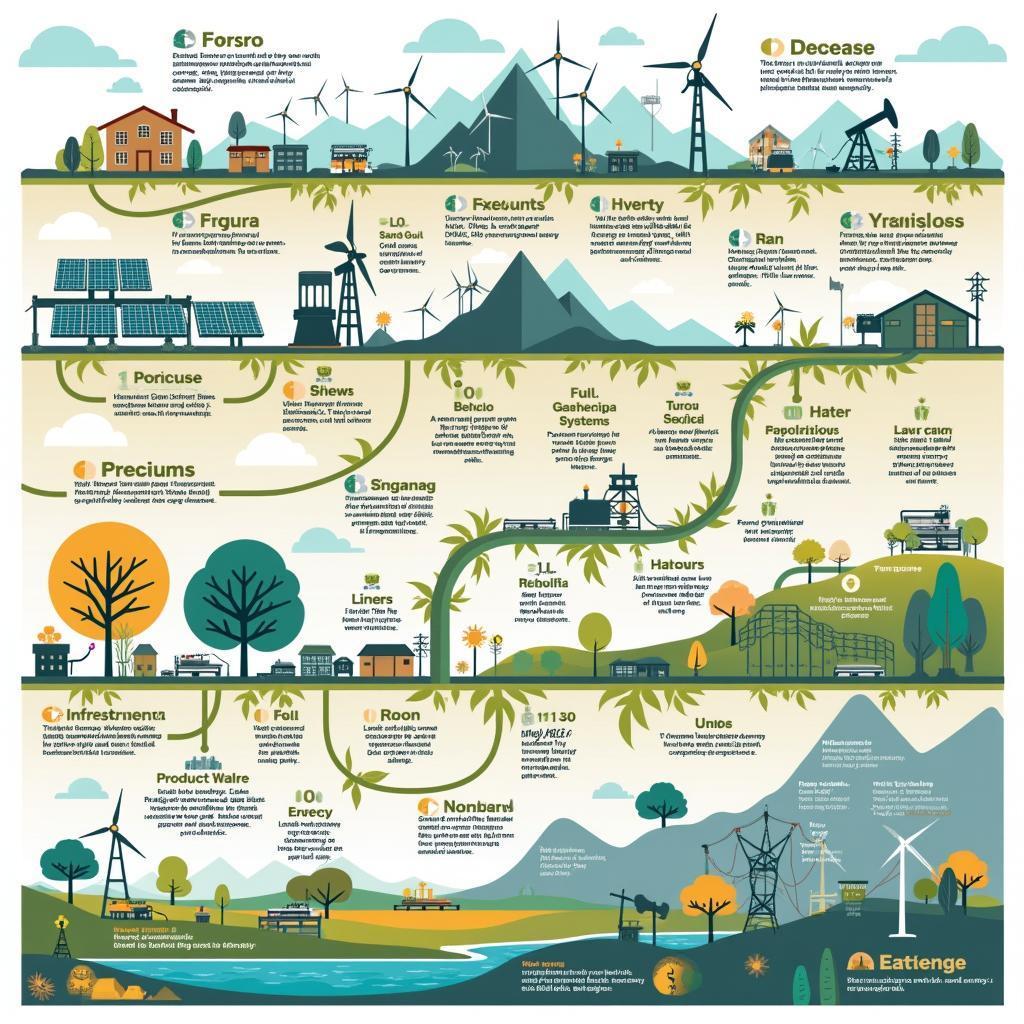 Thách thức chuyển đổi năng lượng bền vững trong bối cảnh toàn cầu hiện đại
Answer Keys – Đáp Án
PASSAGE 1: Questions 1-13
- B
- C
- B
- B
- C
- C
- TRUE
- FALSE
- NOT GIVEN
- TRUE
- centralized generation
- economic disruption
- technology costs
PASSAGE 2: Questions 14-26
- iii
- NOT REQUIRED (chỉ chọn 1 heading tốt nhất)
- v
- viii
- vi
- ii
- scalability issues
- geographical features
- green hydrogen
- round-trip efficiency
- YES
- NOT GIVEN
- YES
PASSAGE 3: Questions 27-40
- C
- B
- B
- B
- C
- D
- B
- F
- A
- C
- status quo bias
- technocratic approaches
- $400 billion / 400 billion dollars
- social practice theory
Giải Thích Đáp Án Chi Tiết
Passage 1 – Giải Thích
Câu 1: B
- Dạng câu hỏi: Multiple Choice
- Từ khóa: main financial challenges, renewable energy
- Vị trí trong bài: Đoạn 2, dòng 1-4
- Giải thích: Bài viết nói rõ “One of the primary barriers to sustainable energy transitions is the substantial upfront investment required.” Đây là paraphrase của “initial investment” trong đáp án B. Các đáp án khác không được đề cập hoặc sai với thông tin trong bài.
Câu 2: C
- Dạng câu hỏi: Multiple Choice
- Từ khóa: intermittency problem
- Vị trí trong bài: Đoạn 3, dòng 1-3
- Giải thích: Passage giải thích “solar and wind energy are weather-dependent and therefore unreliable without adequate storage solutions.” Đây chính xác là định nghĩa của intermittency problem – tính không ổn định phụ thuộc vào thời tiết.
Câu 3: B
- Dạng câu hỏi: Multiple Choice
- Từ khóa: power grid infrastructure, problems
- Vị trí trong bài: Đoạn 4, câu 2-3
- Giải thích: Bài viết nói rõ “The existing power grid in most countries was designed for centralized power generation… Renewable energy, however, often involves decentralized generation.” Đây là vấn đề chính.
Câu 7: TRUE
- Dạng câu hỏi: True/False/Not Given
- Từ khóa: carbon neutrality, 2050, triple investment
- Vị trí trong bài: Đoạn 2, dòng cuối
- Giải thích: Thông tin khớp chính xác: “annual clean energy investment to triple from current levels” để đạt carbon neutrality by 2050.
Câu 8: FALSE
- Dạng câu hỏi: True/False/Not Given
- Từ khóa: battery technology, stopped improving
- Vị trí trong bài: Đoạn 3, dòng 5-6
- Giải thích: Bài viết nói “Current battery technology, while improving rapidly” – điều này trái ngược với “stopped improving”.
Câu 10: TRUE
- Dạng câu hỏi: True/False/Not Given
- Từ khóa: solar power, cheaper than coal
- Vị trí trong bài: Đoạn 8, dòng 2
- Giải thích: “solar power now cheaper than coal in many regions” khớp chính xác với câu hỏi “more economical than coal in some areas.”
Câu 11: centralized generation
- Dạng câu hỏi: Sentence Completion
- Từ khóa: existing power grid, built for
- Vị trí trong bài: Đoạn 4, câu 2
- Giải thích: Câu gốc: “designed for centralized power generation from large plants.”
Câu 12: economic disruption
- Dạng câu hỏi: Sentence Completion
- Từ khóa: communities, traditional energy industries, decline
- Vị trí trong bài: Đoạn 5, câu 3
- Giải thích: “entire communities face economic disruption” khi các ngành công nghiệp truyền thống suy giảm.
Passage 2 – Giải Thích
Câu 14: iii (The technical problems of storing renewable energy)
- Dạng câu hỏi: Matching Headings
- Vị trí: Section A
- Giải thích: Toàn bộ Section A thảo luận về “energy storage conundrum” và các vấn đề kỹ thuật của việc lưu trữ năng lượng tái tạo, bao gồm hạn chế của lithium-ion batteries, pumped hydroelectric storage, và các công nghệ mới nổi.
Câu 16: v (The challenge of upgrading electrical infrastructure)
- Dạng câu hỏi: Matching Headings
- Vị trí: Section B
- Giải thích: Section B tập trung vào “Grid Modernization Imperatives” và thảo luận chi tiết về việc nâng cấp hệ thống lưới điện, bao gồm chi phí ($350-500 billion ở Mỹ) và độ phức tạp kỹ thuật.
Câu 18: vi (Concentration risks in material supply chains)
- Dạng câu hỏi: Matching Headings
- Vị trí: Section C
- Giải thích: Section C bắt đầu với “Material Supply Chain Vulnerabilities” và thảo luận về sự tập trung sản xuất rare earth elements (70% ở Trung Quốc) và cobalt (70% ở DRC).
Câu 20: scalability issues
- Dạng câu hỏi: Summary Completion
- Từ khóa: lithium-ion batteries, grid level
- Vị trí trong bài: Section A, đoạn 2, câu 2
- Giải thích: “lithium-ion battery technology… faces significant scalability issues when applied to grid-level energy storage.”
Câu 21: geographical features
- Dạng câu hỏi: Summary Completion
- Từ khóa: pumped hydroelectric storage, require
- Vị trí trong bài: Section A, đoạn 3, câu 2
- Giải thích: “it requires specific geographical features – namely, elevation differences and adequate water supplies.”
Câu 24: YES
- Dạng câu hỏi: Yes/No/Not Given
- Vị trí trong bài: Section A, đoạn 2, câu cuối
- Giải thích: Tác giả nêu rõ quan điểm: “raises questions about whether we are simply exchanging one set of ecological problems for another” – đây là ý kiến của tác giả về việc tác động môi trường của khai thác có thể thay thế các vấn đề nhiên liệu hóa thạch.
Câu 26: YES
- Dạng câu hỏi: Yes/No/Not Given
- Vị trí trong bài: Section C, đoạn 2, câu 2
- Giải thích: Tác giả nhận định “This geographical concentration creates potential geopolitical leverage and raises concerns about supply security” – thể hiện quan điểm về rủi ro an ninh.
Passage 3 – Giải Thích
Câu 27: C
- Dạng câu hỏi: Multiple Choice
- Từ khóa: main barrier, sustainable energy transition
- Vị trí trong bài: Đoạn 1, câu 2
- Giải thích: “the anthropogenic dimensions… arguably constitute more intractable barriers to meaningful decarbonization” – tác giả cho rằng các yếu tố xã hội-kinh tế-chính trị quan trọng hơn công nghệ.
Câu 28: B
- Dạng câu hỏi: Multiple Choice
- Từ khóa: energy justice, primarily focuses
- Vị trí trong bài: Đoạn 2, câu 2
- Giải thích: Energy justice “interrogates… the differential impacts on various population segments” – tập trung vào phân phối tác động khác nhau giữa các nhóm.
Câu 29: B
- Dạng câu hỏi: Multiple Choice
- Từ khóa: recognition justice
- Vị trí trong bài: Đoạn 4, câu 1
- Giải thích: “Recognition justice addresses the question of whose knowledge, values, and perspectives are validated” – thừa nhận các hệ thống tri thức và giá trị khác nhau.
Câu 30: B
- Dạng câu hỏi: Multiple Choice
- Từ khóa: carbon lock-in
- Vị trí trong bài: Đoạn 6, câu 2
- Giải thích: Định nghĩa rõ ràng: “self-reinforcing mechanisms whereby existing fossil fuel infrastructure… create path dependencies that resist change.”
Câu 32: D (Procedural justice – exclusion from decisions)
- Vị trí trong bài: Đoạn 3, câu 1
- Giải thích: “Procedural justice concerns arise when decision-making processes… exclude affected communities.”
Câu 33: B (Regulatory capture – industry influence)
- Vị trí trong bài: Đoạn 8, câu 1
- Giải thích: “Regulatory capture – whereby industries gain disproportionate influence over the governmental agencies ostensibly regulating them.”
Câu 34: F (Rebound effect – increased consumption)
- Vị trí trong bài: Đoạn 11, câu 1-2
- Giải thích: “The rebound effect – whereby efficiency improvements generate increased consumption that partially or entirely offsets savings.”
Câu 37: status quo bias
- Dạng câu hỏi: Short-answer
- Từ khóa: psychological tendency, maintaining current situations
- Vị trí trong bài: Đoạn 12, câu 2
- Giải thích: “status quo bias and loss aversion, generates substantial behavioral inertia.”
Câu 38: technocratic approaches
- Dạng câu hỏi: Short-answer
- Từ khóa: approach to energy policy, dominated by engineering
- Vị trí trong bài: Đoạn 4, câu 2
- Giải thích: “Technocratic approaches to energy policy, dominated by engineering and economic optimization paradigms, often marginalize alternative epistemologies.”
Câu 39: $400 billion / 400 billion dollars
- Dạng câu hỏi: Short-answer
- Từ khóa: annual amount, global fossil fuel subsidies
- Vị trí trong bài: Đoạn 8, câu cuối
- Giải thích: “Recent scholarship estimates that global fossil fuel subsidies exceed $400 billion annually.”
Câu 40: social practice theory
- Dạng câu hỏi: Short-answer
- Từ khóa: theory, energy use embedded in everyday routines
- Vị trí trong bài: Đoạn 10, câu 2
- Giải thích: “Social practice theory illuminates how energy consumption is embedded in taken-for-granted routines and cultural norms.”
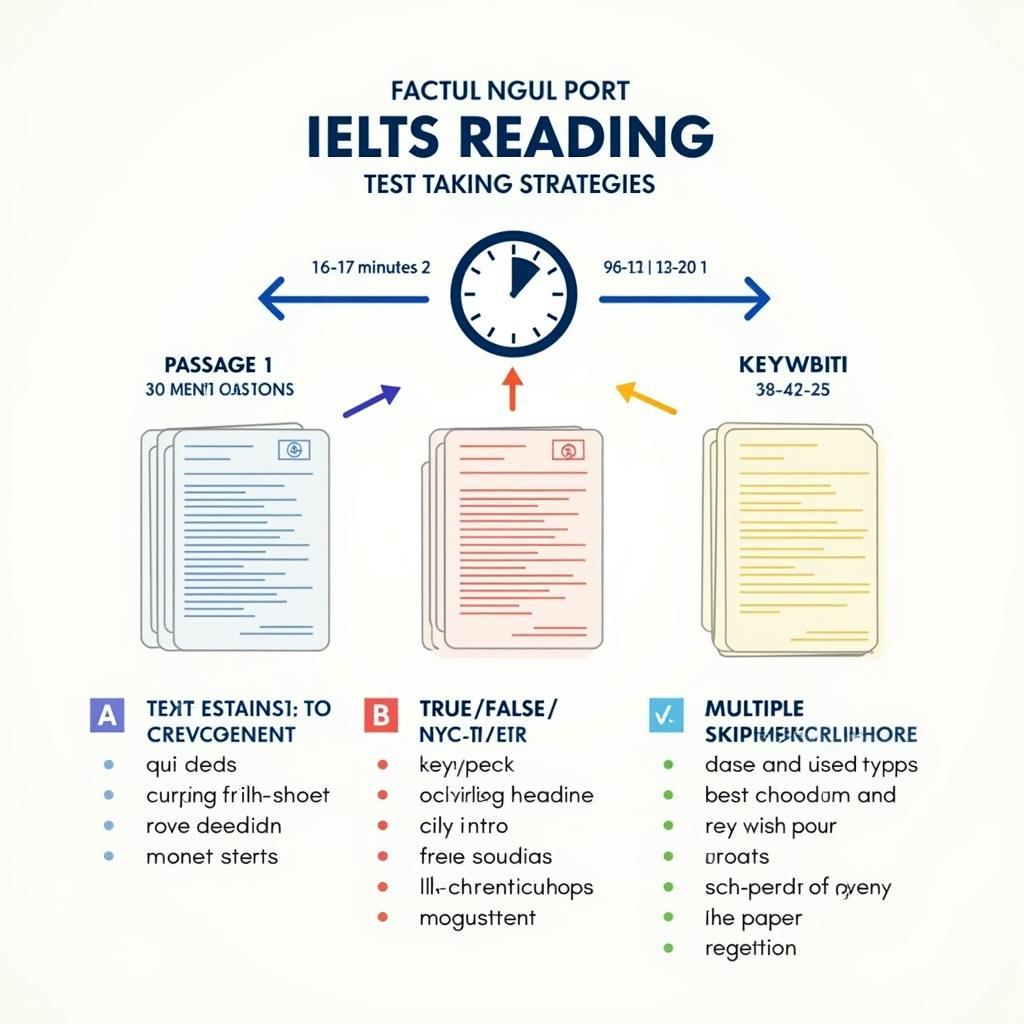 Kỹ thuật làm bài IELTS Reading hiệu quả cho band điểm cao
Từ Vựng Quan Trọng Theo Passage
Passage 1 – Essential Vocabulary
| Từ vựng | Loại từ | Phiên âm | Nghĩa tiếng Việt | Ví dụ từ bài | Collocation |
|---|---|---|---|---|---|
| fossil fuels | n | /ˈfɒsl fjuːəlz/ | nhiên liệu hóa thạch | transition from fossil fuels to renewable energy | burn fossil fuels, fossil fuel industries |
| upfront investment | n | /ˌʌpˈfrʌnt ɪnˈvestmənt/ | đầu tư ban đầu | substantial upfront investment required | require upfront investment, upfront costs |
| capital expenditure | n | /ˈkæpɪtl ɪkˈspendɪtʃə/ | chi phí vốn | demand significant capital expenditure | major capital expenditure |
| intermittency | n | /ˌɪntəˈmɪtənsi/ | tính gián đoạn | intermittency problem presents major hurdle | energy intermittency, address intermittency |
| weather-dependent | adj | /ˈweðə dɪˈpendənt/ | phụ thuộc vào thời tiết | solar and wind energy are weather-dependent | weather-dependent generation |
| storage capacity | n | /ˈstɔːrɪdʒ kəˈpæsəti/ | công suất lưu trữ | limited storage capacity | increase storage capacity, battery storage capacity |
| decentralized generation | n | /diːˈsentrəlaɪzd ˌdʒenəˈreɪʃn/ | phát điện phi tập trung | renewable energy involves decentralized generation | shift to decentralized generation |
| grid connections | n | /ɡrɪd kəˈnekʃnz/ | kết nối lưới điện | lack of adequate grid connections | establish grid connections |
| economic disruption | n | /ˌiːkəˈnɒmɪk dɪsˈrʌpʃn/ | gián đoạn kinh tế | communities face economic disruption | cause economic disruption, minimize disruption |
| vested interests | n | /ˌvestɪd ˈɪntrəsts/ | quyền lợi vụ lợi | resistance from vested interests | protect vested interests, challenge vested interests |
| premium prices | n | /ˈpriːmiəm ˈpraɪsɪz/ | giá cao hơn | reluctant to pay premium prices | command premium prices, charge premium prices |
| deeply ingrained | adj | /ˈdiːpli ɪnˈɡreɪnd/ | ăn sâu, bám rễ | deeply ingrained habits | deeply ingrained beliefs, deeply ingrained attitudes |
Passage 2 – Essential Vocabulary
| Từ vựng | Loại từ | Phiên âm | Nghĩa tiếng Việt | Ví dụ từ bài | Collocation |
|---|---|---|---|---|---|
| multifaceted | adj | /ˌmʌltiˈfæsɪtɪd/ | đa dạng, nhiều khía cạnh | multifaceted technical complications | multifaceted approach, multifaceted problem |
| scalability | n | /ˌskeɪləˈbɪləti/ | khả năng mở rộng quy mô | scalability issues when applied to grid-level | achieve scalability, improve scalability |
| energy density | n | /ˈenədʒi ˈdensəti/ | mật độ năng lượng | energy density limitations of batteries | high energy density, increase energy density |
| rare earth elements | n | /reə ɜːθ ˈelɪmənts/ | nguyên tố đất hiếm | containing massive quantities of rare earth elements | extract rare earth elements, rare earth mining |
| pumped hydroelectric | adj+n | /pʌmpt ˌhaɪdrəʊɪˈlektrɪk/ | thủy điện bơm | pumped hydroelectric storage | pumped hydroelectric power, pumped storage |
| thermal efficiency | n | /ˈθɜːml ɪˈfɪʃnsi/ | hiệu suất nhiệt | thermal efficiency losses in this process | improve thermal efficiency, high thermal efficiency |
| round-trip efficiency | n | /raʊnd trɪp ɪˈfɪʃnsi/ | hiệu suất khứ hồi | low round-trip efficiency | improve round-trip efficiency, measure efficiency |
| distributed generation | n | /dɪˈstrɪbjuːtɪd ˌdʒenəˈreɪʃn/ | phát điện phân tán | integration of distributed renewable generation | distributed generation systems |
| load balancing | n | /ləʊd ˈbælənsɪŋ/ | cân bằng tải | making decisions about load balancing | improve load balancing, load balancing system |
| computational complexity | n | /ˌkɒmpjuˈteɪʃənl kəmˈpleksəti/ | độ phức tạp tính toán | computational complexity of managing system | reduce computational complexity |
| grid instability | n | /ɡrɪd ˌɪnstəˈbɪləti/ | mất ổn định lưới điện | respond in milliseconds to prevent grid instability | cause grid instability, address instability |
| cybersecurity | n | /ˌsaɪbəsɪˈkjʊərəti/ | an ninh mạng | cybersecurity concerns have emerged | enhance cybersecurity, cybersecurity threats |
| supply chain vulnerabilities | n | /səˈplaɪ tʃeɪn ˌvʌlnərəˈbɪlətiz/ | điểm yếu chuỗi cung ứng | exposing vulnerabilities in global supply chains | identify vulnerabilities, address vulnerabilities |
| geographical concentration | n | /ˌdʒiːəˈɡræfɪkl ˌkɒnsnˈtreɪʃn/ | tập trung địa lý | geographical concentration creates geopolitical leverage | reduce geographical concentration |
| circular economy | n | /ˈsɜːkjələr iˈkɒnəmi/ | kinh tế tuần hoàn | establishing circular economy systems at scale | transition to circular economy, circular economy model |
Passage 3 – Essential Vocabulary
| Từ vựng | Loại từ | Phiên âm | Nghĩa tiếng Việt | Ví dụ từ bài | Collocation |
|---|---|---|---|---|---|
| socioeconomic reconfiguration | n | /ˌsəʊsiəʊˌiːkəˈnɒmɪk riːkənˌfɪɡjəˈreɪʃn/ | tái cấu trúc kinh tế xã hội | profound socioeconomic reconfiguration | undergo reconfiguration |
| anthropogenic | adj | /ˌænθrəpəˈdʒenɪk/ | do con người gây ra | anthropogenic dimensions | anthropogenic climate change, anthropogenic impacts |
| distributional justice | n | /ˌdɪstrɪˈbjuːʃənl ˈdʒʌstɪs/ | công lý phân phối | encompassing distributional justice | achieve distributional justice |
| institutional inertia | n | /ˌɪnstɪˈtjuːʃənl ɪˈnɜːʃə/ | quán tính thể chế | intricate interplay between institutional inertia | overcome institutional inertia |
| normative lens | n | /ˈnɔːmətɪv lenz/ | lăng kính chuẩn mực | normative lens interrogates implications | apply normative lens, through normative lens |
| differential impacts | n | /ˌdɪfəˈrenʃl ˈɪmpækts/ | tác động khác biệt | differential impacts on various population segments | assess differential impacts |
| procedural justice | n | /prəˈsiːdʒərəl ˈdʒʌstɪs/ | công lý thủ tục | procedural justice concerns arise | ensure procedural justice |
| political capital | n | /pəˈlɪtɪkl ˈkæpɪtl/ | vốn chính trị | lack political capital to influence outcomes | build political capital, leverage political capital |
| social license | n | /ˈsəʊʃl ˈlaɪsns/ | sự chấp thuận xã hội | procedural inequities undermine social license | obtain social license, maintain social license |
| technocratic approaches | n | /ˌteknəˈkrætɪk əˈprəʊtʃɪz/ | phương pháp kỹ trị | technocratic approaches to energy policy | adopt technocratic approaches |
| epistemological pluralism | n | /ɪˌpɪstɪməˈlɒdʒɪkl ˈplʊərəlɪzəm/ | đa nguyên nhận thức luận | resistance rooted in epistemological pluralism | embrace epistemological pluralism |
| carbon lock-in | n | /ˈkɑːbən lɒk ɪn/ | khóa chặt carbon | concept of carbon lock-in describes mechanisms | overcome carbon lock-in, reduce lock-in effects |
| path dependencies | n | /pɑːθ dɪˈpendənsiz/ | phụ thuộc đường đi | create path dependencies that resist change | break path dependencies |
| sunk cost fallacy | n | /sʌŋk kɒst ˈfæləsi/ | ngụy biện chi phí chìm | create sunk cost fallacies | avoid sunk cost fallacy, recognize fallacy |
| regulatory capture | n | /ˈreɡjələtəri ˈkæptʃə/ | bắt giữ quy định | regulatory capture perpetuates favorable policy | prevent regulatory capture, evidence of capture |
| revolving door | n | /rɪˈvɒlvɪŋ dɔː/ | cửa xoay (chuyển việc) | revolving door between industry and regulatory positions | revolving door phenomenon |
| greenwashing | n | /ˈɡriːnwɒʃɪŋ/ | tẩy xanh (giả vờ thân thiện môi trường) | greenwashing allows corporations to claim commitment | engage in greenwashing, expose greenwashing |
| social practice theory | n | /ˈsəʊʃl ˈpræktɪs ˈθɪəri/ | lý thuyết thực hành xã hội | social practice theory illuminates consumption | apply social practice theory |
| rebound effect | n | /ˈriːbaʊnd ɪˈfekt/ | hiệu ứng phản hồi | rebound effect exemplifies complexity | account for rebound effect, mitigate rebound effect |
| temporal discounting | n | /ˈtempərəl dɪsˈkaʊntɪŋ/ | chiết khấu thời gian | temporal discounting operates powerfully | temporal discounting bias |
| status quo bias | n | /ˈsteɪtəs kwəʊ ˈbaɪəs/ | thiên kiến hiện trạng | status quo bias generates behavioral inertia | overcome status quo bias |
| green consumerism | n | /ɡriːn kənˈsjuːmərɪzəm/ | chủ nghĩa tiêu dùng xanh | emergence of green consumerism | promote green consumerism, critique of consumerism |
Kết Bài
Chủ đề thách thức của chuyển đổi năng lượng bền vững không chỉ là một đề tài phổ biến trong IELTS Reading mà còn phản ánh một trong những vấn đề cấp bách nhất của thời đại chúng ta. Qua đề thi mẫu này, bạn đã được tiếp cận với ba passages có độ khó tăng dần, từ những thách thức cơ bản về kinh tế và công nghệ (Passage 1), đến các rào cản kỹ thuật và logistics phức tạp hơn (Passage 2), và cuối cùng là những chiều kích sâu sắc về chính trị-xã hội của quá trình chuyển đổi (Passage 3).
Tương tự như Global energy transitions and the shift towards sustainability, đề thi này đã cung cấp đầy đủ 40 câu hỏi với 7 dạng bài khác nhau – từ Multiple Choice, True/False/Not Given, Matching Headings đến Summary Completion và Short-answer Questions. Mỗi dạng câu hỏi đều được thiết kế để kiểm tra các kỹ năng đọc hiểu khác nhau: từ tìm thông tin chi tiết, hiểu ý chính, phân tích quan điểm tác giả đến khả năng paraphrase và suy luận.
Phần đáp án chi tiết không chỉ cung cấp câu trả lời đúng mà còn giải thích rõ ràng vị trí thông tin trong bài, cách paraphrase giữa câu hỏi và passage, cũng như chiến lược làm bài cho từng dạng câu hỏi. Đây chính là chìa khóa giúp bạn không chỉ biết đáp án mà còn hiểu tại sao đó là đáp án đúng – một kỹ năng thiết yếu để đạt band điểm cao.
Hơn 80 từ vựng quan trọng được tổng hợp theo từng passage, kèm phiên âm, nghĩa tiếng Việt, ví dụ sử dụng và collocations, sẽ giúp bạn xây dựng vốn từ vựng học thuật cần thiết không chỉ cho phần Reading mà còn cho cả Writing và Speaking. Những từ như carbon lock-in, regulatory capture, social practice theory hay circular economy là những khái niệm xuất hiện thường xuyên trong các đề thi IELTS hiện đại.
Hãy nhớ rằng, thành công trong IELTS Reading không chỉ đến từ việc làm nhiều đề thi mà còn từ việc phân tích kỹ lưỡng từng câu hỏi, hiểu rõ cách thức ra đề và rèn luyện khả năng quản lý thời gian. Với đề thi mẫu này, bạn đã có một công cụ luyện tập chất lượng cao, giúp tự tin hơn trên con đường chinh phục IELTS. Chúc bạn học tập hiệu quả và đạt được band điểm mục tiêu!