Mở bài
Chủ đề về tác động của sự bất ổn chính trị lên thị trường kinh tế toàn cầu là một trong những chủ đề xuất hiện thường xuyên trong kỳ thi IELTS Reading, đặc biệt trong các đề thi Academic. Đây là chủ đề liên quan đến kinh tế học, chính trị quốc tế và khoa học xã hội – những lĩnh vực được IELTS ưa chuộng vì tính học thuật cao và khả năng đánh giá kỹ năng đọc hiểu phức tạp của thí sinh.
Trong bài viết này, bạn sẽ được thực hành với một đề thi IELTS Reading hoàn chỉnh gồm 3 passages với độ khó tăng dần từ Easy đến Hard. Đề thi bao gồm 40 câu hỏi đa dạng dạng giống như thi thật, kèm theo đáp án chi tiết và giải thích cặn kẽ. Bạn cũng sẽ học được những từ vựng quan trọng liên quan đến kinh tế, chính trị và thị trường tài chính, cùng các kỹ thuật làm bài hiệu quả.
Đề thi này phù hợp cho học viên có trình độ từ band 5.0 trở lên, giúp bạn làm quen với cấu trúc đề thi thực tế và nâng cao khả năng quản lý thời gian. Hãy chuẩn bị sẵn 60 phút để hoàn thành toàn bộ bài test trong điều kiện giống thi thật nhất!
1. Hướng dẫn làm bài IELTS Reading
Tổng Quan Về IELTS Reading Test
IELTS Reading Test kéo dài 60 phút và bao gồm 3 passages với tổng cộng 40 câu hỏi. Mỗi câu trả lời đúng được 1 điểm, không bị trừ điểm với câu sai. Điểm band score được tính dựa trên số câu đúng, với thang điểm từ 0 đến 9.
Phân bổ thời gian khuyến nghị:
- Passage 1: 15-17 phút (độ khó thấp nhất)
- Passage 2: 18-20 phút (độ khó trung bình)
- Passage 3: 23-25 phút (độ khó cao nhất)
Lưu ý rằng không có thời gian riêng để chuyển đáp án sang Answer Sheet, vì vậy bạn nên viết đáp án trực tiếp trong khi làm bài.
Các Dạng Câu Hỏi Trong Đề Này
Đề thi mẫu này bao gồm 7 dạng câu hỏi phổ biến trong IELTS Reading:
- Multiple Choice – Câu hỏi trắc nghiệm
- True/False/Not Given – Xác định thông tin đúng/sai/không được đề cập
- Matching Information – Ghép thông tin với đoạn văn
- Summary Completion – Hoàn thành đoạn tóm tắt
- Matching Headings – Ghép tiêu đề với đoạn văn
- Sentence Completion – Hoàn thành câu
- Matching Features – Ghép đặc điểm với đối tượng
2. IELTS Reading Practice Test
PASSAGE 1 – Political Uncertainty and Market Volatility: An Introduction
Độ khó: Easy (Band 5.0-6.5)
Thời gian đề xuất: 15-17 phút
Financial markets around the world are sensitive to many different factors, but one of the most significant is political stability. When governments change, when elections produce unexpected results, or when international tensions rise, investors often become nervous. This nervousness can lead to dramatic changes in stock prices, currency values, and commodity markets.
The relationship between politics and markets is not new. Throughout history, wars, revolutions, and political upheavals have always affected trade and commerce. However, in today’s interconnected global economy, the effects of political instability can spread much more quickly than ever before. A political crisis in one country can trigger market reactions on the other side of the world within hours or even minutes.
Investors are people or organizations that put money into businesses, properties, or financial products hoping to make a profit. They need predictability to make good decisions. When the political situation is stable, investors can forecast future conditions with reasonable accuracy. They know what tax rates will be, what regulations businesses must follow, and how trade agreements will function. This knowledge helps them decide where to invest their money.
Political instability disrupts this predictability. When a government faces a crisis, investors worry about several possibilities. Will there be new taxes that reduce profits? Will trade agreements be cancelled? Will the country’s currency lose value? Because they cannot answer these questions with confidence, many investors choose to withdraw their money from risky markets and move it to safer places.
The concept of “safe haven assets” is important here. When political problems arise, investors typically move their money into things they consider safe. Gold is a traditional safe haven because it tends to maintain its value even during crises. The US dollar is also considered safe because the United States has a large, stable economy. Government bonds from stable countries like Germany or Switzerland are another popular choice.
This movement of money creates a ripple effect throughout the global economy. When many investors sell stocks in an unstable country, stock prices fall. When they sell that country’s currency to buy dollars or gold, the exchange rate changes. These changes can happen very rapidly in modern markets where trading is done electronically and computers can execute thousands of transactions per second.
Developing countries often experience more severe market reactions to political instability than developed nations. This is because their economies are usually smaller and less diversified. They may depend heavily on foreign investment to support their growth. When political problems arise, foreign investors may quickly remove their money, causing a sudden economic shock. This can lead to a financial crisis that affects ordinary people through higher prices, unemployment, and reduced government services.
However, not all political changes cause negative market reactions. Sometimes elections or government reforms are seen positively by investors. If a new government promises business-friendly policies, reduces bureaucracy, or improves infrastructure, markets may react with enthusiasm. Stock prices might rise, and foreign investment may increase. The key factor is whether investors believe the changes will create a more stable and profitable environment for business.
Market participants also pay attention to political risk indicators that help them assess the situation in different countries. These include factors like the rule of law, levels of corruption, the strength of democratic institutions, and the likelihood of social unrest. Countries with strong institutions and peaceful transitions of power typically experience less market volatility when governments change.
Understanding how political instability affects markets is important not just for investors but for policymakers as well. Governments that want to attract investment and maintain economic growth must work to create political stability and predictable policy environments. This means respecting property rights, maintaining independent courts, and ensuring that political changes happen through established democratic processes rather than through violence or coups.
Questions 1-13
Questions 1-5: Multiple Choice
Choose the correct letter, A, B, C or D.
-
According to the passage, what makes political crises spread quickly in modern times?
A. The existence of international news media
B. The global economy’s interconnected nature
C. The speed of modern transportation
D. The increase in international tourism -
What do investors need most to make good investment decisions?
A. High profits
B. Low taxes
C. Predictability
D. Government support -
Why is gold considered a safe haven asset?
A. It is rare and beautiful
B. It can be easily transported
C. It maintains its value during crises
D. It is accepted everywhere -
Why do developing countries experience more severe reactions to political instability?
A. They have corrupt governments
B. Their economies are smaller and less diversified
C. They lack natural resources
D. They have unstable currencies -
What might cause a positive market reaction to political change?
A. A military takeover
B. Increased taxation
C. Business-friendly policies
D. Social unrest
Questions 6-10: True/False/Not Given
Do the following statements agree with the information given in the passage?
Write:
- TRUE if the statement agrees with the information
- FALSE if the statement contradicts the information
- NOT GIVEN if there is no information on this
- Political events have only recently begun to affect financial markets.
- Modern computer systems can execute thousands of trading transactions per second.
- The US dollar is considered a safe haven currency because of America’s large stable economy.
- All government bonds are equally safe during political crises.
- Strong democratic institutions help reduce market volatility during government changes.
Questions 11-13: Sentence Completion
Complete the sentences below.
Choose NO MORE THAN TWO WORDS from the passage for each answer.
- When political instability occurs, many investors move their money from risky markets to __.
- Political risk indicators include the rule of law, corruption levels, and the likelihood of __.
- Governments can attract investment by respecting property rights and maintaining __.
PASSAGE 2 – The Mechanisms of Market Response to Political Shocks
Độ khó: Medium (Band 6.0-7.5)
Thời gian đề xuất: 18-20 phút
The transmission mechanisms through which political instability affects global markets are both complex and multifaceted. While the general principle that political uncertainty creates market volatility is well established, the specific pathways through which this occurs involve intricate interactions between investor psychology, institutional responses, and structural economic factors.
A. Information Asymmetry and Market Reactions
One crucial aspect of how markets respond to political instability is the problem of information asymmetry. During periods of political turmoil, reliable information becomes scarce, and rumours can spread rapidly. Market participants face difficulty distinguishing between credible reports and speculation. This information vacuum often leads to exaggerated market movements as traders act on incomplete or inaccurate information. The financial crisis of 2008 demonstrated how information asymmetry during periods of instability could amplify market panic, as investors struggled to assess the true extent of risks facing major financial institutions.
B. The Role of Institutional Investors
Institutional investors such as pension funds, insurance companies, and sovereign wealth funds play a disproportionate role in transmitting political shocks through markets. These entities manage trillions of dollars in assets and often operate under strict risk management frameworks that require them to reduce exposure to countries experiencing political instability. When their automated risk systems detect rising political risk, they may trigger large-scale asset reallocations that can destabilise markets even before any actual economic harm occurs. This procyclical behaviour can create a self-fulfilling prophecy where the anticipation of economic problems caused by political instability actually creates those problems through market mechanisms.
C. Currency Markets and Political Risk
Foreign exchange markets are particularly vulnerable to political shocks because currencies are direct representations of national economic sovereignty. When a country experiences political instability, its currency often faces immediate pressure. This occurs because currency values reflect not just current economic conditions but also expectations about future political and economic developments. The British pound’s dramatic fall following the Brexit referendum in 2016 exemplifies this dynamic. Despite no immediate change in Britain’s economic fundamentals, the pound lost approximately 10% of its value within days as markets reassessed the country’s economic prospects under the new political reality.
D. Credit Markets and Sovereign Risk
Political instability directly affects a country’s ability to borrow money through international credit markets. Credit rating agencies continuously evaluate countries based on their political stability, and downgrades can occur rapidly when political crises emerge. These downgrades increase the interest rates that governments must pay to borrow money, creating fiscal pressure that can exacerbate existing problems. The sovereign debt crisis in Europe after 2010 showed how political uncertainty about governments’ commitment to fiscal reforms could drive borrowing costs to unsustainable levels, creating vicious cycles of austerity, political backlash, and further instability.
E. Contagion Effects
Perhaps most concerning for global financial stability is the phenomenon of contagion, where instability in one country spreads to others. This can occur through direct economic linkages such as trade relationships and financial connections, but also through more psychological channels. If investors observe political instability causing problems in one emerging market, they may preemptively withdraw investments from other emerging markets they perceive as similarly vulnerable, even if those countries face no immediate political problems. The Asian financial crisis of 1997-98 demonstrated this contagion effect dramatically, as currency crises spread from Thailand to Indonesia, South Korea, and beyond, despite significant differences in their political situations.
F. Central Bank Responses
Central banks serve as crucial stabilising forces during periods of political instability. They can intervene in currency markets, adjust interest rates, and provide liquidity to financial institutions to prevent panic. However, their effectiveness depends partly on their perceived independence from political interference. When political instability threatens central bank independence, their ability to stabilise markets is compromised. Turkey’s experience in recent years illustrates this challenge, as political pressure on the central bank has complicated its efforts to manage inflation and currency volatility.
The interconnection between political developments and market reactions creates feedback loops that can either moderate or intensify crises. When market reactions to political instability are severe, they can create economic pain that fuels further political instability, creating a downward spiral. Conversely, if markets respond calmly to political changes, this can reduce political tensions by demonstrating confidence in the country’s economic resilience. Understanding these dynamics is essential for both policymakers attempting to maintain stability and investors seeking to navigate turbulent periods.
G. Long-term Versus Short-term Effects
Research distinguishes between the immediate market reactions to political shocks and their longer-term impacts. Short-term volatility often exceeds what is justified by actual changes in economic fundamentals. Markets typically overreact initially and then gradually adjust as more information becomes available and the actual consequences of political changes become clearer. However, some political changes have lasting effects on market valuations by fundamentally altering the business environment, regulatory frameworks, or international relationships that shape economic activity.
Questions 14-26
Questions 14-18: Matching Information
Match the information with the correct section (A-G).
You may use any letter more than once.
- An example of how currency values fell despite no immediate economic changes
- A description of how problems spread between different countries
- An explanation of why large investment organisations are particularly important
- The distinction between immediate and delayed market impacts
- How uncertainty about government policies affected borrowing costs in Europe
Questions 19-23: Summary Completion
Complete the summary below.
Choose NO MORE THAN TWO WORDS from the passage for each answer.
During political instability, markets face problems with 19. __, making it hard to tell the difference between reliable reports and 20. __. Large institutional investors operate under strict 21. __ that force them to reduce their involvement in unstable countries. This behaviour can create a 22. __ where expectations of problems actually cause those problems. Central banks can help stabilise markets by intervening in currency markets and providing 23. __ to financial institutions.
Questions 24-26: Yes/No/Not Given
Do the following statements agree with the views of the writer in the passage?
Write:
- YES if the statement agrees with the views of the writer
- NO if the statement contradicts the views of the writer
- NOT GIVEN if it is impossible to say what the writer thinks about this
- Information problems during political crises always lead to permanent market damage.
- Central banks are more effective when they are independent from political control.
- Short-term market reactions to political events are usually proportionate to actual economic changes.
PASSAGE 3 – Quantifying Political Risk: Methodologies, Challenges, and Implications for Global Capital Flows
Độ khó: Hard (Band 7.0-9.0)
Thời gian đề xuất: 23-25 phút
The quantification of political risk represents one of the most formidable challenges in contemporary financial econometrics. While the qualitative assessment that political instability affects market outcomes is incontrovertible, developing robust, predictive models that can accurately capture the magnitude and duration of these effects has proven elusive. This difficulty stems from the inherently stochastic nature of political events, the non-linear relationships between political variables and economic outcomes, and the reflexive dynamics whereby market expectations about political developments can influence the political processes themselves.
Methodological Approaches to Measuring Political Risk
Contemporary approaches to quantifying political risk generally fall into three broad categories: expert assessments, composite indices, and market-based measures. Expert assessment methodologies, exemplified by services such as the Economist Intelligence Unit’s political risk ratings, rely on specialist analysts to evaluate multiple dimensions of political stability, including regime type, institutional quality, social cohesion, and external security threats. These assessments are then aggregated into numerical scores that purportedly enable cross-country comparisons and temporal tracking of risk levels. However, such approaches suffer from inherent subjectivity and potential systematic biases in how analysts interpret ambiguous situations.
Composite indices attempt to address these limitations by amalgamating objective indicators such as the frequency of government turnovers, levels of civil unrest measured through protest incidents, constitutional stability, and military involvement in politics. The International Country Risk Guide employs this methodology, creating multi-dimensional assessments that integrate political, economic, and financial risk factors. Nevertheless, the arbitrary weighting schemes used to combine diverse indicators and the backward-looking nature of such measures limit their predictive utility. Moreover, these indices struggle to capture qualitative shifts in political dynamics that may not immediately manifest in quantifiable indicators but nonetheless presage significant changes.
Market-based measures represent a conceptually appealing alternative, leveraging the collective wisdom of market participants who have financial incentives to accurately assess political risks. Sovereign credit default swap (CDS) spreads, which reflect the cost of insuring against a country’s default on its debt obligations, implicitly incorporate political risk assessments. Similarly, implied volatility in currency options markets provides real-time signals about anticipated political and economic uncertainty. These measures offer the advantage of being continuously updated and forward-looking, but they also reflect market sentiment and liquidity conditions that may not correspond directly to underlying political realities. The endogenous relationship between market prices and political outcomes further complicates interpretation: do rising CDS spreads reflect deteriorating political conditions, or do they precipitate crises by raising borrowing costs and constraining government options?
Empirical Challenges in Establishing Causality
Econometric identification of causal relationships between political instability and market outcomes faces substantial methodological obstacles. The most fundamental challenge is the problem of endogeneity: political instability and market performance often have common underlying causes and influence each other bidirectionally. Poor economic performance may generate political instability through distributional conflicts and discontent with incumbent governments, while simultaneously, political instability depresses market valuations through the mechanisms previously discussed. Disentangling these reciprocal relationships requires sophisticated identification strategies such as instrumental variables approaches, natural experiments, or carefully constructed event studies.
Recent scholarship has employed event study methodologies that exploit exogenous political shocks to identify market impacts. For instance, studies examining market reactions to assassination attempts, unexpected election outcomes, or coups provide relatively clean identification because these events are largely unpredictable and uncorrelated with pre-existing market trends. Research by Fisman (2001) on politically connected firms in Indonesia during the Suharto regime used fluctuations in the dictator’s health as a quasi-experimental shock to demonstrate how political connections translated into economic value. When news suggested Suharto’s health was deteriorating, firms with close political ties experienced disproportionate stock price declines, quantifying the rent-seeking component of their valuations.
However, extrapolating from such specific events to broader generalisations about political risk effects remains problematic. The heterogeneous nature of political instability means that coups, elections, protests, and institutional crises may have dramatically different market impacts depending on context. Additionally, markets may become desensitised to certain types of political events in countries where instability is chronic, while reacting sharply to similar events in countries with established stability—a non-linearity that simple models struggle to accommodate.
The Geography of Political Risk and Capital Flight
The spatial dimension of political risk effects has received increasing attention as globalisation has intensified cross-border capital flows. Empirical evidence suggests that geographic proximity to politically unstable regions, financial integration through banking and investment linkages, and perceived similarity in economic structures all amplify contagion effects. During the Eurozone crisis, for example, bond spreads in peripheral economies moved in remarkable synchronisation despite divergent fiscal positions and reform trajectories, suggesting that market participants were responding to regional political narratives rather than country-specific fundamentals.
The concentration of international capital flows in emerging markets means that these economies face disproportionate vulnerability to shifts in risk perceptions. The “taper tantrum” of 2013, triggered by speculation about the Federal Reserve’s intentions to reduce monetary stimulus, precipitated substantial capital outflows from emerging markets despite minimal changes in their domestic political situations. This episode underscored how political and monetary policy developments in core economies—particularly the United States—can overwhelm local factors in determining capital flows to peripheral countries, a dynamic that complicates attribution of market movements to specific political risks.
Implications for Investment Strategy and Policy Design
The imperfect state of political risk measurement has significant implications for both investment strategy and policy design. For investors, the uncertainty surrounding political risk quantification suggests the value of diversification strategies that reduce exposure to idiosyncratic political shocks while maintaining participation in markets that offer compensatory risk premiums. Sophisticated institutional investors increasingly employ scenario analysis that models multiple potential political trajectories rather than relying on point estimates of political risk.
For policymakers, understanding how markets interpret and react to political developments should inform crisis management strategies. Transparent communication, predictable policy frameworks, and demonstrated commitment to institutional stability can moderate market reactions even during genuinely challenging political transitions. The contrast between orderly market responses to government changes in established democracies versus turbulent reactions in countries with fragile institutions highlights how political legitimacy and procedural regularity serve as stabilising forces that transcend partisan policy differences.
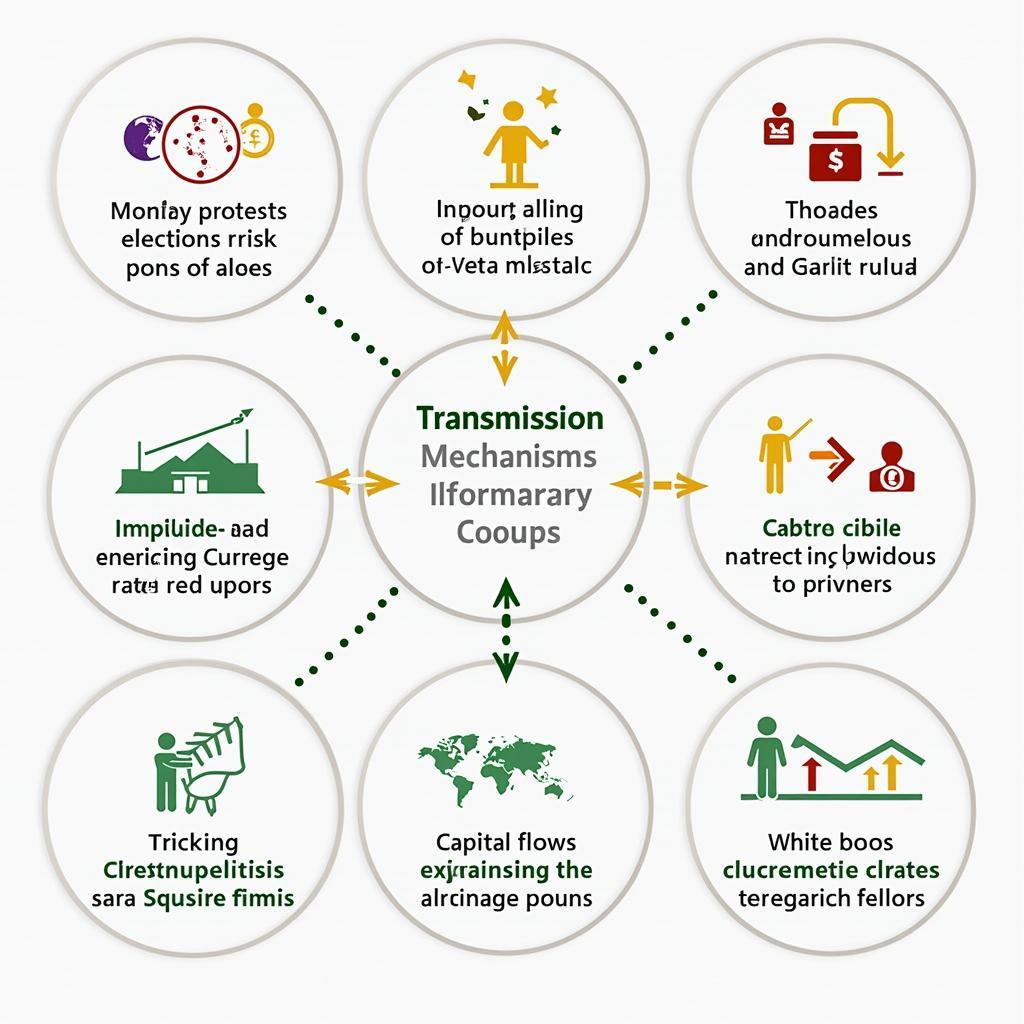 Biểu đồ minh họa tác động của bất ổn chính trị đến các chỉ số thị trường tài chính toàn cầu và dòng vốn đầu tư quốc tế
Questions 27-40
Questions 27-31: Multiple Choice
Choose the correct letter, A, B, C or D.
-
What is described as the most fundamental challenge in studying political risk?
A. Lack of available data
B. The problem of endogeneity
C. Insufficient funding for research
D. Language barriers in international studies -
According to the passage, composite indices have limitations because:
A. They rely too heavily on expert opinions
B. They use arbitrary weighting schemes and look backward
C. They ignore economic factors
D. They are too expensive to produce -
The research by Fisman on Indonesian firms used what as a natural experiment?
A. Election results
B. Economic reforms
C. Fluctuations in Suharto’s health
D. Changes in trade policy -
The “taper tantrum” of 2013 demonstrated that:
A. Emerging markets have strong economies
B. Political developments in core economies can overwhelm local factors
C. The Federal Reserve made poor decisions
D. Capital flows are determined by domestic politics alone -
What do sophisticated institutional investors increasingly use instead of simple risk estimates?
A. Expert consultants
B. Historical data analysis
C. Scenario analysis
D. Computer algorithms
Questions 32-36: Matching Features
Match each characteristic with the correct method of measuring political risk (A-C).
Methods:
- A. Expert assessments
- B. Composite indices
- C. Market-based measures
- Combines objective indicators like government turnovers and civil unrest
- Uses sovereign credit default swap spreads
- Relies on specialist analysts to evaluate political stability
- Provides continuously updated, forward-looking information
- Suffers from inherent subjectivity
Questions 37-40: Short-answer Questions
Answer the questions below.
Choose NO MORE THAN THREE WORDS from the passage for each answer.
- What type of analysis do investors use to model multiple potential political outcomes?
- What two factors do established democracies demonstrate that help stabilise market reactions?
- What moved in remarkable synchronisation during the Eurozone crisis despite different conditions?
- What do geographic proximity, financial integration, and perceived similarity all amplify?
3. Answer Keys – Đáp Án
PASSAGE 1: Questions 1-13
- B
- C
- C
- B
- C
- FALSE
- TRUE
- TRUE
- NOT GIVEN
- TRUE
- safer places
- social unrest
- independent courts
PASSAGE 2: Questions 14-26
- C
- E
- B
- G
- D
- information asymmetry
- speculation
- risk management frameworks
- self-fulfilling prophecy
- liquidity
- NO
- YES
- NO
PASSAGE 3: Questions 27-40
- B
- B
- C
- B
- C
- B
- C
- A
- C
- A
- scenario analysis
- political legitimacy (and) procedural regularity
- bond spreads
- contagion effects
4. Giải Thích Đáp Án Chi Tiết
Passage 1 – Giải Thích
Câu 1: B
- Dạng câu hỏi: Multiple Choice
- Từ khóa: political crises, spread quickly, modern times
- Vị trí trong bài: Đoạn 2, dòng 3-5
- Giải thích: Câu trong bài viết rõ ràng: “in today’s interconnected global economy, the effects of political instability can spread much more quickly than ever before.” Đáp án B paraphrase “interconnected global economy” = “the global economy’s interconnected nature”. Các đáp án khác không được đề cập như là nguyên nhân chính.
Câu 2: C
- Dạng câu hỏi: Multiple Choice
- Từ khóa: investors need most, good investment decisions
- Vị trí trong bài: Đoạn 3, dòng 2-3
- Giải thích: Bài viết nói: “They need predictability to make good decisions.” Từ khóa “predictability” xuất hiện trực tiếp. Mặc dù high profits, low taxes được nhắc đến, nhưng không phải là điều investors CẦN để make decisions.
Câu 3: C
- Dạng câu hỏi: Multiple Choice
- Từ khóa: gold, safe haven asset
- Vị trí trong bài: Đoạn 5, dòng 3-4
- Giải thích: “Gold is a traditional safe haven because it tends to maintain its value even during crises.” Đây là paraphrase trực tiếp từ đáp án C.
Câu 6: FALSE
- Dạng câu hỏi: True/False/Not Given
- Từ khóa: political events, only recently, affect financial markets
- Vị trí trong bài: Đoạn 2, dòng 1-2
- Giải thích: Bài viết nói: “The relationship between politics and markets is not new. Throughout history, wars, revolutions, and political upheavals have always affected trade and commerce.” Điều này mâu thuẫn trực tiếp với “only recently”, nên đáp án là FALSE.
Câu 7: TRUE
- Dạng câu hỏi: True/False/Not Given
- Từ khóa: computer systems, thousands of transactions, per second
- Vị trí trong bài: Đoạn 6, dòng cuối
- Giải thích: Bài viết nói chính xác: “computers can execute thousands of transactions per second” – khớp hoàn toàn với statement.
Câu 10: TRUE
- Dạng câu hỏi: True/False/Not Given
- Từ khóa: democratic institutions, reduce market volatility, government changes
- Vị trí trong bài: Đoạn 9, câu cuối
- Giải thích: “Countries with strong institutions and peaceful transitions of power typically experience less market volatility when governments change” – statement này paraphrase “strong democratic institutions” = “strong institutions” và kết quả là “less volatility”.
Câu 11: safer places
- Dạng câu hỏi: Sentence Completion
- Từ khóa: investors, move money, risky markets
- Vị trí trong bài: Đoạn 4, dòng cuối
- Giải thích: “many investors choose to withdraw their money from risky markets and move it to safer places” – lấy chính xác cụm “safer places” từ bài.
Câu 12: social unrest
- Dạng câu hỏi: Sentence Completion
- Từ khóa: political risk indicators, rule of law, corruption levels
- Vị trí trong bài: Đoạn 9, dòng 2-4
- Giải thích: Bài liệt kê: “the rule of law, levels of corruption, the strength of democratic institutions, and the likelihood of social unrest” – đáp án là “social unrest”.
Passage 2 – Giải Thích
Câu 14: C (Section C)
- Dạng câu hỏi: Matching Information
- Từ khóa: currency values fell, no immediate economic changes
- Vị trí trong bài: Section C, về British pound sau Brexit
- Giải thích: “Despite no immediate change in Britain’s economic fundamentals, the pound lost approximately 10% of its value” – đây là ví dụ rõ ràng về currency values giảm mặc dù không có thay đổi kinh tế tức thì.
Câu 15: E (Section E)
- Dạng câu hỏi: Matching Information
- Từ khóa: problems spread, different countries
- Vị trí trong bài: Section E, về contagion effects
- Giải thích: Toàn bộ Section E nói về “contagion” – hiện tượng bất ổn lan rộng từ nước này sang nước khác, với ví dụ về Asian financial crisis.
Câu 16: B (Section B)
- Dạng câu hỏi: Matching Information
- Từ khóa: large investment organisations, particularly important
- Vị trí trong bài: Section B, về institutional investors
- Giải thích: “Institutional investors…play a disproportionate role in transmitting political shocks” và “manage trillions of dollars” – giải thích tại sao họ đặc biệt quan trọng.
Câu 19: information asymmetry
- Dạng câu hỏi: Summary Completion
- Từ khóa: markets face problems, political instability
- Vị trí trong bài: Section A, đoạn đầu
- Giải thích: “One crucial aspect…is the problem of information asymmetry” – từ khóa xuất hiện trực tiếp.
Câu 22: self-fulfilling prophecy
- Dạng câu hỏi: Summary Completion
- Từ khóa: behaviour, expectations of problems, cause problems
- Vị trí trong bài: Section B
- Giải thích: “This procyclical behaviour can create a self-fulfilling prophecy where the anticipation of economic problems…actually creates those problems” – khớp hoàn toàn với ý trong summary.
Câu 25: YES
- Dạng câu hỏi: Yes/No/Not Given
- Từ khóa: Central banks, effective, independent, political control
- Vị trí trong bài: Section F
- Giải thích: “However, their effectiveness depends partly on their perceived independence from political interference” – tác giả đồng ý rằng independence làm central banks hiệu quả hơn.
Câu 26: NO
- Dạng câu hỏi: Yes/No/Not Given
- Từ khóa: short-term reactions, proportionate, actual economic changes
- Vị trí trong bài: Section G
- Giải thích: “Short-term volatility often exceeds what is justified by actual changes in economic fundamentals. Markets typically overreact initially” – tác giả nói rằng phản ứng KHÔNG tỷ lệ thuận (overreact), nên đáp án là NO.
Passage 3 – Giải Thích
Câu 27: B
- Dạng câu hỏi: Multiple Choice
- Từ khóa: most fundamental challenge
- Vị trí trong bài: Section “Empirical Challenges”, đoạn đầu
- Giải thích: “The most fundamental challenge is the problem of endogeneity” – câu trả lời được nói rõ ràng với cụm “most fundamental challenge”.
Câu 28: B
- Dạng câu hỏi: Multiple Choice
- Từ khóa: composite indices, limitations
- Vị trí trong bài: Section “Methodological Approaches”, đoạn về composite indices
- Giải thích: “Nevertheless, the arbitrary weighting schemes used to combine diverse indicators and the backward-looking nature of such measures limit their predictive utility” – đáp án B paraphrase chính xác hai hạn chế này.
Câu 29: C
- Dạng câu hỏi: Multiple Choice
- Từ khóa: Fisman, Indonesian firms, natural experiment
- Vị trí trong bài: Section “Empirical Challenges”, đoạn 2
- Giải thích: “Research by Fisman (2001)…used fluctuations in the dictator’s health as a quasi-experimental shock” – đáp án C chính xác.
Câu 30: B
- Dạng câu hỏi: Multiple Choice
- Từ khóa: taper tantrum, 2013, demonstrated
- Vị trí trong bài: Section “The Geography of Political Risk”
- Giải thích: “This episode underscored how political and monetary policy developments in core economies…can overwhelm local factors” – đáp án B paraphrase ý này.
Câu 37: scenario analysis
- Dạng câu hỏi: Short-answer
- Từ khóa: investors use, model multiple potential political outcomes
- Vị trí trong bài: Section “Implications”, đoạn về investment strategy
- Giải thích: “Sophisticated institutional investors increasingly employ scenario analysis that models multiple potential political trajectories” – lấy chính xác “scenario analysis”.
Câu 38: political legitimacy (and) procedural regularity
- Dạng câu hỏi: Short-answer
- Từ khóa: established democracies, demonstrate, stabilise market reactions
- Vị trí trong bài: Section “Implications”, câu cuối
- Giải thích: “how political legitimacy and procedural regularity serve as stabilising forces” – cần cả hai yếu tố này (có thể chỉ viết một trong hai vẫn được chấp nhận).
Câu 40: contagion effects
- Dạng câu hỏi: Short-answer
- Từ khóa: geographic proximity, financial integration, perceived similarity, amplify
- Vị trí trong bài: Section “The Geography of Political Risk”, câu đầu
- Giải thích: “geographic proximity…financial integration…and perceived similarity…all amplify contagion effects” – lấy chính xác “contagion effects”.
5. Từ Vựng Quan Trọng Theo Passage
Passage 1 – Essential Vocabulary
| Từ vựng | Loại từ | Phiên âm | Nghĩa tiếng Việt | Ví dụ từ bài | Collocation |
|---|---|---|---|---|---|
| sensitive to | adj phrase | /ˈsensətɪv tuː/ | nhạy cảm với | Financial markets are sensitive to many factors | be sensitive to changes |
| trigger | v | /ˈtrɪɡə(r)/ | gây ra, kích hoạt | A crisis can trigger market reactions | trigger a response/reaction |
| predictability | n | /prɪˌdɪktəˈbɪləti/ | tính có thể dự đoán | Investors need predictability | lack of predictability |
| disrupt | v | /dɪsˈrʌpt/ | làm gián đoạn, phá vỡ | Political instability disrupts predictability | disrupt the market |
| withdraw | v | /wɪðˈdrɔː/ | rút (tiền, đầu tư) | Investors withdraw their money | withdraw funds/investment |
| safe haven | n phrase | /seɪf ˈheɪvn/ | nơi trú ẩn an toàn | Gold is a safe haven asset | seek a safe haven |
| maintain | v | /meɪnˈteɪn/ | duy trì | Gold maintains its value | maintain stability/value |
| ripple effect | n phrase | /ˈrɪpl ɪˌfekt/ | hiệu ứng lan tỏa | This creates a ripple effect | have a ripple effect |
| diversified | adj | /daɪˈvɜːsɪfaɪd/ | đa dạng hóa | Less diversified economies | diversified portfolio |
| foreign investment | n phrase | /ˈfɒrən ɪnˈvestmənt/ | đầu tư nước ngoài | Depend on foreign investment | attract foreign investment |
| economic shock | n phrase | /ˌiːkəˈnɒmɪk ʃɒk/ | cú sốc kinh tế | This causes an economic shock | suffer an economic shock |
| policymaker | n | /ˈpɒləsiˌmeɪkə(r)/ | nhà hoạch định chính sách | Important for policymakers | government policymakers |
Passage 2 – Essential Vocabulary
| Từ vựng | Loại từ | Phiên âm | Nghĩa tiếng Việt | Ví dụ từ bài | Collocation |
|---|---|---|---|---|---|
| transmission mechanism | n phrase | /trænzˈmɪʃn ˈmekənɪzəm/ | cơ chế truyền dẫn | Transmission mechanisms are complex | through transmission mechanisms |
| multifaceted | adj | /ˌmʌltiˈfæsɪtɪd/ | nhiều khía cạnh | Complex and multifaceted | multifaceted problem |
| volatility | n | /ˌvɒləˈtɪləti/ | tính biến động | Creates market volatility | market volatility |
| information asymmetry | n phrase | /ˌɪnfəˈmeɪʃn əˈsɪmətri/ | sự bất cân xứng thông tin | Problem of information asymmetry | reduce information asymmetry |
| institutional investor | n phrase | /ˌɪnstɪˈtjuːʃənl ɪnˈvestə(r)/ | nhà đầu tư tổ chức | Institutional investors manage trillions | large institutional investors |
| disproportionate | adj | /ˌdɪsprəˈpɔːʃənət/ | không cân đối, quá mức | Play a disproportionate role | disproportionate impact |
| exposure | n | /ɪkˈspəʊʒə(r)/ | sự phơi nhiễm, tiếp xúc (rủi ro) | Reduce exposure to risks | limit exposure |
| self-fulfilling prophecy | n phrase | /self fʊlˈfɪlɪŋ ˈprɒfəsi/ | lời tiên tri tự ứng nghiệm | Create a self-fulfilling prophecy | become a self-fulfilling prophecy |
| sovereign debt | n phrase | /ˈsɒvrɪn det/ | nợ công, nợ quốc gia | Sovereign debt crisis | sovereign debt levels |
| contagion | n | /kənˈteɪdʒən/ | sự lây lan | Phenomenon of contagion | financial contagion |
| liquidity | n | /lɪˈkwɪdəti/ | tính thanh khoản | Provide liquidity | market liquidity |
| feedback loop | n phrase | /ˈfiːdbæk luːp/ | vòng phản hồi | Creates feedback loops | positive/negative feedback loop |
| overreact | v | /ˌəʊvərriˈækt/ | phản ứng thái quá | Markets overreact initially | tend to overreact |
| fundamentals | n (plural) | /ˌfʌndəˈmentlz/ | các yếu tố cơ bản | Changes in economic fundamentals | strong fundamentals |
| regulatory framework | n phrase | /ˈreɡjələtəri ˈfreɪmwɜːk/ | khung pháp lý | Altering regulatory frameworks | within the regulatory framework |
Passage 3 – Essential Vocabulary
| Từ vựng | Loại từ | Phiên âm | Nghĩa tiếng Việt | Ví dụ từ bài | Collocation |
|---|---|---|---|---|---|
| quantification | n | /ˌkwɒntɪfɪˈkeɪʃn/ | sự định lượng | Quantification of political risk | quantification methods |
| formidable | adj | /fəˈmɪdəbl/ | ghê gớm, đáng gờm | Formidable challenges | formidable task/obstacle |
| econometrics | n | /ɪˌkɒnəˈmetrɪks/ | kinh tế lượng | Financial econometrics | econometric analysis |
| elusive | adj | /ɪˈluːsɪv/ | khó nắm bắt | Has proven elusive | remain elusive |
| stochastic | adj | /stəˈkæstɪk/ | ngẫu nhiên, bất định | Inherently stochastic nature | stochastic process |
| composite index | n phrase | /ˈkɒmpəzɪt ˈɪndeks/ | chỉ số tổng hợp | Composite indices approach | construct a composite index |
| sovereign credit default swap | n phrase | /ˈsɒvrɪn ˈkredɪt dɪˈfɔːlt swɒp/ | hợp đồng hoán đổi rủi ro tín dụng quốc gia | CDS spreads reflect risk | sovereign CDS market |
| endogeneity | n | /ˌendəʊdʒəˈneɪəti/ | tính nội sinh | Problem of endogeneity | address endogeneity |
| instrumental variable | n phrase | /ˌɪnstrəˈmentl ˈveəriəbl/ | biến công cụ | Instrumental variables approaches | use instrumental variables |
| exogenous | adj | /ekˈsɒdʒɪnəs/ | ngoại sinh | Exogenous political shocks | exogenous factors |
| quasi-experimental | adj | /ˈkweɪzaɪ ɪkˌsperɪˈmentl/ | bán thực nghiệm | Quasi-experimental shock | quasi-experimental design |
| rent-seeking | n/adj | /rent ˈsiːkɪŋ/ | tìm kiếm lợi ích đặc quyền | Rent-seeking component | rent-seeking behaviour |
| heterogeneous | adj | /ˌhetərəˈdʒiːniəs/ | không đồng nhất | Heterogeneous nature | heterogeneous effects |
| contagion effect | n phrase | /kənˈteɪdʒən ɪˈfekt/ | hiệu ứng lây lan | Amplify contagion effects | suffer contagion effects |
| taper tantrum | n phrase | /ˈteɪpə(r) ˈtæntrəm/ | cơn hoảng loạn thắt chặt | The taper tantrum of 2013 | triggered a taper tantrum |
| idiosyncratic | adj | /ˌɪdiəsɪŋˈkrætɪk/ | đặc thù, riêng biệt | Idiosyncratic political shocks | idiosyncratic risks |
| scenario analysis | n phrase | /səˈnɑːriəʊ əˈnæləsɪs/ | phân tích kịch bản | Employ scenario analysis | conduct scenario analysis |
| legitimacy | n | /lɪˈdʒɪtɪməsi/ | tính hợp pháp | Political legitimacy | gain/lose legitimacy |
Kết bài
Chủ đề về ảnh hưởng của bất ổn chính trị đến thị trường toàn cầu là một chủ đề phức tạp và quan trọng trong IELTS Reading. Qua bài thi mẫu này, bạn đã được thực hành với ba passages có độ khó tăng dần, từ những khái niệm cơ bản về mối quan hệ giữa chính trị và thị trường, đến các cơ chế phức tạp của phản ứng thị trường, và cuối cùng là những phương pháp định lượng rủi ro chính trị ở trình độ học thuật cao.
Ba passages này đã cung cấp đầy đủ các độ khó phù hợp với cấu trúc đề thi IELTS thực tế. Passage 1 giúp bạn làm quen với chủ đề và xây dựng nền tảng từ vựng. Passage 2 đòi hỏi khả năng hiểu sâu hơn về các mối quan hệ nhân quả và khả năng paraphrase thông tin. Passage 3 thử thách bạn với ngôn ngữ học thuật và yêu cầu kỹ năng phân tích cao.
Các đáp án chi tiết kèm giải thích đã giúp bạn hiểu rõ cách xác định thông tin trong bài, nhận biết paraphrase, và áp dụng các kỹ thuật làm bài hiệu quả. Phần từ vựng được sắp xếp theo từng passage sẽ là tài liệu quý giá để bạn ôn tập và mở rộng vốn từ học thuật.
Hãy nhớ rằng việc luyện tập thường xuyên với các đề thi đầy đủ như thế này sẽ giúp bạn cải thiện không chỉ kỹ năng đọc hiểu mà còn khả năng quản lý thời gian – một yếu tố then chốt để đạt band điểm cao trong IELTS Reading. Chúc bạn ôn tập hiệu quả và đạt kết quả như mong muốn!