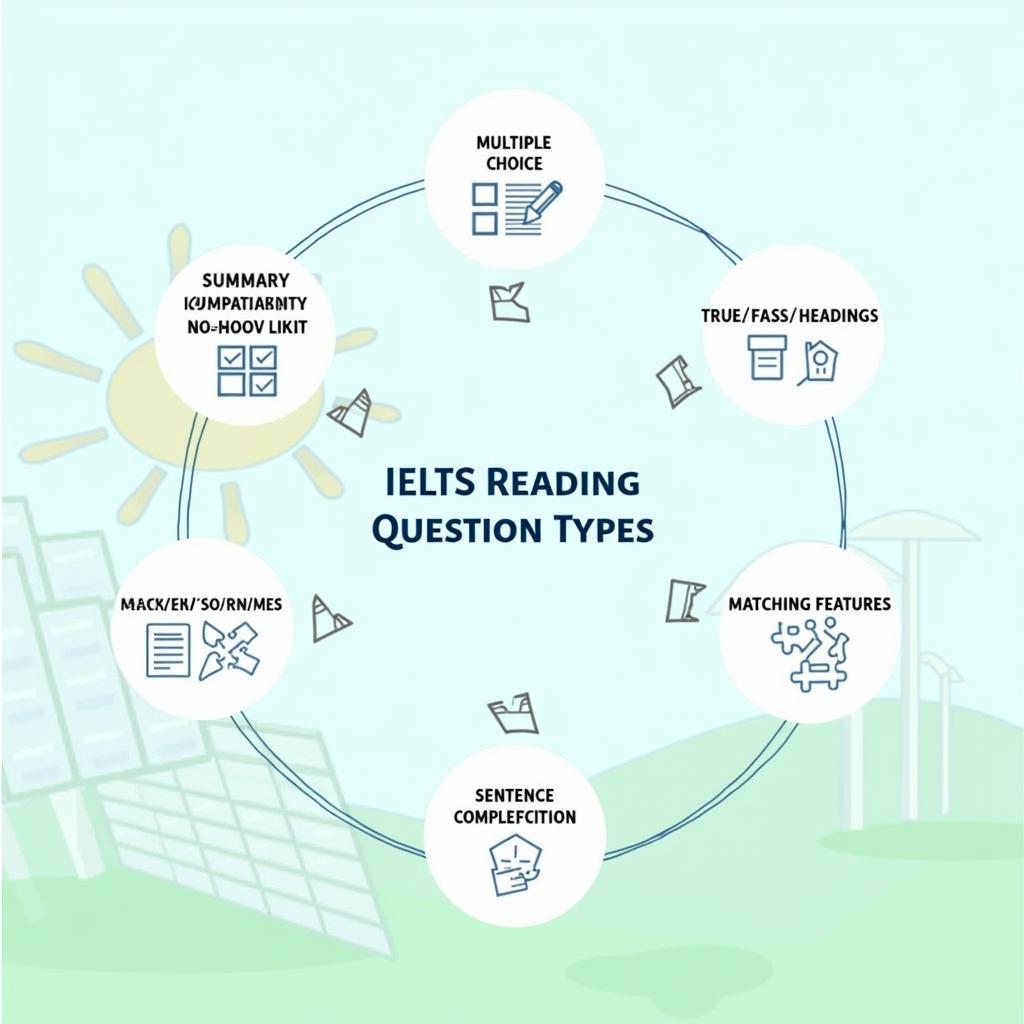
Trí tuệ nhân tạo (AI) đang tạo ra cuộc cách mạng trong lĩnh vực chăm sóc sức khỏe toàn cầu, từ chẩn đoán bệnh chính xác hơn đến phát triển thuốc mới nhanh chóng. Chủ đề “What Are The Impacts Of Artificial Intelligence On Healthcare?” xuất hiện ngày càng thường xuyên trong các đề thi IELTS Reading gần đây, phản ánh tầm quan trọng của công nghệ này trong đời sống hiện đại.
Bài viết này cung cấp một bộ đề thi IELTS Reading hoàn chỉnh với 3 passages tăng dần độ khó từ band 5.0 đến 9.0. Bạn sẽ được luyện tập với đầy đủ 40 câu hỏi theo đúng format thi thật, bao gồm nhiều dạng câu hỏi khác nhau như Multiple Choice, True/False/Not Given, Matching Headings, và Summary Completion. Mỗi câu hỏi đều có đáp án chi tiết kèm giải thích vị trí trong bài và cách paraphrase, giúp bạn hiểu rõ phương pháp làm bài hiệu quả. Ngoài ra, bộ từ vựng chuyên ngành y tế và công nghệ được tổng hợp kỹ lưỡng sẽ giúp bạn nâng cao vốn từ vựng học thuật. Đề thi này phù hợp cho học viên từ band 5.0 trở lên, đặc biệt hữu ích cho những ai đang nhắm đến band điểm 7.0-8.0.
Hướng Dẫn Làm Bài IELTS Reading
Tổng Quan Về IELTS Reading Test
IELTS Reading Test kéo dài 60 phút với 3 passages và tổng cộng 40 câu hỏi. Mỗi passage có độ khó tăng dần, yêu cầu kỹ năng đọc hiểu từ cơ bản đến nâng cao. Để đạt hiệu quả tối ưu, bạn nên phân bổ thời gian như sau:
- Passage 1: 15-17 phút (độ khó dễ, band 5.0-6.5)
- Passage 2: 18-20 phút (độ khó trung bình, band 6.0-7.5)
- Passage 3: 23-25 phút (độ khó cao, band 7.0-9.0)
Lưu ý dành 2-3 phút cuối để kiểm tra và chuyển đáp án vào answer sheet. Không có thời gian thêm để chuyển đáp án sau khi hết giờ.
Các Dạng Câu Hỏi Trong Đề Này
Đề thi mẫu này bao gồm đầy đủ các dạng câu hỏi phổ biến nhất trong IELTS Reading:
- Multiple Choice: Chọn đáp án đúng từ 3-4 phương án
- True/False/Not Given: Xác định thông tin đúng, sai hoặc không được đề cập
- Yes/No/Not Given: Xác định ý kiến của tác giả
- Matching Headings: Nối tiêu đề với đoạn văn phù hợp
- Summary Completion: Hoàn thành đoạn tóm tắt
- Sentence Completion: Hoàn thành câu với thông tin từ bài đọc
- Short-answer Questions: Trả lời câu hỏi ngắn
IELTS Reading Practice Test
PASSAGE 1 – The Dawn of AI in Medical Diagnostics
Độ khó: Easy (Band 5.0-6.5)
Thời gian đề xuất: 15-17 phút
The integration of artificial intelligence into healthcare has begun to transform the way medical professionals diagnose and treat diseases. In recent years, AI systems have shown remarkable accuracy in identifying medical conditions from images, sometimes surpassing the performance of experienced doctors. This technological revolution is not about replacing human doctors but rather enhancing their capabilities and helping them make more informed decisions.
One of the most successful applications of AI in healthcare is in medical imaging. Computer algorithms can now analyze X-rays, CT scans, and MRI images to detect abnormalities such as tumors, fractures, or signs of disease. For example, AI systems designed to read mammograms can identify breast cancer with an accuracy rate of over 90%, which is comparable to or sometimes better than human radiologists. These systems work by learning from thousands of previous cases, recognizing patterns that might be too subtle for the human eye to detect.
The benefits of AI in diagnostics extend beyond accuracy. Speed is another crucial advantage. While a radiologist might take 15-20 minutes to thoroughly examine a single scan, an AI system can process the same image in seconds. This rapid analysis is particularly valuable in emergency situations where quick diagnosis can save lives. In stroke cases, for instance, every minute counts, and AI can help doctors identify the problem and begin treatment much faster than traditional methods.
Cost reduction is another significant impact of AI in healthcare. By automating routine diagnostic tasks, hospitals can allocate their human resources more efficiently. Radiologists and other specialists can focus on complex cases that require human judgment and expertise, while AI handles the more straightforward analyses. This not only improves productivity but also helps address the shortage of medical professionals in many parts of the world, particularly in rural and underserved areas.
However, the implementation of AI in healthcare is not without challenges. One major concern is data privacy. AI systems require access to large amounts of patient data to learn and improve, but this raises questions about how to protect sensitive medical information. Healthcare institutions must ensure that patient data is securely stored and used only for legitimate medical purposes. Another challenge is the need for continuous updating and validation of AI systems. Medical knowledge evolves constantly, and AI algorithms must be regularly retrained with new data to maintain their accuracy and relevance.
Trust is another important factor. Many patients and even some doctors are skeptical about relying on machines for medical decisions. Building confidence in AI systems requires transparency about how they work and clear evidence of their reliability. Medical professionals need proper training to understand AI tools and interpret their results correctly. The goal is to create a collaborative relationship between human doctors and AI systems, where each complements the other’s strengths.
Despite these challenges, the future of AI in medical diagnostics looks promising. Researchers are developing increasingly sophisticated systems that can detect diseases earlier and more accurately. Some AI tools can now predict the likelihood of developing certain conditions years before symptoms appear, allowing for preventive measures. As technology continues to advance, AI is expected to become an integral part of healthcare, improving outcomes for patients worldwide while making medical services more accessible and affordable.
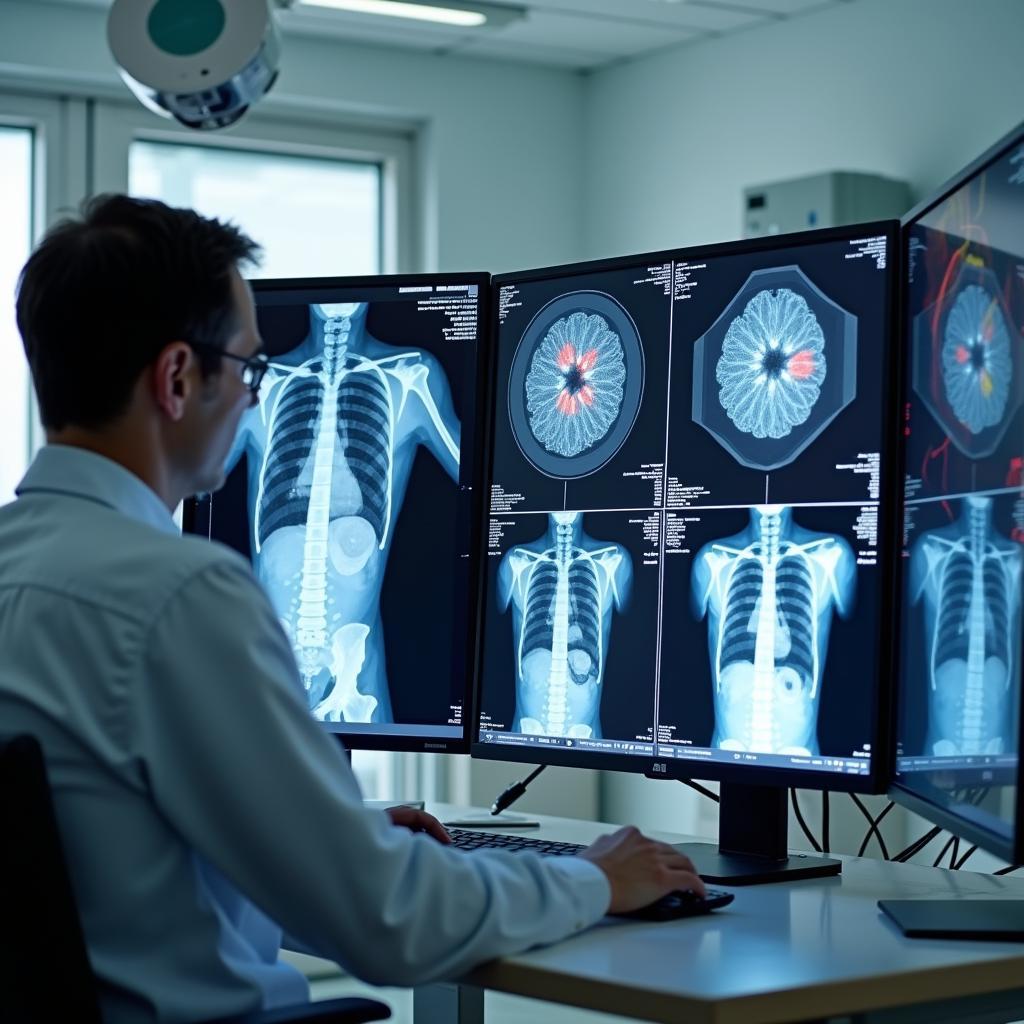 Minh họa hệ thống AI phân tích hình ảnh y tế trong bài thi IELTS Reading về tác động trí tuệ nhân tạo
Questions 1-13
Questions 1-5: Multiple Choice
Choose the correct letter, A, B, C, or D.
-
According to the passage, AI in healthcare is designed to:
- A) Replace human doctors completely
- B) Work independently from medical staff
- C) Improve doctors’ decision-making abilities
- D) Reduce the number of doctors needed
-
AI systems can identify breast cancer with an accuracy rate of:
- A) Less than 80%
- B) Exactly 85%
- C) More than 90%
- D) 100%
-
The main advantage of AI in emergency situations is:
- A) Lower cost
- B) Processing speed
- C) Better accuracy
- D) Easier operation
-
AI can help address the shortage of medical professionals by:
- A) Training new doctors faster
- B) Replacing all diagnostic work
- C) Handling routine analyses
- D) Increasing doctor salaries
-
One challenge mentioned regarding AI implementation is:
- A) High equipment costs
- B) Lack of computer programmers
- C) Patient data privacy
- D) Insufficient hospital space
Questions 6-9: True/False/Not Given
Do the following statements agree with the information in the passage?
Write:
- TRUE if the statement agrees with the information
- FALSE if the statement contradicts the information
- NOT GIVEN if there is no information on this
- AI systems learn to detect diseases by studying thousands of previous medical cases.
- All radiologists are enthusiastic about using AI in their work.
- AI algorithms need regular updates to remain effective.
- The cost of AI diagnostic systems is decreasing every year.
Questions 10-13: Sentence Completion
Complete the sentences below. Choose NO MORE THAN TWO WORDS from the passage for each answer.
- AI can process a medical scan in __, much faster than human radiologists.
- The implementation of AI allows hospitals to use their __ more efficiently.
- Building trust in AI requires __ about how the systems operate.
- Some AI tools can predict disease development years before __ appear.
PASSAGE 2 – Machine Learning Applications in Drug Development
Độ khó: Medium (Band 6.0-7.5)
Thời gian đề xuất: 18-20 phút
The pharmaceutical industry has traditionally been characterized by lengthy and expensive drug development processes, often taking more than a decade and costing billions of dollars to bring a single new medication to market. However, the advent of artificial intelligence and machine learning is revolutionizing this paradigm, offering the potential to dramatically accelerate drug discovery while simultaneously reducing costs and improving success rates. This transformation represents one of the most profound impacts of AI on healthcare, with implications that extend far beyond the laboratory.
Machine learning algorithms are proving particularly adept at identifying potential drug candidates from vast chemical libraries. Traditional drug discovery methods required scientists to manually test thousands of compounds to find those that might interact with a specific disease target. This process was not only time-consuming but also inherently limited by human capacity to process and analyze complex data. Modern AI systems, by contrast, can simultaneously evaluate millions of molecular structures, predicting their properties, potential efficacy, and safety profiles before any physical testing begins. This computational approach has already led to the identification of promising drug candidates for conditions ranging from cancer to neurodegenerative diseases.
One of the most compelling applications of AI in this field is drug repurposing – finding new uses for existing medications. Pharmaceutical companies have long recognized that approved drugs might be effective against conditions other than those they were originally designed to treat. However, systematically exploring these possibilities was practically impossible using traditional methods. AI systems can analyze the molecular mechanisms of existing drugs and compare them with the biological pathways involved in various diseases, identifying potential matches that human researchers might never consider. During the COVID-19 pandemic, this approach proved invaluable, with AI helping to rapidly identify several existing medications that showed promise in treating the virus.
The application of AI extends to predicting and mitigating potential side effects of new drugs, an area where pharmaceutical development has historically faced substantial challenges. Adverse drug reactions are a leading cause of clinical trial failures and post-market drug withdrawals, representing both a significant financial burden and a serious public health concern. Machine learning models can analyze the chemical structure of a drug candidate and predict how it might interact with various biological systems in the human body, flagging potential safety concerns early in the development process. This predictive capability not only saves time and money but also helps protect patients from exposure to potentially harmful medications.
Personalized medicine represents another frontier where AI is making substantial contributions to drug development. The recognition that individuals respond differently to medications based on their genetic makeup, lifestyle factors, and other variables has led to increasing interest in tailored treatments. AI algorithms can analyze genetic data from large patient populations to identify biomarkers that predict how different people will respond to specific drugs. This information enables the development of more targeted therapies and helps doctors select the most appropriate treatment for each patient, maximizing efficacy while minimizing adverse effects.
Despite these advances, the integration of AI into drug development faces several obstacles. Data quality remains a persistent challenge; machine learning models are only as good as the data they are trained on, and much medical and chemical data is incomplete, inconsistent, or inaccessible due to proprietary restrictions. Additionally, regulatory frameworks have not fully adapted to the use of AI in drug development, creating uncertainty about how AI-derived drugs will be evaluated and approved. There are also legitimate questions about accountability – if an AI system identifies a drug candidate that later proves problematic, determining responsibility can be complex.
Nevertheless, the trajectory is clear: AI is becoming an indispensable tool in pharmaceutical research. Major drug companies and research institutions are investing heavily in AI capabilities, and collaborations between technology companies and pharmaceutical firms are increasingly common. As algorithms become more sophisticated and datasets more comprehensive, the impact of AI on drug development is likely to intensify, potentially ushering in an era where new, effective treatments can be developed more quickly and affordably than ever before.
Questions 14-26
Questions 14-18: Yes/No/Not Given
Do the following statements agree with the views of the writer in the passage?
Write:
- YES if the statement agrees with the views of the writer
- NO if the statement contradicts the views of the writer
- NOT GIVEN if it is impossible to say what the writer thinks about this
- The traditional drug development process is both time-consuming and costly.
- AI systems are completely replacing human scientists in drug discovery.
- Drug repurposing using AI was particularly useful during the COVID-19 pandemic.
- All pharmaceutical companies have successfully implemented AI in their research.
- Regulatory frameworks are well-prepared for AI-derived drugs.
Questions 19-22: Matching Information
Which paragraph contains the following information? Write the correct letter, A-G.
Note: You may use any letter more than once.
- Information about how AI can identify new uses for existing medications
- Details about the financial and time costs of traditional drug development
- An explanation of how AI helps predict drug safety issues
- A discussion of obstacles facing AI integration in pharmaceutical research
Questions 23-26: Summary Completion
Complete the summary below. Choose NO MORE THAN TWO WORDS from the passage for each answer.
AI is transforming drug development by analyzing millions of (23) __ and predicting their properties before any physical testing. One important application is finding new uses for (24) __, which proved valuable during the pandemic. AI can also predict potential (25) __ of new drugs, helping to avoid clinical trial failures. In personalized medicine, AI analyzes (26) __ to identify biomarkers that predict patient responses to specific medications.
PASSAGE 3 – The Ethical and Societal Implications of AI in Healthcare Systems
Độ khó: Hard (Band 7.0-9.0)
Thời gian đề xuất: 23-25 phút
The proliferation of artificial intelligence throughout healthcare systems worldwide has precipitated a complex constellation of ethical, social, and philosophical questions that transcend mere technical considerations. While the tangible benefits of AI in clinical settings are increasingly well-documented, ranging from enhanced diagnostic accuracy to expedited drug discovery, the broader ramifications for healthcare equity, professional identity, and the fundamental nature of the patient-physician relationship remain subjects of vigorous debate among ethicists, policymakers, and healthcare stakeholders. This discourse is rendered particularly urgent by the accelerating pace of AI implementation, which often outstrips the development of appropriate regulatory frameworks and ethical guidelines.
Algorithmic bias represents perhaps the most pervasive and insidious challenge confronting AI deployment in healthcare. Machine learning systems are trained on historical data, and when that data reflects existing societal inequalities – whether in terms of race, gender, socioeconomic status, or geographic location – the resulting algorithms may perpetuate and even amplify these disparities. Studies have revealed that some widely-used diagnostic algorithms perform significantly less accurately for minority populations, a phenomenon attributed to underrepresentation of these groups in training datasets. The consequences can be profound: misdiagnoses, delayed treatment, and suboptimal care recommendations that systematically disadvantage already marginalized communities. Addressing this issue requires not merely technical solutions but a fundamental reconceptualization of how medical data is collected, curated, and utilized, ensuring representative and diverse datasets that reflect the full spectrum of human variation.
The epistemological nature of AI decision-making poses additional complications for medical practice. Many advanced AI systems, particularly those employing deep learning techniques, function as “black boxes” – their internal reasoning processes are opaque even to their creators. When an AI system recommends a particular diagnosis or treatment, it may be impossible to extract a clear explanation of the reasoning that led to that conclusion. This lack of interpretability conflicts with established medical norms of evidence-based practice and informed consent. Physicians are accustomed to explaining their decisions to patients based on observable symptoms, test results, and established medical principles. How does one explain a diagnosis that emerges from a computational process that cannot be fully articulated or understood? This epistemological challenge has spurred research into “explainable AI” – systems designed to provide transparent, comprehensible justifications for their outputs – though this remains an active area of investigation with no definitive solutions.
The integration of AI into healthcare also raises questions about professional autonomy and the evolving role of medical practitioners. As AI systems demonstrate capabilities that rival or exceed those of human experts in specific domains, there is a legitimate concern about the potential erosion of clinical skills and professional judgment. If radiologists routinely defer to AI interpretations of medical images, will they maintain the expertise necessary to critically evaluate those AI assessments? The phenomenon of “automation bias” – the tendency to favor suggestions from automated systems even when they may be incorrect – has been documented across various fields and represents a genuine risk in clinical settings. Conversely, excessive skepticism toward AI recommendations might negate their potential benefits. Striking an appropriate balance requires cultivating what might be termed “AI literacy” among healthcare professionals – an understanding not only of how to use AI tools but also of their limitations, assumptions, and appropriate applications.
The economic and structural implications of AI in healthcare extend to questions of access and equity at a systemic level. While proponents argue that AI can democratize healthcare by making high-quality diagnostics available in resource-poor settings, there is a countervailing risk that AI technologies will primarily benefit affluent populations and well-funded healthcare systems capable of affording the necessary infrastructure and expertise. The concentration of AI development in wealthy nations and corporations may exacerbate global health inequalities, creating a “digital divide” in healthcare that mirrors existing economic disparities. Furthermore, the commercialization of medical AI raises questions about intellectual property, data ownership, and the appropriate balance between innovation incentives and public access to life-saving technologies.
Legal and regulatory challenges compound these issues. Existing medical liability frameworks were developed in an era when medical decisions were made exclusively by human practitioners. The introduction of AI as a decision-making agent complicates questions of responsibility and accountability. If an AI system contributes to a misdiagnosis or harmful treatment decision, who bears responsibility – the algorithm’s developer, the healthcare institution that deployed it, or the physician who relied on its recommendations? Different jurisdictions are grappling with these questions, and the lack of international consensus impedes the development of coherent regulatory approaches. The dynamic nature of machine learning systems, which continuously evolve as they process new data, further complicates traditional regulatory paradigms that assume static, well-defined products.
Privacy considerations acquire particular salience in the context of AI healthcare applications. The development of effective AI systems necessitates access to vast quantities of patient data, creating tension between the collective benefit of improved medical knowledge and individual rights to privacy and confidential medical information. While anonymization techniques exist, research has demonstrated that supposedly anonymous medical data can often be “re-identified” through sophisticated analysis, especially when combined with other publicly available information. The prospect of insurance companies, employers, or other entities gaining access to AI-derived health predictions – including predisposition to future diseases – raises dystopian scenarios of discrimination and social stratification based on algorithmic health assessments.
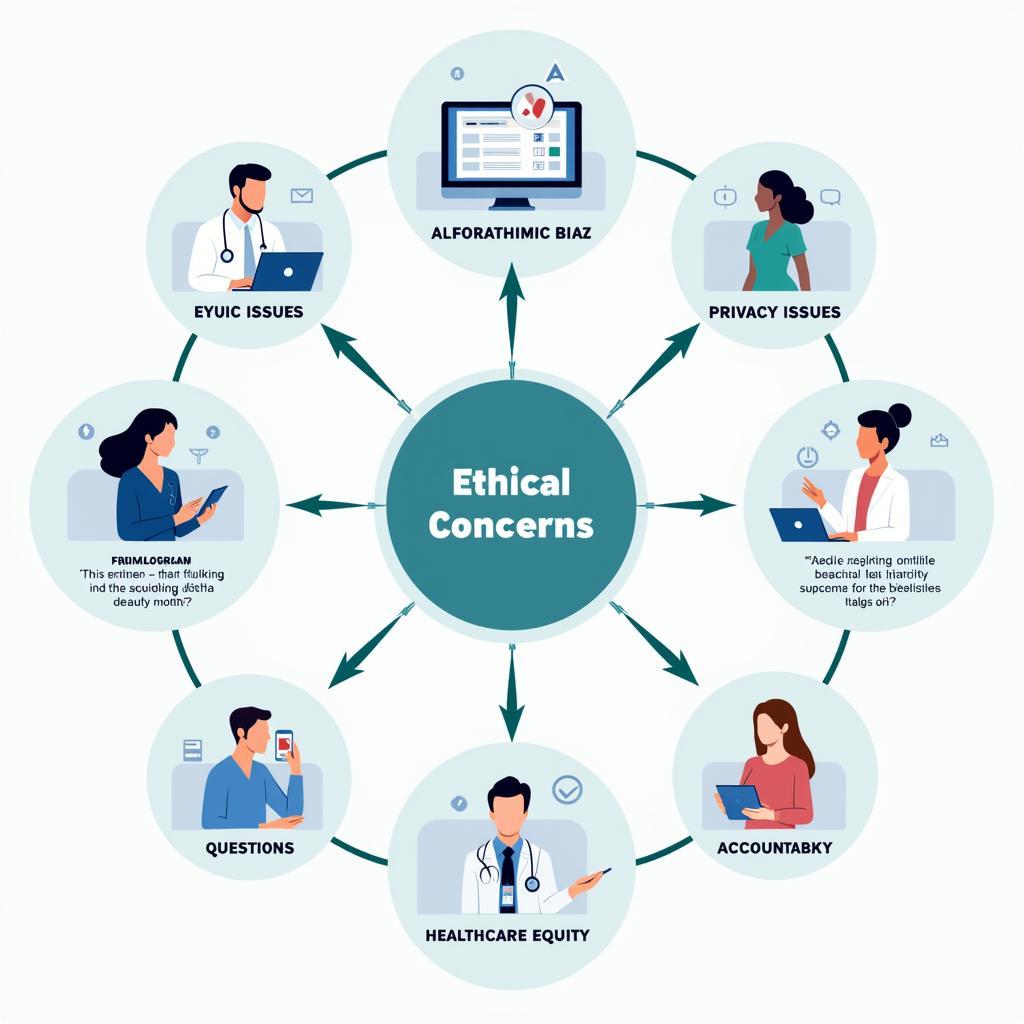 Biểu đồ minh họa các vấn đề đạo đức của AI trong y tế cho đề thi IELTS Reading
Despite these formidable challenges, the trajectory toward greater AI integration in healthcare appears inexorable, driven by both technological capability and genuine potential to improve patient outcomes. The imperative, therefore, is not to resist this transformation but to shape it in ways that maximize benefits while mitigating risks and ensuring that the deployment of AI in healthcare aligns with fundamental values of equity, dignity, and beneficence. This will require sustained, multidisciplinary collaboration among technologists, healthcare professionals, ethicists, policymakers, and patient advocates, along with robust public engagement to ensure that the evolution of AI in healthcare reflects broad societal values rather than narrow technical or commercial interests.
Questions 27-40
Questions 27-31: Multiple Choice
Choose the correct letter, A, B, C, or D.
-
According to the passage, algorithmic bias in healthcare AI primarily results from:
- A) Intentional discrimination by developers
- B) Insufficient computing power
- C) Unequal representation in training data
- D) Resistance from medical professionals
-
The term “black box” refers to:
- A) The physical appearance of AI computers
- B) The inability to understand AI’s reasoning process
- C) Encrypted patient data storage
- D) Experimental AI technology
-
“Automation bias” is described as:
- A) Excessive trust in automated system suggestions
- B) Discrimination against certain patient groups
- C) Preference for traditional medical methods
- D) Errors made by AI systems
-
The passage suggests that AI in healthcare might increase inequality by:
- A) Replacing doctors in poor countries
- B) Being too expensive for public hospitals
- C) Primarily benefiting wealthy populations
- D) Requiring patients to have computer skills
-
Legal challenges with medical AI primarily concern:
- A) Patent protection
- B) International trade agreements
- C) Hospital licensing requirements
- D) Responsibility for AI errors
Questions 32-36: Matching Sentence Endings
Complete each sentence with the correct ending, A-H, below.
- Training datasets that reflect existing societal inequalities may
- The lack of interpretability in deep learning systems conflicts with
- If radiologists routinely defer to AI interpretations, they might
- The concentration of AI development in wealthy nations could
- Anonymized medical data can sometimes be
A. lose their critical evaluation skills.
B. improve diagnostic accuracy for all patients.
C. re-identified through sophisticated analysis.
D. perpetuate healthcare disparities.
E. replace human medical practitioners entirely.
F. established principles of informed consent.
G. worsen global health inequalities.
H. reduce the cost of medical education.
Questions 37-40: Short-answer Questions
Answer the questions below. Choose NO MORE THAN THREE WORDS from the passage for each answer.
- What type of research is being conducted to address the problem of AI systems lacking transparency?
- What term describes the understanding healthcare professionals need to have about AI tools and their limitations?
- What kind of collaboration is needed to ensure AI deployment aligns with societal values?
- According to the passage, what appears inevitable despite the challenges discussed?
Answer Keys – Đáp Án
PASSAGE 1: Questions 1-13
- C
- C
- B
- C
- C
- TRUE
- NOT GIVEN
- TRUE
- NOT GIVEN
- seconds
- human resources
- transparency
- symptoms
PASSAGE 2: Questions 14-26
- YES
- NO
- YES
- NOT GIVEN
- NO
- Paragraph 3
- Paragraph 1
- Paragraph 4
- Paragraph 6
- molecular structures
- existing medications / existing drugs
- side effects
- genetic data
PASSAGE 3: Questions 27-40
- C
- B
- A
- C
- D
- D
- F
- A
- G
- C
- explainable AI
- AI literacy
- multidisciplinary collaboration
- greater AI integration
Giải Thích Đáp Án Chi Tiết
Passage 1 – Giải Thích
Câu 1: C
- Dạng câu hỏi: Multiple Choice
- Từ khóa: AI in healthcare, designed to
- Vị trí trong bài: Đoạn 1, dòng 3-4
- Giải thích: Bài đọc nói rõ “This technological revolution is not about replacing human doctors but rather enhancing their capabilities and helping them make more informed decisions.” Đây là paraphrase của đáp án C – improve doctors’ decision-making abilities. Các đáp án khác sai vì: A và B mâu thuẫn với câu này, D không được đề cập.
Câu 2: C
- Dạng câu hỏi: Multiple Choice
- Từ khóa: breast cancer, accuracy rate
- Vị trí trong bài: Đoạn 2, dòng 4-5
- Giải thích: Câu trong bài: “AI systems designed to read mammograms can identify breast cancer with an accuracy rate of over 90%”. “Over 90%” = “More than 90%” là đáp án C.
Câu 3: B
- Dạng câu hỏi: Multiple Choice
- Từ khóa: main advantage, emergency situations
- Vị trí trong bài: Đoạn 3, dòng 3-5
- Giải thích: “This rapid analysis is particularly valuable in emergency situations where quick diagnosis can save lives.” Từ “rapid analysis” và “quick” nhấn mạnh tốc độ, chọn B – Processing speed.
Câu 4: C
- Dạng câu hỏi: Multiple Choice
- Từ khóa: shortage of medical professionals
- Vị trí trong bài: Đoạn 4, dòng 2-4
- Giải thích: “By automating routine diagnostic tasks… Radiologists and other specialists can focus on complex cases… while AI handles the more straightforward analyses.” Đây là paraphrase của C – Handling routine analyses.
Câu 5: C
- Dạng câu hỏi: Multiple Choice
- Từ khóa: challenge, AI implementation
- Vị trí trong bài: Đoạn 5, dòng 2-3
- Giải thích: “One major concern is data privacy” được nêu rõ là thách thức lớn.
Câu 6: TRUE
- Dạng câu hỏi: True/False/Not Given
- Từ khóa: AI systems, learn, previous medical cases
- Vị trí trong bài: Đoạn 2, dòng 6-7
- Giải thích: “These systems work by learning from thousands of previous cases” khớp hoàn toàn với câu hỏi.
Câu 7: NOT GIVEN
- Dạng câu hỏi: True/False/Not Given
- Từ khóa: all radiologists, enthusiastic
- Giải thích: Bài chỉ nói “some doctors are skeptical” nhưng không đề cập đến thái độ của tất cả bác sĩ X-quang.
Câu 8: TRUE
- Dạng câu hỏi: True/False/Not Given
- Từ khóa: AI algorithms, regular updates
- Vị trí trong bài: Đoạn 5, dòng 6-7
- Giải thích: “AI algorithms must be regularly retrained with new data to maintain their accuracy” đồng nghĩa với câu hỏi.
Câu 9: NOT GIVEN
- Dạng câu hỏi: True/False/Not Given
- Từ khóa: cost, decreasing
- Giải thích: Bài không đề cập đến xu hướng thay đổi giá của hệ thống AI.
Câu 10: seconds
- Dạng câu hỏi: Sentence Completion
- Từ khóa: process, medical scan
- Vị trí trong bài: Đoạn 3, dòng 1-2
- Giải thích: “an AI system can process the same image in seconds”
Câu 11: human resources
- Dạng câu hỏi: Sentence Completion
- Từ khóa: hospitals, use, efficiently
- Vị trí trong bài: Đoạn 4, dòng 2
- Giải thích: “hospitals can allocate their human resources more efficiently”
Câu 12: transparency
- Dạng câu hỏi: Sentence Completion
- Từ khóa: building trust, requires
- Vị trí trong bài: Đoạn 6, dòng 3
- Giải thích: “Building confidence in AI systems requires transparency about how they work”
Câu 13: symptoms
- Dạng câu hỏi: Sentence Completion
- Từ khóa: predict, years before
- Vị trí trong bài: Đoạn 7, dòng 2-3
- Giải thích: “predict the likelihood of developing certain conditions years before symptoms appear”
Passage 2 – Giải Thích
Câu 14: YES
- Dạng câu hỏi: Yes/No/Not Given
- Từ khóa: traditional drug development, time-consuming, costly
- Vị trí trong bài: Đoạn 1, dòng 1-2
- Giải thích: “often taking more than a decade and costing billions of dollars” thể hiện rõ quan điểm của tác giả về chi phí và thời gian.
Câu 15: NO
- Dạng câu hỏi: Yes/No/Not Given
- Từ khóa: AI systems, completely replacing, human scientists
- Vị trí trong bài: Đoạn 2 và 7
- Giải thích: Bài viết nhấn mạnh AI là công cụ hỗ trợ, không thay thế hoàn toàn con người. Đoạn 7: “indispensable tool” nhưng vẫn cần sự hợp tác.
Câu 16: YES
- Dạng câu hỏi: Yes/No/Not Given
- Từ khóa: drug repurposing, AI, COVID-19
- Vị trí trong bài: Đoạn 3, dòng 7-9
- Giải thích: “During the COVID-19 pandemic, this approach proved invaluable” thể hiện quan điểm tích cực của tác giả.
Câu 17: NOT GIVEN
- Dạng câu hỏi: Yes/No/Not Given
- Từ khóa: all pharmaceutical companies, successfully implemented
- Giải thích: Bài chỉ nói các công ty lớn đang đầu tư, không đề cập đến việc tất cả đều thành công.
Câu 18: NO
- Dạng câu hỏi: Yes/No/Not Given
- Từ khóa: regulatory frameworks, well-prepared
- Vị trí trong bài: Đoạn 6, dòng 3-4
- Giải thích: “regulatory frameworks have not fully adapted to the use of AI in drug development, creating uncertainty” cho thấy tác giả nghĩ chúng chưa sẵn sàng.
Câu 19: Paragraph 3
- Dạng câu hỏi: Matching Information
- Từ khóa: new uses, existing medications
- Giải thích: Đoạn 3 nói về drug repurposing – tìm công dụng mới cho thuốc có sẵn.
Câu 20: Paragraph 1
- Dạng câu hỏi: Matching Information
- Từ khóa: financial, time costs, traditional drug development
- Giải thích: Đoạn 1 mở đầu bằng việc mô tả chi phí và thời gian phát triển thuốc truyền thống.
Câu 21: Paragraph 4
- Dạng câu hỏi: Matching Information
- Từ khóa: predict drug safety issues
- Giải thích: Đoạn 4 tập trung vào việc AI dự đoán và giảm thiểu tác dụng phụ.
Câu 22: Paragraph 6
- Dạng câu hỏi: Matching Information
- Từ khóa: obstacles, AI integration
- Giải thích: Đoạn 6 liệt kê các thách thức như chất lượng dữ liệu, quy định, và trách nhiệm.
Câu 23: molecular structures
- Dạng câu hỏi: Summary Completion
- Từ khóa: analyzing millions
- Vị trí trong bài: Đoạn 2, dòng 3-4
- Giải thích: “simultaneously evaluate millions of molecular structures”
Câu 24: existing medications / existing drugs
- Dạng câu hỏi: Summary Completion
- Từ khóa: finding new uses
- Vị trí trong bài: Đoạn 3, dòng 1-2
- Giải thích: “drug repurposing – finding new uses for existing medications”
Câu 25: side effects
- Dạng câu hỏi: Summary Completion
- Từ khóa: predict potential
- Vị trí trong bài: Đoạn 4, dòng 1-2
- Giải thích: “predicting and mitigating potential side effects”
Câu 26: genetic data
- Dạng câu hỏi: Summary Completion
- Từ khóa: analyzes, identify biomarkers
- Vị trí trong bài: Đoạn 5, dòng 4-5
- Giải thích: “AI algorithms can analyze genetic data from large patient populations to identify biomarkers”
Passage 3 – Giải Thích
Câu 27: C
- Dạng câu hỏi: Multiple Choice
- Từ khóa: algorithmic bias, primarily results from
- Vị trí trong bài: Đoạn 2, dòng 2-4
- Giải thích: “when that data reflects existing societal inequalities… the resulting algorithms may perpetuate and even amplify these disparities” và “attributed to underrepresentation of these groups in training datasets” chỉ rõ nguyên nhân là sự không đồng đều trong dữ liệu huấn luyện.
Câu 28: B
- Dạng câu hỏi: Multiple Choice
- Từ khóa: black box, refers to
- Vị trí trong bài: Đoạn 3, dòng 2-3
- Giải thích: “‘black boxes’ – their internal reasoning processes are opaque even to their creators” giải thích rõ đây là việc không thể hiểu được quá trình suy luận của AI.
Câu 29: A
- Dạng câu hỏi: Multiple Choice
- Từ khóa: automation bias, described as
- Vị trí trong bài: Đoạn 4, dòng 6-7
- Giải thích: “the tendency to favor suggestions from automated systems even when they may be incorrect” là định nghĩa chính xác của automation bias.
Câu 30: C
- Dạng câu hỏi: Multiple Choice
- Từ khóa: AI, increase inequality
- Vị trí trong bài: Đoạn 5, dòng 2-4
- Giải thích: “there is a countervailing risk that AI technologies will primarily benefit affluent populations and well-funded healthcare systems”
Câu 31: D
- Dạng câu hỏi: Multiple Choice
- Từ khóa: legal challenges, primarily concern
- Vị trí trong bài: Đoạn 6, dòng 4-6
- Giải thích: “If an AI system contributes to a misdiagnosis or harmful treatment decision, who bears responsibility” cho thấy vấn đề chính là trách nhiệm khi có lỗi.
Câu 32: D
- Dạng câu hỏi: Matching Sentence Endings
- Vị trí trong bài: Đoạn 2, dòng 2-4
- Giải thích: “the resulting algorithms may perpetuate and even amplify these disparities” khớp với ending D.
Câu 33: F
- Dạng câu hỏi: Matching Sentence Endings
- Vị trí trong bài: Đoạn 3, dòng 4-5
- Giải thích: “This lack of interpretability conflicts with established medical norms of evidence-based practice and informed consent”
Câu 34: A
- Dạng câu hỏi: Matching Sentence Endings
- Vị trí trong bài: Đoạn 4, dòng 3-5
- Giải thích: “If radiologists routinely defer to AI interpretations… will they maintain the expertise necessary to critically evaluate” nghĩa là mất kỹ năng đánh giá.
Câu 35: G
- Dạng câu hỏi: Matching Sentence Endings
- Vị trí trong bài: Đoạn 5, dòng 4-6
- Giải thích: “The concentration of AI development in wealthy nations and corporations may exacerbate global health inequalities”
Câu 36: C
- Dạng câu hỏi: Matching Sentence Endings
- Vị trí trong bài: Đoạn 7, dòng 4-5
- Giải thích: “supposedly anonymous medical data can often be ‘re-identified’ through sophisticated analysis”
Câu 37: explainable AI
- Dạng câu hỏi: Short-answer Questions
- Từ khóa: research, address, transparency
- Vị trí trong bài: Đoạn 3, dòng 8-9
- Giải thích: “This epistemological challenge has spurred research into ‘explainable AI'”
Câu 38: AI literacy
- Dạng câu hỏi: Short-answer Questions
- Từ khóa: understanding, healthcare professionals, limitations
- Vị trí trong bài: Đoạn 4, dòng 9-11
- Giải thích: “cultivating what might be termed ‘AI literacy’ among healthcare professionals – an understanding not only of how to use AI tools but also of their limitations”
Câu 39: multidisciplinary collaboration
- Dạng câu hỏi: Short-answer Questions
- Từ khóa: collaboration, ensure, societal values
- Vị trí trong bài: Đoạn 8, dòng 3-4
- Giải thích: “This will require sustained, multidisciplinary collaboration among technologists, healthcare professionals…”
Câu 40: greater AI integration
- Dạng câu hỏi: Short-answer Questions
- Từ khóa: appears inevitable, despite challenges
- Vị trí trong bài: Đoạn 8, dòng 1
- Giải thích: “the trajectory toward greater AI integration in healthcare appears inexorable”
Từ Vựng Quan Trọng Theo Passage
Passage 1 – Essential Vocabulary
| Từ vựng | Loại từ | Phiên âm | Nghĩa tiếng Việt | Ví dụ từ bài | Collocation |
|---|---|---|---|---|---|
| artificial intelligence | n | /ˌɑːtɪˈfɪʃəl ɪnˈtelɪdʒəns/ | trí tuệ nhân tạo | The integration of artificial intelligence into healthcare | artificial intelligence systems, artificial intelligence technology |
| transform | v | /trænsˈfɔːm/ | chuyển đổi, biến đổi | has begun to transform the way medical professionals diagnose | transform the industry, completely transform |
| remarkable | adj | /rɪˈmɑːkəbl/ | đáng chú ý, xuất sắc | AI systems have shown remarkable accuracy | remarkable achievement, remarkable progress |
| surpass | v | /səˈpɑːs/ | vượt qua | sometimes surpassing the performance of experienced doctors | surpass expectations, far surpass |
| enhance | v | /ɪnˈhɑːns/ | nâng cao, cải thiện | enhancing their capabilities | enhance productivity, significantly enhance |
| abnormality | n | /ˌæbnɔːˈmæləti/ | bất thường | detect abnormalities such as tumors | detect abnormalities, identify abnormalities |
| comparable to | adj phrase | /ˈkɒmpərəbl tuː/ | có thể so sánh với | comparable to or sometimes better than | comparable to traditional methods |
| subtle | adj | /ˈsʌtl/ | tinh tế, khó nhận ra | patterns that might be too subtle | subtle differences, subtle changes |
| allocate | v | /ˈæləkeɪt/ | phân bổ | hospitals can allocate their human resources | allocate resources, properly allocate |
| shortage | n | /ˈʃɔːtɪdʒ/ | sự thiếu hụt | address the shortage of medical professionals | severe shortage, shortage of staff |
| skeptical | adj | /ˈskeptɪkl/ | hoài nghi | Many patients are skeptical about relying on machines | remain skeptical, highly skeptical |
| transparency | n | /trænsˈpærənsi/ | tính minh bạch | requires transparency about how they work | ensure transparency, lack of transparency |
| promising | adj | /ˈprɒmɪsɪŋ/ | đầy hứa hẹn | the future looks promising | promising results, most promising |
Passage 2 – Essential Vocabulary
| Từ vựng | Loại từ | Phiên âm | Nghĩa tiếng Việt | Ví dụ từ bài | Collocation |
|---|---|---|---|---|---|
| pharmaceutical | adj | /ˌfɑːməˈsuːtɪkl/ | liên quan đến dược phẩm | The pharmaceutical industry | pharmaceutical companies, pharmaceutical research |
| advent | n | /ˈædvent/ | sự ra đời, sự xuất hiện | the advent of artificial intelligence | the advent of technology, mark the advent |
| revolutionize | v | /ˌrevəˈluːʃənaɪz/ | cách mạng hóa | revolutionizing this paradigm | revolutionize the industry, completely revolutionize |
| accelerate | v | /əkˈseləreɪt/ | đẩy nhanh, tăng tốc | dramatically accelerate drug discovery | accelerate the process, significantly accelerate |
| profound | adj | /prəˈfaʊnd/ | sâu sắc, to lớn | one of the most profound impacts | profound impact, profound effect |
| adept at | adj phrase | /əˈdept æt/ | thành thạo trong | proving particularly adept at identifying | adept at handling, highly adept |
| compound | n | /ˈkɒmpaʊnd/ | hợp chất | test thousands of compounds | chemical compounds, synthetic compounds |
| efficacy | n | /ˈefɪkəsi/ | hiệu quả (của thuốc) | predicting their potential efficacy | demonstrate efficacy, proven efficacy |
| repurpose | v | /riːˈpɜːpəs/ | tái sử dụng cho mục đích khác | drug repurposing | repurpose existing drugs |
| invaluable | adj | /ɪnˈvæljuəbl/ | vô giá, cực kỳ quý | this approach proved invaluable | invaluable experience, prove invaluable |
| adverse | adj | /ˈædvɜːs/ | bất lợi, có hại | Adverse drug reactions | adverse effects, adverse reactions |
| biomarker | n | /ˈbaɪəʊˌmɑːkə/ | dấu ấn sinh học | identify biomarkers | genetic biomarkers, specific biomarkers |
| tailored | adj | /ˈteɪləd/ | được điều chỉnh riêng | tailored treatments | tailored approach, specifically tailored |
| obstacle | n | /ˈɒbstəkl/ | trở ngại | faces several obstacles | major obstacle, overcome obstacles |
| trajectory | n | /trəˈdʒektəri/ | quỹ đạo phát triển | the trajectory is clear | current trajectory, upward trajectory |
Passage 3 – Essential Vocabulary
| Từ vựng | Loại từ | Phiên âm | Nghĩa tiếng Việt | Ví dụ từ bài | Collocation |
|---|---|---|---|---|---|
| proliferation | n | /prəˌlɪfəˈreɪʃn/ | sự gia tăng nhanh chóng | The proliferation of artificial intelligence | rapid proliferation, nuclear proliferation |
| precipitate | v | /prɪˈsɪpɪteɪt/ | gây ra, tạo nên | has precipitated a complex constellation | precipitate a crisis, precipitate change |
| ramification | n | /ˌræmɪfɪˈkeɪʃn/ | hậu quả, tác động | the broader ramifications for healthcare | serious ramifications, legal ramifications |
| discourse | n | /ˈdɪskɔːs/ | diễn ngôn, thảo luận | This discourse is rendered particularly urgent | public discourse, academic discourse |
| pervasive | adj | /pəˈveɪsɪv/ | lan tràn, phổ biến | the most pervasive challenge | pervasive problem, increasingly pervasive |
| insidious | adj | /ɪnˈsɪdiəs/ | ngấm ngầm, lén lút | pervasive and insidious challenge | insidious threat, insidious nature |
| perpetuate | v | /pəˈpetʃueɪt/ | duy trì, làm tồn tại lâu dài | may perpetuate and even amplify | perpetuate stereotypes, perpetuate inequality |
| disparity | n | /dɪˈspærəti/ | sự chênh lệch, bất bình đẳng | amplify these disparities | income disparity, racial disparities |
| marginalized | adj | /ˈmɑːdʒɪnəlaɪzd/ | bị gạt ra lề | systematically disadvantage already marginalized communities | marginalized groups, socially marginalized |
| epistemological | adj | /ɪˌpɪstɪməˈlɒdʒɪkl/ | thuộc nhận thức luận | The epistemological nature | epistemological questions, epistemological framework |
| opaque | adj | /əʊˈpeɪk/ | mờ đục, khó hiểu | their internal reasoning processes are opaque | remain opaque, deliberately opaque |
| interpretability | n | /ɪnˌtɜːprɪtəˈbɪləti/ | khả năng giải thích được | This lack of interpretability | improve interpretability, model interpretability |
| automation bias | n phrase | /ˌɔːtəˈmeɪʃn ˈbaɪəs/ | thiên kiến tự động hóa | The phenomenon of automation bias | suffer from automation bias |
| erosion | n | /ɪˈrəʊʒn/ | sự xói mòn | potential erosion of clinical skills | erosion of trust, gradual erosion |
| exacerbate | v | /ɪɡˈzæsəbeɪt/ | làm trầm trọng thêm | may exacerbate global health inequalities | exacerbate the problem, further exacerbate |
| liability | n | /ˌlaɪəˈbɪləti/ | trách nhiệm pháp lý | medical liability frameworks | legal liability, criminal liability |
| salience | n | /ˈseɪliəns/ | sự nổi bật, tầm quan trọng | Privacy considerations acquire particular salience | gain salience, political salience |
| dystopian | adj | /dɪsˈtəʊpiən/ | thuộc về xã hội đen tối | raises dystopian scenarios | dystopian future, dystopian vision |
Kết Bài
Chủ đề về tác động của trí tuệ nhân tạo đối với ngành y tế không chỉ là một trong những chủ đề nóng trong các đề thi IELTS Reading hiện nay mà còn phản ánh sự thay đổi sâu sắc của xã hội hiện đại. Qua bộ đề thi mẫu này, bạn đã được trải nghiệm đầy đủ ba cấp độ khó từ dễ đến nâng cao, với tổng cộng 40 câu hỏi đa dạng theo đúng format thi thật.
Ba passages trong đề thi đã cung cấp góc nhìn toàn diện về vấn đề: từ ứng dụng AI trong chẩn đoán y tế (Passage 1), vai trò của machine learning trong phát triển thuốc (Passage 2), đến những vấn đề đạo đức và xã hội phức tạp mà công nghệ này đặt ra (Passage 3). Mỗi passage không chỉ giúp bạn luyện tập kỹ năng đọc hiểu mà còn mở rộng kiến thức về một lĩnh vực quan trọng của khoa học công nghệ.
Phần đáp án chi tiết với giải thích cụ thể về vị trí thông tin, cách paraphrase và lý do chọn đáp án sẽ giúp bạn tự đánh giá chính xác năng lực và hiểu rõ phương pháp làm bài hiệu quả. Đặc biệt, bảng từ vựng được tổng hợp kỹ lưỡng với hơn 40 từ vựng quan trọng, kèm phiên âm, nghĩa và collocation, sẽ là tài liệu quý giá giúp bạn nâng cao vốn từ học thuật.
Hãy làm bài một cách nghiêm túc như thi thật, sau đó đối chiếu đáp án và phân tích kỹ những câu sai để rút kinh nghiệm. Nếu bạn muốn hiểu sâu hơn về cách AI đang thay đổi ngành y tế, hãy tham khảo thêm về The role of artificial intelligence in healthcare, nơi bạn sẽ tìm thấy thêm nhiều thông tin bổ ích. Đồng thời, để mở rộng hiểu biết về xu hướng tự động hóa trong các ngành khác, bạn có thể khám phá thêm How does the rise of automation affect the service industry?, giúp bạn có cái nhìn tổng quan về tác động của công nghệ hiện đại.
Chúc bạn ôn tập hiệu quả và đạt được band điểm mong muốn trong kỳ thi IELTS sắp tới!