
Mở Bài
Chủ đề công nghệ và an ninh mạng, đặc biệt là những tiến bộ trong điện toán lượng tử (quantum computing), đang ngày càng trở nên phổ biến trong các kỳ thi IELTS Reading. Với sự phát triển nhanh chóng của khoa học công nghệ trong thập kỷ qua, Cambridge đã liên tục đưa các bài đọc về AI, cybersecurity, và quantum technology vào các đề thi chính thức từ Cambridge IELTS 14 trở đi.
Trong bài viết này, bạn sẽ được trải nghiệm một bộ đề thi IELTS Reading hoàn chỉnh gồm 3 passages với độ khó tăng dần, từ Easy đến Hard, xoay quanh câu hỏi “What Are The Implications Of Quantum Computing On Cybersecurity?” – một chủ đề vừa thời sự vừa mang tính học thuật cao. Bạn sẽ học được:
- Bộ đề thi chuẩn 40 câu hỏi với 3 passages (Easy → Medium → Hard) giống thi thật 100%
- 7-8 dạng câu hỏi đa dạng bao gồm True/False/Not Given, Multiple Choice, Matching, Summary Completion
- Đáp án chi tiết kèm giải thích với vị trí cụ thể trong passage và phân tích cách paraphrase
- Từ vựng chuyên ngành về công nghệ, bảo mật và điện toán lượng tử với phiên âm, ví dụ và collocations
Bộ đề này phù hợp cho học viên từ band 5.0 trở lên, giúp bạn làm quen với văn phong học thuật và rèn luyện kỹ năng đọc hiểu trên chủ đề khoa học công nghệ – một trong những chủ đề xuất hiện thường xuyên nhất trong IELTS Reading.
1. Hướng Dẫn Làm Bài IELTS Reading
Tổng Quan Về IELTS Reading Test
IELTS Reading Test kéo dài 60 phút và bao gồm 3 passages với tổng cộng 40 câu hỏi. Mỗi câu trả lời đúng được tính là 1 điểm, không có điểm âm cho câu trả lời sai.
Phân bổ thời gian khuyến nghị:
- Passage 1: 15-17 phút (độ khó Easy, band 5.0-6.5)
- Passage 2: 18-20 phút (độ khó Medium, band 6.0-7.5)
- Passage 3: 23-25 phút (độ khó Hard, band 7.0-9.0)
Lưu ý dành 2-3 phút cuối để chuyển đáp án vào Answer Sheet cẩn thận, tránh mất điểm vì lỗi chính tả hoặc ghi sai vị trí.
Các Dạng Câu Hỏi Trong Đề Này
Bộ đề thi này bao gồm 7 dạng câu hỏi phổ biến nhất trong IELTS Reading:
- True/False/Not Given – Xác định thông tin đúng, sai hay không được nhắc đến
- Multiple Choice – Chọn đáp án đúng từ 3-4 lựa chọn
- Matching Information – Ghép thông tin với đoạn văn tương ứng
- Sentence Completion – Hoàn thành câu với từ trong bài đọc
- Summary Completion – Điền từ vào đoạn tóm tắt
- Matching Features – Ghép đặc điểm với người/tổ chức/khái niệm
- Short-answer Questions – Trả lời ngắn gọn các câu hỏi
2. IELTS Reading Practice Test
PASSAGE 1 – The Dawn of Quantum Computing
Độ khó: Easy (Band 5.0-6.5)
Thời gian đề xuất: 15-17 phút
Quantum computing, a revolutionary technology that harnesses the principles of quantum mechanics, is poised to transform the digital landscape in ways we are only beginning to understand. Unlike classical computers that process information in binary bits (0s and 1s), quantum computers use quantum bits, or qubits, which can exist in multiple states simultaneously through a phenomenon called superposition. This fundamental difference gives quantum computers an exponential advantage in processing power for certain types of calculations.
The concept of quantum computing was first proposed in the early 1980s by physicist Richard Feynman, who suggested that quantum systems could be used to simulate other quantum systems more efficiently than classical computers. However, it wasn’t until the late 1990s and early 2000s that researchers began building prototype quantum processors that could demonstrate this potential. Today, major technology companies including IBM, Google, and Microsoft are investing billions of dollars into developing commercially viable quantum computers.
One of the most significant implications of quantum computing lies in the field of cybersecurity. Modern encryption systems, which protect everything from online banking transactions to government communications, rely on mathematical problems that are extremely difficult for classical computers to solve. The most widely used encryption method, known as RSA encryption, is based on the difficulty of factoring large prime numbers – a task that would take conventional computers thousands of years to complete for sufficiently large numbers.
However, in 1994, mathematician Peter Shor developed an algorithm that could theoretically allow a quantum computer to factor these large numbers exponentially faster than any classical computer. This discovery sent shockwaves through the cybersecurity community because it meant that a sufficiently powerful quantum computer could potentially break most of the encryption systems currently in use. Security experts refer to this potential future scenario as “Q-Day” – the day when quantum computers become powerful enough to decrypt sensitive information that was previously considered secure.
The threat is not merely theoretical. Intelligence agencies and cybercriminals are already engaging in what security researchers call “harvest now, decrypt later” attacks. In these operations, adversaries collect encrypted data today with the intention of storing it until quantum computers become available to decrypt it in the future. This is particularly concerning for information that needs to remain confidential for decades, such as medical records, state secrets, and intellectual property.
Despite these concerns, quantum computing also offers promising solutions for cybersecurity challenges. Researchers are developing quantum-resistant encryption algorithms, also known as post-quantum cryptography, which are designed to be secure against both classical and quantum computer attacks. The National Institute of Standards and Technology (NIST) in the United States has been leading an international effort since 2016 to standardize these new encryption methods, with the first approved algorithms announced in 2022.
Additionally, quantum technology itself provides new ways to secure communications through quantum key distribution (QKD). This method uses the principles of quantum mechanics to create encryption keys that are theoretically impossible to intercept without detection. If an eavesdropper attempts to observe the quantum states being transmitted, the act of measurement itself alters those states, immediately alerting the legitimate parties to the security breach. Several countries, including China, have already deployed quantum communication networks using QKD technology for government and financial institutions.
The transition to quantum-safe security is not without its challenges. Implementing new encryption standards requires significant time and resources, as organizations must update their software, hardware, and security protocols. Many legacy systems that are still widely used were designed decades ago and cannot easily incorporate new encryption methods. Furthermore, the computational requirements of post-quantum algorithms are generally higher than current encryption systems, which may impact system performance.
Cybersecurity professionals emphasize that the time to act is now. Even though large-scale, cryptographically relevant quantum computers may still be years or even decades away, the transition to quantum-resistant security needs to begin immediately. The process of identifying vulnerable systems, testing new encryption methods, and rolling out updates across entire organizations can take many years to complete.
Educational institutions and governments worldwide are recognizing the urgent need to prepare the next generation of cybersecurity professionals for the quantum era. Universities are introducing specialized courses in quantum computing and post-quantum cryptography, while industry certifications are being updated to include quantum security competencies. The quantum revolution in computing is not just about building more powerful machines; it’s about fundamentally rethinking how we protect information in an increasingly digital world.
Questions 1-13
Questions 1-5: TRUE/FALSE/NOT GIVEN
Write TRUE if the statement agrees with the information, FALSE if the statement contradicts the information, or NOT GIVEN if there is no information on this.
- Qubits can only exist in one state at a time, unlike classical bits.
- Richard Feynman first suggested the concept of quantum computing in the 1980s.
- RSA encryption is based on the mathematical challenge of factoring large prime numbers.
- Peter Shor’s algorithm has already been used to break modern encryption systems.
- Medical records and state secrets are examples of information vulnerable to “harvest now, decrypt later” attacks.
Questions 6-9: MULTIPLE CHOICE
Choose the correct letter, A, B, C, or D.
-
According to the passage, what is “Q-Day”?
- A) The day quantum computers were invented
- B) The day when quantum computers can break current encryption
- C) The day Peter Shor created his algorithm
- D) The day NIST announced new encryption standards
-
What happens when someone tries to intercept quantum key distribution?
- A) The encryption becomes stronger
- B) The quantum states remain unchanged
- C) The interception is immediately detected
- D) The communication continues normally
-
Which organization has been leading efforts to standardize post-quantum cryptography?
- A) IBM
- B) Google
- C) Microsoft
- D) NIST
-
What is a major challenge in transitioning to quantum-safe security?
- A) Quantum computers are too expensive
- B) Legacy systems cannot easily adopt new encryption
- C) There are no quantum-resistant algorithms available
- D) Universities don’t offer relevant courses
Questions 10-13: SENTENCE COMPLETION
Complete the sentences below. Choose NO MORE THAN THREE WORDS from the passage for each answer.
- Quantum computers use __ instead of binary bits to process information.
- China has already implemented __ using quantum key distribution technology.
- Post-quantum cryptography algorithms typically require more __ than current systems.
- The process of updating security systems across organizations can take __ to complete.
PASSAGE 2 – Quantum Threats and Cryptographic Vulnerabilities
Độ khó: Medium (Band 6.0-7.5)
Thời gian đề xuất: 18-20 phút
The emergence of quantum computing represents a paradigm shift in computational capability, one that poses unprecedented challenges to the cryptographic foundations upon which modern digital security rests. To fully comprehend the implications, it is essential to understand not only the vulnerabilities that quantum computers exploit but also the intricate mechanisms through which current encryption systems operate and the sophisticated countermeasures being developed to address these emerging threats.
Contemporary cryptographic systems fall into two broad categories: symmetric-key cryptography and public-key cryptography. Symmetric-key systems, such as the Advanced Encryption Standard (AES), use the same key for both encryption and decryption. While quantum computers do present some threat to these systems through Grover’s algorithm, which provides a quadratic speedup in searching unsorted databases, this threat is considered manageable. Doubling the key length – for instance, moving from AES-128 to AES-256 – effectively mitigates the quantum advantage, as the algorithm would still require an impractical amount of time to break the encryption.
The situation is dramatically different for public-key cryptography, which underpins the security of internet communications, digital signatures, and blockchain technologies. Public-key systems, including RSA, Elliptic Curve Cryptography (ECC), and Diffie-Hellman key exchange, rely on mathematical problems that are computationally difficult for classical computers to solve but are demonstrably vulnerable to quantum algorithms. Shor’s algorithm, for instance, can solve the integer factorization problem and the discrete logarithm problem in polynomial time – an achievement that would render these encryption methods obsolete once sufficiently powerful quantum computers become available.
 Hình ảnh minh họa máy tính lượng tử tấn công vào hệ thống mã hóa truyền thống RSA trong bài thi IELTS Reading về cybersecurity
The quantum threat timeline remains a subject of considerable debate among experts. Conservative estimates suggest that a cryptographically relevant quantum computer – one capable of breaking 2048-bit RSA encryption – may not emerge for another 15 to 30 years. However, more optimistic projections from quantum computing companies suggest this milestone could be achieved within a decade. This uncertainty itself poses a strategic challenge: organizations must balance the immediate costs of transitioning to post-quantum security against the uncertain but potentially catastrophic risks of delaying action.
Several factors contribute to the complexity of the transition. First, the heterogeneous nature of modern IT infrastructure means that encryption is embedded in countless systems, protocols, and applications, many of which were designed without consideration for future cryptographic upgrades. Second, backward compatibility requirements mean that organizations cannot simply abandon older systems overnight; they must maintain hybrid approaches that support both classical and quantum-resistant encryption during a potentially lengthy transition period. Third, the performance overhead associated with many post-quantum algorithms is significantly higher than current systems, potentially impacting user experience and system efficiency.
The National Institute of Standards and Technology’s post-quantum cryptography standardization process represents the most comprehensive global effort to address these challenges. After evaluating 82 initial submissions over six years of rigorous analysis, NIST selected four algorithms for standardization in July 2022: CRYSTALS-Kyber for key establishment, and CRYSTALS-Dilithium, FALCON, and SPHINCS+ for digital signatures. These algorithms are based on different mathematical problems believed to be resistant to both classical and quantum attacks, including lattice-based cryptography, hash-based signatures, and code-based cryptography.
However, the standardization of algorithms represents only the first phase of a multifaceted transition. Implementation presents its own set of challenges. Post-quantum algorithms often require larger key sizes and longer processing times, which can strain bandwidth and computational resources, particularly in resource-constrained environments such as Internet of Things (IoT) devices and embedded systems. Additionally, cryptographic agility – the ability to quickly switch between different cryptographic algorithms – is becoming recognized as a critical capability, as the discovery of vulnerabilities in post-quantum algorithms could necessitate rapid transitions to alternative systems.
The geopolitical dimensions of quantum computing and cybersecurity add another layer of complexity to this issue. Nations view quantum computing capability as a matter of strategic importance, with significant implications for national security, economic competitiveness, and technological leadership. The United States, China, and the European Union have each committed substantial public funding to quantum research and development. China’s launch of the quantum communication satellite Micius in 2016 and its 2,000-kilometer quantum communication network connecting Beijing and Shanghai demonstrate the country’s commitment to quantum security infrastructure.
Intelligence agencies worldwide face a particularly acute challenge. They must not only protect their own communications against future quantum threats but also consider the implications for signals intelligence capabilities. The potential obsolescence of current encryption creates a time-sensitive window for collecting encrypted communications that may become readable in the future, while simultaneously creating pressure to develop quantum-resistant methods for protecting classified information. This dynamic has led to increased government involvement in post-quantum cryptography research and accelerated deployment of quantum-safe solutions in sensitive sectors.
The financial services industry represents another critical sector grappling with quantum threats. Banks, payment processors, and financial markets rely extensively on public-key cryptography for securing transactions, authenticating communications, and protecting sensitive financial data. The long lifecycle of financial records – some of which must be retained for decades – makes the sector particularly vulnerable to “harvest now, decrypt later” attacks. Regulatory bodies in various jurisdictions are beginning to issue guidance on quantum preparedness, with some requiring financial institutions to assess their quantum risk exposure and develop transition plans.
As quantum computing matures, cybersecurity professionals are redefining best practices for the quantum era. Cryptographic inventories – comprehensive audits of all encryption used within an organization – are becoming essential first steps in quantum preparedness. Risk assessment frameworks are being adapted to account for quantum threats, considering factors such as the sensitivity and longevity of protected data, the time required to implement new security measures, and the pace of quantum computing development. Organizations are being advised to adopt a “security in depth” approach, combining multiple layers of protection including post-quantum algorithms, quantum key distribution where feasible, and enhanced operational security measures.
Questions 14-26
Questions 14-18: YES/NO/NOT GIVEN
Write YES if the statement agrees with the views of the writer, NO if the statement contradicts the views of the writer, or NOT GIVEN if it is impossible to say what the writer thinks about this.
- Symmetric-key cryptography faces a more severe threat from quantum computers than public-key cryptography.
- The exact timeline for developing cryptographically relevant quantum computers is well-established.
- All experts agree that quantum computers will be available within ten years.
- The transition to post-quantum cryptography requires organizations to maintain hybrid systems temporarily.
- Post-quantum algorithms always perform better than current encryption systems.
Questions 19-22: MATCHING INFORMATION
Match the following statements with the correct algorithm or cryptographic system (A-F).
A) RSA
B) AES
C) CRYSTALS-Kyber
D) CRYSTALS-Dilithium
E) Grover’s algorithm
F) Shor’s algorithm
- Can solve integer factorization in polynomial time
- Used for key establishment in post-quantum cryptography
- Provides quadratic speedup for searching databases
- Can be secured by doubling the key length
Questions 23-26: SUMMARY COMPLETION
Complete the summary below. Choose NO MORE THAN TWO WORDS from the passage for each answer.
The post-quantum cryptography standardization process by NIST evaluated 82 submissions and selected four algorithms based on different mathematical concepts, including (23) __, hash-based signatures, and code-based cryptography. However, these new algorithms often require (24) __ and longer processing times, which can be problematic for resource-constrained devices. The concept of (25) __ is becoming important as it allows organizations to quickly change cryptographic algorithms if vulnerabilities are discovered. Financial institutions face particular challenges due to the (26) __ of financial records, making them vulnerable to future quantum attacks.
PASSAGE 3 – Post-Quantum Cryptography: Theoretical Foundations and Practical Implementation Challenges
Độ khó: Hard (Band 7.0-9.0)
Thời gian đề xuất: 23-25 phút
The advent of quantum computing has precipitated a fundamental reconsideration of cryptographic security assumptions that have remained largely unchallenged since the development of public-key cryptography in the 1970s. The vulnerability of widely deployed cryptosystems to quantum algorithms represents not merely an incremental security concern but a potential cryptographic discontinuity that necessitates a comprehensive reevaluation of how we conceptualize, implement, and maintain information security in an increasingly interconnected digital ecosystem. The development and deployment of post-quantum cryptographic systems constitutes one of the most significant technological transitions in the history of information security, involving complex mathematical innovations, substantial engineering challenges, and profound sociotechnical implications that extend far beyond purely technical considerations.
The mathematical foundations of post-quantum cryptography rest upon computational problems that are conjectured to be intractable for both classical and quantum computers. Unlike the number-theoretic problems underpinning current public-key systems – which have been subjected to centuries of mathematical scrutiny and for which quantum algorithms have demonstrated polynomial-time solutions – the hardness assumptions of post-quantum systems are based on problems from diverse mathematical domains that have received comparatively less extensive analysis. This asymmetry in mathematical maturity introduces a fundamental element of uncertainty into post-quantum security assessments, as the discovery of either classical or quantum algorithms capable of efficiently solving these problems would necessitate yet another cryptographic transition.
Lattice-based cryptography, which forms the mathematical basis for several NIST-selected algorithms including CRYSTALS-Kyber and CRYSTALS-Dilithium, relies on the computational difficulty of problems such as the Shortest Vector Problem (SVP) and the Learning With Errors (LWE) problem. These problems involve finding particular solutions within high-dimensional geometric structures called lattices, tasks that appear resistant to both classical and quantum algorithmic approaches. The appeal of lattice-based systems extends beyond their presumed quantum resistance: they offer versatile cryptographic constructions capable of supporting not only traditional encryption and digital signatures but also advanced cryptographic primitives such as fully homomorphic encryption and functional encryption, which enable computations on encrypted data without decryption.
However, the practical deployment of lattice-based cryptography confronts several non-trivial implementation challenges. The key sizes and ciphertext expansion factors associated with lattice-based schemes are substantially larger than their classical counterparts – CRYSTALS-Kyber, for instance, requires public keys of approximately 800 to 1,568 bytes depending on the security level, compared to 256 bytes for comparable elliptic curve systems. This bandwidth inflation poses particular challenges for bandwidth-constrained environments and systems with strict latency requirements, such as satellite communications, industrial control systems, and certain IoT applications. Moreover, the computational characteristics of lattice operations differ substantially from the modular arithmetic operations optimized in current cryptographic hardware, potentially necessitating significant infrastructure investments in specialized processing capabilities.
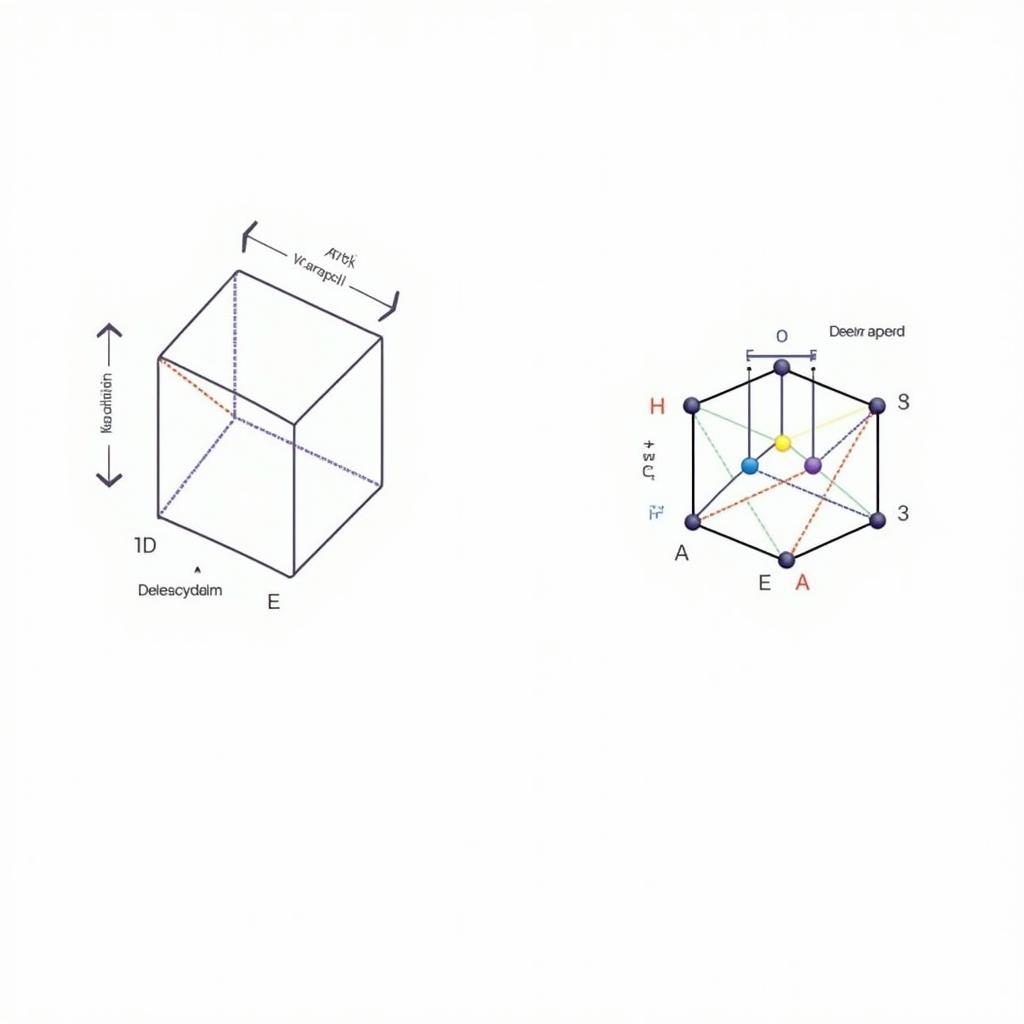 Sơ đồ học thuật chi tiết về cấu trúc lattice-based cryptography và các thuật toán CRYSTALS trong đề IELTS Reading
Alternative post-quantum approaches offer different trade-offs in the multidimensional space of security, performance, and practicality. Code-based cryptography, exemplified by systems descended from the McEliece cryptosystem first proposed in 1978, relies on the difficulty of decoding general linear codes – a problem that has resisted algorithmic advances for decades and for which no efficient quantum algorithm is known. Code-based systems offer exceptionally fast encryption and decryption operations and possess the longest track record of cryptanalytic scrutiny among post-quantum candidates. However, they are characterized by prohibitively large public key sizes – often measured in hundreds of kilobytes or even megabytes – that render them impractical for many applications, though they may find specialized use in scenarios where public keys can be pre-distributed and performance is paramount.
Hash-based signature schemes, another major category represented by SPHINCS+ in the NIST standardization, offer a compelling security proposition: their security can be rigorously reduced to the properties of underlying cryptographic hash functions, which are among the most thoroughly studied and well-understood cryptographic primitives. This conservative security foundation makes hash-based signatures particularly attractive for applications requiring long-term security guarantees, such as firmware signing and long-term document authentication. The primary limitation of hash-based schemes lies in their stateful nature in the most efficient implementations: each private key can only be used to generate a limited number of signatures, after which it must be retired. While stateless variants like SPHINCS+ eliminate this constraint, they do so at the cost of substantially larger signature sizes and increased computational requirements.
The isogeny-based cryptography, though not selected in NIST’s first round of standardization, represents an intriguing alternative that offers remarkably compact key sizes – comparable to or even smaller than current elliptic curve systems. These schemes base their security on the difficulty of computing isogenies (mathematical mappings) between elliptic curves, a problem rooted in algebraic geometry that appears resistant to quantum algorithms. However, recent cryptanalytic advances, including the unexpected break of the SIKE (Supersingular Isogeny Key Encapsulation) scheme in 2022, have highlighted the relative immaturity of security analysis in this domain and the potential for unforeseen vulnerabilities in systems based on novel mathematical structures.
The standardization process itself embodies a delicate balance between competing imperatives. On one hand, premature standardization risks enshrining vulnerabilities or suboptimal designs in critical infrastructure; on the other hand, delayed standardization perpetuates exposure to quantum threats and impedes the multi-year deployment processes required for widespread adoption. NIST’s approach has attempted to navigate this tension through a phased methodology that combines extensive public cryptanalysis, multiple rounds of evaluation, and ongoing consideration of additional candidates even after initial selections. The process has been explicitly designed to maintain cryptographic agility, acknowledging that post-quantum cryptography represents not a final solution but rather the current best understanding in an evolving field.
Implementation security considerations add additional layers of complexity to the post-quantum transition. Cryptographic systems must be secure not only against mathematical attacks but also against side-channel attacks that exploit physical information leakage such as timing variations, power consumption patterns, or electromagnetic emissions during cryptographic operations. The mathematical structures underlying post-quantum algorithms introduce novel side-channel vulnerabilities distinct from those affecting classical cryptography. Lattice-based systems, for example, may be vulnerable to timing attacks that exploit data-dependent execution paths, while the rejection sampling techniques used in some signature schemes create potential timing channels. Developing constant-time implementations and effective countermeasures for post-quantum algorithms represents an active research frontier with significant practical implications.
The transition to post-quantum cryptography also intersects with broader trends in cryptographic engineering and security architecture. The concept of hybrid cryptography – combining classical and post-quantum algorithms to provide defense in depth – has gained traction as a pragmatic approach that maintains security even if vulnerabilities are discovered in post-quantum components. Major internet protocols, including TLS (Transport Layer Security) and IPsec, are being updated to support hybrid key exchange mechanisms that combine, for instance, elliptic curve Diffie-Hellman with CRYSTALS-Kyber. This approach reflects a mature engineering philosophy that acknowledges uncertainty and builds resilience through redundancy rather than relying on single points of cryptographic failure.
Organizational and governance challenges pervade the post-quantum transition in ways that extend far beyond technical implementation. Large enterprises typically maintain complex cryptographic ecosystems involving diverse systems, platforms, and applications developed over decades by different teams using various technologies. Creating comprehensive inventories of cryptographic dependencies, assessing the quantum vulnerability of different data and systems, prioritizing migration efforts, and executing transitions without disrupting operations represent formidable project management challenges that require sustained executive commitment and cross-functional coordination. The absence of immediate threats – quantum computers capable of breaking current encryption remain years away – creates a psychological barrier to action, as organizations naturally prioritize more immediate operational concerns over long-term strategic vulnerabilities.
The educational and workforce implications of the quantum transition are equally significant. The specialized mathematical knowledge required for post-quantum cryptography – spanning algebraic geometry, lattice theory, coding theory, and quantum computing – differs substantially from the number theory that has traditionally formed the mathematical foundation of cryptographic education. Universities and training programs are adapting curricula to address this shift, but the development of a workforce with adequate expertise represents a multi-year process that is only beginning. Furthermore, the broader cybersecurity workforce must develop at least conceptual familiarity with quantum threats and post-quantum solutions to make informed decisions about security architecture and implementation priorities.
Looking forward, the post-quantum cryptographic landscape is likely to remain dynamic rather than settling into a stable equilibrium. Ongoing cryptanalytic research continues to refine understanding of post-quantum security assumptions, with the possibility of both positive developments – stronger security arguments for existing schemes – and negative outcomes – discovery of vulnerabilities necessitating algorithm changes. Advances in quantum computing technology may accelerate or decelerate projected timelines for cryptographically relevant quantum computers, affecting the urgency of transition efforts. Simultaneously, research into quantum cryptography – not merely quantum-resistant classical cryptography but cryptographic systems that exploit quantum mechanical properties such as quantum key distribution – may mature from specialized applications to more widespread deployment, adding another dimension to the cryptographic toolkit. The quantum era of cybersecurity is thus not characterized by a single transition from one stable state to another, but rather by an ongoing process of cryptographic adaptation and innovation in response to evolving capabilities, understanding, and threats.
Questions 27-40
Questions 27-31: MULTIPLE CHOICE
Choose the correct letter, A, B, C, or D.
- According to the passage, what is the main uncertainty in post-quantum cryptography?
- A) The cost of implementation is too high
- B) The mathematical problems have not been studied as extensively as number-theoretic problems
- C) Quantum computers already exist
- D) There is no government support for research
- What advantage does lattice-based cryptography offer beyond quantum resistance?
- A) Smaller key sizes than classical systems
- B) Faster processing speeds
- C) Support for fully homomorphic encryption
- D) Lower implementation costs
- Why are hash-based signature schemes considered to have a “conservative security foundation”?
- A) They use very old technology
- B) Their security is based on well-understood hash functions
- C) They require less computational power
- D) They have the smallest signature sizes
- What happened to the SIKE scheme in 2022?
- A) It was selected by NIST for standardization
- B) It was proven to be perfectly secure
- C) It was unexpectedly broken by cryptanalysts
- D) It became the most popular post-quantum algorithm
- What is the main purpose of hybrid cryptography?
- A) To reduce implementation costs
- B) To maintain security even if one component is compromised
- C) To increase processing speed
- D) To eliminate the need for post-quantum algorithms
Questions 32-36: MATCHING FEATURES
Match each cryptographic approach (A-E) with its correct characteristic (32-36).
Cryptographic Approaches:
A) Lattice-based cryptography
B) Code-based cryptography
C) Hash-based signatures
D) Isogeny-based cryptography
E) Hybrid cryptography
Characteristics:
32. Offers exceptionally fast encryption but has very large public key sizes
33. Provides compact key sizes comparable to elliptic curve systems
34. Requires private keys to be retired after a limited number of uses in efficient implementations
35. Combines classical and post-quantum algorithms for enhanced security
36. Based on the Shortest Vector Problem and Learning With Errors problem
Questions 37-40: SHORT-ANSWER QUESTIONS
Answer the questions below. Choose NO MORE THAN THREE WORDS from the passage for each answer.
- What type of attacks exploit physical information leakage like power consumption during cryptographic operations?
- Which two major internet protocols are being updated to support hybrid key exchange mechanisms?
- What creates a psychological barrier to organizations taking action on quantum preparedness?
- What type of process does the passage describe the quantum era of cybersecurity as, rather than a single transition?
3. Answer Keys – Đáp Án
PASSAGE 1: Questions 1-13
- FALSE
- TRUE
- TRUE
- NOT GIVEN
- TRUE
- B
- C
- D
- B
- quantum bits / qubits
- quantum communication networks
- computational requirements
- many years
PASSAGE 2: Questions 14-26
- NO
- NO
- NOT GIVEN
- YES
- NO
- F
- C
- E
- B
- lattice-based cryptography
- larger key sizes
- cryptographic agility
- long lifecycle
PASSAGE 3: Questions 27-40
- B
- C
- B
- C
- B
- B
- D
- C
- E
- A
- side-channel attacks
- TLS and IPsec / TLS, IPsec
- absence of immediate threats / no immediate threats
- cryptographic adaptation and innovation / ongoing process
4. Giải Thích Đáp Án Chi Tiết
Passage 1 – Giải Thích
Câu 1: FALSE
- Dạng câu hỏi: True/False/Not Given
- Từ khóa: qubits, exist, one state
- Vị trí trong bài: Đoạn 1, dòng 2-4
- Giải thích: Câu hỏi nói qubits chỉ có thể tồn tại ở một trạng thái, nhưng bài đọc nói rõ qubits “can exist in multiple states simultaneously through a phenomenon called superposition” (có thể tồn tại ở nhiều trạng thái đồng thời thông qua hiện tượng chồng chất). Đây là thông tin trái ngược hoàn toàn.
Câu 2: TRUE
- Dạng câu hỏi: True/False/Not Given
- Từ khóa: Richard Feynman, first suggested, 1980s
- Vị trí trong bài: Đoạn 2, dòng 1
- Giải thích: Bài đọc nói “The concept of quantum computing was first proposed in the early 1980s by physicist Richard Feynman” khớp chính xác với thông tin trong câu hỏi.
Câu 3: TRUE
- Dạng câu hỏi: True/False/Not Given
- Từ khóa: RSA encryption, factoring large prime numbers
- Vị trí trong bài: Đoạn 3, dòng 4-5
- Giải thích: Bài viết nói “RSA encryption, is based on the difficulty of factoring large prime numbers” khớp chính xác với câu hỏi.
Câu 4: NOT GIVEN
- Dạng câu hỏi: True/False/Not Given
- Từ khóa: Peter Shor’s algorithm, already used, break encryption
- Vị trí trong bài: Đoạn 4
- Giải thích: Bài đọc chỉ nói thuật toán của Shor “could theoretically allow” (về lý thuyết có thể cho phép) máy tính lượng tử phá mã, nhưng không đề cập đến việc nó đã được sử dụng trong thực tế.
 Học viên Việt Nam đang làm bài thi IELTS Reading về quantum computing và cybersecurity với tài liệu đề thi
Câu 5: TRUE
- Dạng câu hỏi: True/False/Not Given
- Từ khóa: medical records, state secrets, harvest now decrypt later
- Vị trí trong bài: Đoạn 5, dòng 3-4
- Giải thích: Bài đọc nói rõ “This is particularly concerning for information that needs to remain confidential for decades, such as medical records, state secrets, and intellectual property” trong bối cảnh thảo luận về “harvest now, decrypt later” attacks.
Câu 6: B
- Dạng câu hỏi: Multiple Choice
- Từ khóa: Q-Day
- Vị trí trong bài: Đoạn 4, dòng 5-7
- Giải thích: Bài viết định nghĩa “Q-Day” là “the day when quantum computers become powerful enough to decrypt sensitive information that was previously considered secure” (ngày mà máy tính lượng tử đủ mạnh để giải mã thông tin nhạy cảm trước đây được coi là an toàn), khớp với đáp án B.
Câu 7: C
- Dạng câu hỏi: Multiple Choice
- Từ khóa: quantum key distribution, intercept
- Vị trí trong bài: Đoạn 7, dòng 3-5
- Giải thích: Bài đọc nói “If an eavesdropper attempts to observe the quantum states being transmitted, the act of measurement itself alters those states, immediately alerting the legitimate parties to the security breach” – việc đo lường sẽ làm thay đổi trạng thái và cảnh báo ngay lập tức, tức là phát hiện được.
Câu 8: D
- Dạng câu hỏi: Multiple Choice
- Từ khóa: standardize, post-quantum cryptography
- Vị trí trong bài: Đoạn 6, dòng 3-4
- Giải thích: Bài viết nói rõ “The National Institute of Standards and Technology (NIST) in the United States has been leading an international effort since 2016 to standardize these new encryption methods.”
Câu 9: B
- Dạng câu hỏi: Multiple Choice
- Từ khóa: challenge, transitioning, quantum-safe security
- Vị trí trong bài: Đoạn 8, dòng 2-4
- Giải thích: Bài đọc đề cập “Many legacy systems that are still widely used were designed decades ago and cannot easily incorporate new encryption methods” là một thách thức chính.
Câu 10: quantum bits / qubits
- Dạng câu hỏi: Sentence Completion
- Từ khóa: quantum computers, instead of binary bits
- Vị trí trong bài: Đoạn 1, dòng 2-3
- Giải thích: Câu trong bài: “quantum computers use quantum bits, or qubits” – có thể dùng cả hai cách viết.
Câu 11: quantum communication networks
- Dạng câu hỏi: Sentence Completion
- Từ khóa: China, implemented, quantum key distribution
- Vị trí trong bài: Đoạn 7, dòng cuối
- Giải thích: “Several countries, including China, have already deployed quantum communication networks using QKD technology.”
Câu 12: computational requirements
- Dạng câu hỏi: Sentence Completion
- Từ khóa: post-quantum algorithms, higher than current systems
- Vị trí trong bài: Đoạn 8, dòng 4-5
- Giải thích: “Furthermore, the computational requirements of post-quantum algorithms are generally higher than current encryption systems.”
Câu 13: many years
- Dạng câu hỏi: Sentence Completion
- Từ khóa: updating security systems, take, complete
- Vị trí trong bài: Đoạn 9, dòng cuối
- Giải thích: “The process of identifying vulnerable systems, testing new encryption methods, and rolling out updates across entire organizations can take many years to complete.”
Passage 2 – Giải Thích
Câu 14: NO
- Dạng câu hỏi: Yes/No/Not Given
- Từ khóa: symmetric-key, more severe threat, public-key
- Vị trí trong bài: Đoạn 2 và 3
- Giải thích: Bài viết nói rõ “this threat is considered manageable” với symmetric-key và có thể giảm thiểu bằng cách tăng độ dài khóa, trong khi “The situation is dramatically different for public-key cryptography” với mối đe dọa nghiêm trọng hơn nhiều. Đây là quan điểm ngược lại với câu hỏi.
Câu 15: NO
- Dạng câu hỏi: Yes/No/Not Given
- Từ khóa: exact timeline, well-established
- Vị trí trong bài: Đoạn 4, dòng 1
- Giải thích: Bài viết nói “The quantum threat timeline remains a subject of considerable debate among experts” và đưa ra các ước tính khác nhau, cho thấy timeline không được xác định rõ ràng.
Câu 16: NOT GIVEN
- Dạng câu hỏi: Yes/No/Not Given
- Từ khóa: all experts agree, within ten years
- Vị trí trong bài: Đoạn 4
- Giải thích: Bài viết đề cập đến “more optimistic projections” cho rằng có thể đạt được trong vòng một thập kỷ, nhưng không nói TẤT CẢ các chuyên gia đồng ý về điều này.
Câu 17: YES
- Dạng câu hỏi: Yes/No/Not Given
- Từ khóa: transition, maintain hybrid systems
- Vị trí trong bài: Đoạn 5, dòng 3-5
- Giải thích: Bài viết nói rõ “organizations cannot simply abandon older systems overnight; they must maintain hybrid approaches that support both classical and quantum-resistant encryption during a potentially lengthy transition period.”
Câu 18: NO
- Dạng câu hỏi: Yes/No/Not Given
- Từ khóa: post-quantum algorithms, always perform better
- Vị trí trong bài: Đoạn 5, dòng cuối và đoạn 7
- Giải thích: Bài viết nói “the performance overhead associated with many post-quantum algorithms is significantly higher than current systems” – nghĩa là hiệu suất thực sự kém hơn, không tốt hơn.
Câu 19: F (Shor’s algorithm)
- Dạng câu hỏi: Matching Information
- Từ khóa: solve integer factorization, polynomial time
- Vị trí trong bài: Đoạn 3, dòng 4-5
- Giải thích: “Shor’s algorithm, for instance, can solve the integer factorization problem and the discrete logarithm problem in polynomial time.”
Câu 20: C (CRYSTALS-Kyber)
- Dạng câu hỏi: Matching Information
- Từ khóa: key establishment, post-quantum
- Vị trí trong bài: Đoạn 6, dòng 3-4
- Giải thích: “NIST selected four algorithms for standardization in July 2022: CRYSTALS-Kyber for key establishment.”
Câu 21: E (Grover’s algorithm)
- Dạng câu hỏi: Matching Information
- Từ khóa: quadratic speedup, searching databases
- Vị trí trong bài: Đoạn 2, dòng 3-4
- Giải thích: “Grover’s algorithm, which provides a quadratic speedup in searching unsorted databases.”
Câu 22: B (AES)
- Dạng câu hỏi: Matching Information
- Từ khóa: secured, doubling key length
- Vị trí trong bài: Đoạn 2, dòng 5-6
- Giải thích: “Doubling the key length – for instance, moving from AES-128 to AES-256 – effectively mitigates the quantum advantage.”
Câu 23: lattice-based cryptography
- Dạng câu hỏi: Summary Completion
- Từ khóa: mathematical concepts, hash-based, code-based
- Vị trí trong bài: Đoạn 6, dòng cuối
- Giải thích: Bài viết liệt kê “lattice-based cryptography, hash-based signatures, and code-based cryptography” là các khái niệm toán học khác nhau.
Câu 24: larger key sizes
- Dạng câu hỏi: Summary Completion
- Từ khóa: new algorithms require, longer processing times
- Vị trí trong bài: Đoạn 7, dòng 2-3
- Giải thích: “Post-quantum algorithms often require larger key sizes and longer processing times.”
Câu 25: cryptographic agility
- Dạng câu hỏi: Summary Completion
- Từ khóa: quickly switch, cryptographic algorithms
- Vị trí trong bài: Đoạn 7, dòng 5-6
- Giải thích: “Additionally, cryptographic agility – the ability to quickly switch between different cryptographic algorithms – is becoming recognized as a critical capability.”
Câu 26: long lifecycle
- Dạng câu hỏi: Summary Completion
- Từ khóa: financial institutions, financial records, vulnerable
- Vị trí trong bài: Đoạn 10, dòng 3-4
- Giải thích: “The long lifecycle of financial records – some of which must be retained for decades – makes the sector particularly vulnerable.”
Passage 3 – Giải Thích
Câu 27: B
- Dạng câu hỏi: Multiple Choice
- Từ khóa: main uncertainty, post-quantum cryptography
- Vị trí trong bài: Đoạn 2, dòng 3-5
- Giải thích: Bài viết nói rõ “the hardness assumptions of post-quantum systems are based on problems from diverse mathematical domains that have received comparatively less extensive analysis” và “This asymmetry in mathematical maturity introduces a fundamental element of uncertainty.”
Câu 28: C
- Dạng câu hỏi: Multiple Choice
- Từ khóa: lattice-based cryptography, advantage, beyond quantum resistance
- Vị trí trong bài: Đoạn 3, dòng 5-7
- Giải thích: “The appeal of lattice-based systems extends beyond their presumed quantum resistance: they offer versatile cryptographic constructions capable of supporting not only traditional encryption and digital signatures but also advanced cryptographic primitives such as fully homomorphic encryption.”
Câu 29: B
- Dạng câu hỏi: Multiple Choice
- Từ khóa: hash-based signatures, conservative security foundation
- Vị trí trong bài: Đoạn 6, dòng 1-3
- Giải thích: “Hash-based signature schemes…offer a compelling security proposition: their security can be rigorously reduced to the properties of underlying cryptographic hash functions, which are among the most thoroughly studied and well-understood cryptographic primitives.”
Câu 30: C
- Dạng câu hỏi: Multiple Choice
- Từ khóa: SIKE scheme, 2022
- Vị trí trong bài: Đoạn 7, dòng 6-8
- Giải thích: “However, recent cryptanalytic advances, including the unexpected break of the SIKE (Supersingular Isogeny Key Encapsulation) scheme in 2022, have highlighted the relative immaturity of security analysis.”
Câu 31: B
- Dạng câu hỏi: Multiple Choice
- Từ khóa: hybrid cryptography, main purpose
- Vị trí trong bài: Đoạn 10, dòng 2-4
- Giải thích: “The concept of hybrid cryptography – combining classical and post-quantum algorithms to provide defense in depth – has gained traction as a pragmatic approach that maintains security even if vulnerabilities are discovered in post-quantum components.”
Câu 32: B (Code-based cryptography)
- Dạng câu hỏi: Matching Features
- Từ khóa: fast encryption, large public key sizes
- Vị trí trong bài: Đoạn 5, dòng 4-6
- Giải thích: “Code-based systems offer exceptionally fast encryption and decryption operations…However, they are characterized by prohibitively large public key sizes.”
Câu 33: D (Isogeny-based cryptography)
- Dạng câu hỏi: Matching Features
- Từ khóa: compact key sizes, comparable elliptic curve
- Vị trí trong bài: Đoạn 7, dòng 1-2
- Giải thích: “The isogeny-based cryptography…represents an intriguing alternative that offers remarkably compact key sizes – comparable to or even smaller than current elliptic curve systems.”
Câu 34: C (Hash-based signatures)
- Dạng câu hỏi: Matching Features
- Từ khóa: private keys retired, limited number uses
- Vị trí trong bài: Đoạn 6, dòng 6-8
- Giải thích: “The primary limitation of hash-based schemes lies in their stateful nature in the most efficient implementations: each private key can only be used to generate a limited number of signatures, after which it must be retired.”
Câu 35: E (Hybrid cryptography)
- Dạng câu hỏi: Matching Features
- Từ khóa: combines classical and post-quantum
- Vị trí trong bài: Đoạn 10, dòng 2-3
- Giải thích: “The concept of hybrid cryptography – combining classical and post-quantum algorithms to provide defense in depth.”
Câu 36: A (Lattice-based cryptography)
- Dạng câu hỏi: Matching Features
- Từ khóa: Shortest Vector Problem, Learning With Errors
- Vị trí trong bài: Đoạn 3, dòng 1-3
- Giải thích: “Lattice-based cryptography…relies on the computational difficulty of problems such as the Shortest Vector Problem (SVP) and the Learning With Errors (LWE) problem.”
Câu 37: side-channel attacks
- Dạng câu hỏi: Short-answer Questions
- Từ khóa: attacks, physical information leakage, power consumption
- Vị trí trong bài: Đoạn 9, dòng 2-3
- Giải thích: “Cryptographic systems must be secure not only against mathematical attacks but also against side-channel attacks that exploit physical information leakage such as timing variations, power consumption patterns, or electromagnetic emissions.”
Câu 38: TLS and IPsec / TLS, IPsec
- Dạng câu hỏi: Short-answer Questions
- Từ khóa: major internet protocols, hybrid key exchange
- Vị trí trong bài: Đoạn 10, dòng 5-6
- Giải thích: “Major internet protocols, including TLS (Transport Layer Security) and IPsec, are being updated to support hybrid key exchange mechanisms.”
Câu 39: absence of immediate threats / no immediate threats
- Dạng câu hỏi: Short-answer Questions
- Từ khóa: psychological barrier, organizations
- Vị trí trong bài: Đoạn 11, dòng 5-6
- Giải thích: “The absence of immediate threats – quantum computers capable of breaking current encryption remain years away – creates a psychological barrier to action.”
Câu 40: cryptographic adaptation and innovation / ongoing process
- Dạng câu hỏi: Short-answer Questions
- Từ khóa: quantum era cybersecurity, rather than single transition
- Vị trí trong bài: Đoạn 13, câu cuối
- Giải thích: “The quantum era of cybersecurity is thus not characterized by a single transition from one stable state to another, but rather by an ongoing process of cryptographic adaptation and innovation.”
5. Từ Vựng Quan Trọng Theo Passage
Passage 1 – Essential Vocabulary
| Từ vựng | Loại từ | Phiên âm | Nghĩa tiếng Việt | Ví dụ từ bài | Collocation |
|---|---|---|---|---|---|
| harnesses | v | /ˈhɑːrnɪsɪz/ | khai thác, tận dụng | harnesses the principles of quantum mechanics | harness potential/power/energy |
| superposition | n | /ˌsuːpərpəˈzɪʃn/ | sự chồng chất (trạng thái lượng tử) | exist in multiple states through superposition | quantum superposition |
| exponential advantage | n phrase | /ˌekspəˈnenʃl ədˈvæntɪdʒ/ | lợi thế theo cấp số nhân | gives quantum computers an exponential advantage | exponential growth/increase |
| prototype | n | /ˈprəʊtətaɪp/ | nguyên mẫu | building prototype quantum processors | prototype design/model |
| implications | n | /ˌɪmplɪˈkeɪʃnz/ | hệ quả, tác động | significant implications of quantum computing | far-reaching implications |
| factoring | n | /ˈfæktərɪŋ/ | phân tích thành thừa số | difficulty of factoring large prime numbers | prime factoring, integer factoring |
| decrypt | v | /diːˈkrɪpt/ | giải mã | decrypt sensitive information | decrypt data/messages |
| harvest | v | /ˈhɑːrvɪst/ | thu thập (dữ liệu) | harvest now, decrypt later attacks | harvest data/information |
| intellectual property | n phrase | /ˌɪntəˈlektʃuəl ˈprɒpəti/ | sở hữu trí tuệ | protecting intellectual property | intellectual property rights |
| quantum-resistant | adj | /ˈkwɒntəm rɪˈzɪstənt/ | kháng lượng tử | quantum-resistant encryption algorithms | quantum-resistant cryptography |
| standardize | v | /ˈstændədaɪz/ | tiêu chuẩn hóa | standardize new encryption methods | standardize procedures/protocols |
| legacy systems | n phrase | /ˈleɡəsi ˈsɪstəmz/ | hệ thống kế thừa (cũ) | many legacy systems cannot be easily updated | legacy infrastructure/software |
 Bảng từ vựng chuyên ngành quantum computing và cybersecurity trong đề thi IELTS Reading với phiên âm và nghĩa
Passage 2 – Essential Vocabulary
| Từ vựng | Loại từ | Phiên âm | Nghĩa tiếng Việt | Ví dụ từ bài | Collocation |
|---|---|---|---|---|---|
| paradigm shift | n phrase | /ˈpærədaɪm ʃɪft/ | sự chuyển đổi mô hình | represents a paradigm shift in computational capability | paradigm shift in thinking |
| unprecedented | adj | /ʌnˈpresɪdentɪd/ | chưa từng có | poses unprecedented challenges | unprecedented scale/level |
| intricate mechanisms | n phrase | /ˈɪntrɪkət ˈmekənɪzəmz/ | cơ chế phức tạp | intricate mechanisms of encryption systems | intricate details/patterns |
| symmetric-key | adj | /sɪˈmetrɪk kiː/ | khóa đối xứng | symmetric-key cryptography | symmetric-key encryption |
| quadratic speedup | n phrase | /kwɒˈdrætɪk ˈspiːdʌp/ | tăng tốc bậc hai | provides a quadratic speedup | exponential/linear speedup |
| mitigates | v | /ˈmɪtɪɡeɪts/ | giảm thiểu | effectively mitigates the quantum advantage | mitigate risks/threats |
| demonstrably vulnerable | adj phrase | /dɪˈmɒnstrəbli ˈvʌlnərəbl/ | dễ bị tổn thương một cách rõ ràng | demonstrably vulnerable to quantum algorithms | demonstrably effective/false |
| polynomial time | n phrase | /ˌpɒlɪˈnəʊmiəl taɪm/ | thời gian đa thức | solve in polynomial time | polynomial complexity |
| cryptographically relevant | adj phrase | /ˌkrɪptəˈɡræfɪkli ˈreləvənt/ | liên quan đến mật mã học | cryptographically relevant quantum computer | cryptographically secure |
| heterogeneous nature | n phrase | /ˌhetərəˈdʒiːniəs ˈneɪtʃə/ | bản chất không đồng nhất | heterogeneous nature of IT infrastructure | heterogeneous population/group |
| backward compatibility | n phrase | /ˈbækwəd kəmˌpætəˈbɪləti/ | khả năng tương thích ngược | backward compatibility requirements | maintain backward compatibility |
| performance overhead | n phrase | /pəˈfɔːməns ˈəʊvəhed/ | chi phí hiệu suất | performance overhead of algorithms | computational overhead |
| lattice-based | adj | /ˈlætɪs beɪst/ | dựa trên mạng tinh thể | lattice-based cryptography | lattice-based methods |
| cryptographic agility | n phrase | /ˌkrɪptəˈɡræfɪk əˈdʒɪləti/ | tính linh hoạt mật mã | cryptographic agility is critical | organizational agility |
| strain bandwidth | v phrase | /streɪn ˈbændwɪdθ/ | làm căng băng thông | strain bandwidth and resources | strain resources/capacity |
Passage 3 – Essential Vocabulary
| Từ vựng | Loại từ | Phiên âm | Nghĩa tiếng Việt | Ví dụ từ bài | Collocation |
|---|---|---|---|---|---|
| precipitated | v | /prɪˈsɪpɪteɪtɪd/ | gây ra, thúc đẩy | has precipitated a fundamental reconsideration | precipitate a crisis/change |
| cryptographic discontinuity | n phrase | /ˌkrɪptəˈɡræfɪk ˌdɪskɒntɪˈnjuːəti/ | sự gián đoạn mật mã | potential cryptographic discontinuity | technological discontinuity |
| sociotechnical implications | n phrase | /ˌsəʊsiəʊˈteknɪkl ˌɪmplɪˈkeɪʃnz/ | hệ quả xã hội-kỹ thuật | profound sociotechnical implications | sociotechnical systems |
| intractable | adj | /ɪnˈtræktəbl/ | khó giải quyết | computational problems that are intractable | intractable problems/conflicts |
| asymmetry | n | /eɪˈsɪmətri/ | sự bất đối xứng | asymmetry in mathematical maturity | asymmetry in power/information |
| lattice | n | /ˈlætɪs/ | mạng tinh thể | high-dimensional geometric structures called lattices | crystal lattice |
| versatile | adj | /ˈvɜːsətaɪl/ | linh hoạt, đa năng | offer versatile cryptographic constructions | versatile tool/approach |
| homomorphic encryption | n phrase | /ˌhɒməˈmɔːfɪk ɪnˈkrɪpʃn/ | mã hóa đồng cấu | fully homomorphic encryption | homomorphic properties |
| non-trivial | adj | /nɒn ˈtrɪviəl/ | không tầm thường, phức tạp | confronts several non-trivial challenges | non-trivial task/problem |
| ciphertext expansion | n phrase | /ˈsaɪfətekst ɪkˈspænʃn/ | sự mở rộng bản mã | ciphertext expansion factors | data expansion |
| bandwidth inflation | n phrase | /ˈbændwɪdθ ɪnˈfleɪʃn/ | lạm phát băng thông | bandwidth inflation poses challenges | cost inflation, price inflation |
| prohibitively large | adj phrase | /prəˈhɪbɪtɪvli lɑːdʒ/ | lớn đến mức không khả thi | prohibitively large public key sizes | prohibitively expensive/costly |
| rigorously reduced | v phrase | /ˈrɪɡərəsli rɪˈdjuːst/ | được quy về một cách chặt chẽ | security can be rigorously reduced | rigorously tested/analyzed |
| stateful nature | n phrase | /ˈsteɪtfl ˈneɪtʃə/ | bản chất có trạng thái | limitation in their stateful nature | stateless/stateful protocol |
| enshrining vulnerabilities | v phrase | /ɪnˈʃraɪnɪŋ ˌvʌlnərəˈbɪlətiz/ | khắc sâu các lỗ hổng | risks enshrining vulnerabilities | enshrine principles/rights |
| side-channel vulnerabilities | n phrase | /saɪd ˈtʃænl ˌvʌlnərəˈbɪlətiz/ | lỗ hổng kênh phụ | novel side-channel vulnerabilities | side-channel attacks |
| constant-time implementations | n phrase | /ˈkɒnstənt taɪm ˌɪmplɪmenˈteɪʃnz/ | triển khai thời gian hằng định | developing constant-time implementations | constant-time algorithm |
| defense in depth | n phrase | /dɪˈfens ɪn depθ/ | phòng thủ nhiều lớp | provide defense in depth | defense mechanism/strategy |
| formidable challenges | n phrase | /ˈfɔːmɪdəbl ˈtʃælɪndʒɪz/ | thách thức to lớn | represent formidable challenges | formidable opponent/task |
| conceptual familiarity | n phrase | /kənˈseptʃuəl fəˌmɪliˈærəti/ | sự quen thuộc về khái niệm | develop conceptual familiarity | conceptual understanding/framework |
Kết Bài
Chủ đề “What are the implications of quantum computing on cybersecurity?” không chỉ là một câu hỏi mang tính thời sự mà còn phản ánh xu hướng ra đề của IELTS Reading trong những năm gần đây – tập trung vào các chủ đề khoa học công nghệ, an ninh thông tin và những thay đổi mang tính đột phá trong xã hội hiện đại.
Bộ đề thi hoàn chỉnh này với 3 passages từ Easy đến Hard đã cung cấp cho bạn:
✅ 40 câu hỏi đa dạng bao gồm 7 dạng câu hỏi phổ biến nhất trong IELTS Reading
✅ Nội dung học thuật chất lượng về điện toán lượng tử, mã hóa, và an ninh mạng với độ khó tăng dần
✅ Đáp án chi tiết kèm giải thích với vị trí cụ thể trong passage và phân tích kỹ thuật paraphrase
✅ Bộ từ vựng chuyên ngành với hơn 40 từ vựng quan trọng kèm phiên âm, ví dụ và collocations
Việc luyện tập với những bài đọc có nội dung phức tạp như thế này sẽ giúp bạn:
- Làm quen với văn phong học thuật và từ vựng chuyên ngành
- Rèn luyện khả năng đọc hiểu thông tin kỹ thuật
- Nâng cao kỹ năng quản lý thời gian trong 60 phút
- Tự tin hơn khi gặp các chủ đề khoa học công nghệ trong thi thật
Lời khuyên cuối: Hãy làm đề này trong điều kiện giống thi thật (60 phút, không tra từ điển), sau đó đối chiếu đáp án và phân tích kỹ những câu sai để hiểu rõ lỗi của mình. Đặc biệt chú ý đến các từ vựng được làm đậm trong passages – đây là những từ quan trọng bạn nên ghi nhớ để nâng cao vốn từ vựng học thuật.
Chúc bạn học tập hiệu quả và đạt band điểm mong muốn trong kỳ thi IELTS sắp tới!

