Mở bài
Di dời dân cư do biến đổi khí hậu đang trở thành một trong những thách thức nhân đạo lớn nhất của thế kỷ 21. Chủ đề này xuất hiện ngày càng thường xuyên trong các đề thi IELTS Reading gần đây, đặc biệt ở các Cambridge IELTS từ quyển 15 trở đi. Hiểu rõ các tác động xã hội của hiện tượng này không chỉ giúp bạn làm tốt bài thi mà còn mở rộng kiến thức về một vấn đề toàn cầu cấp bách.
Bài viết này cung cấp cho bạn một bộ đề thi IELTS Reading hoàn chỉnh với 3 passages theo đúng cấu trúc thi thật, từ mức độ dễ đến khó. Bạn sẽ được luyện tập với 40 câu hỏi đa dạng các dạng bài phổ biến nhất, kèm theo đáp án chi tiết và giải thích cụ thể. Đặc biệt, phần từ vựng được tổng hợp và phân tích kỹ lưỡng sẽ giúp bạn nâng cao vốn từ học thuật.
Đề thi này phù hợp cho học viên từ band 5.0 trở lên, giúp bạn làm quen với format thi thật và rèn luyện kỹ năng đọc hiểu một cách bài bản và hiệu quả nhất.
Hướng Dẫn Làm Bài IELTS Reading
Tổng Quan Về IELTS Reading Test
IELTS Reading Test là phần thi kéo dài 60 phút với 3 passages và tổng cộng 40 câu hỏi. Độ khó của các passages tăng dần từ dễ đến khó, yêu cầu thí sinh có khả năng quản lý thời gian hiệu quả và áp dụng chiến lược đọc phù hợp cho từng loại bài.
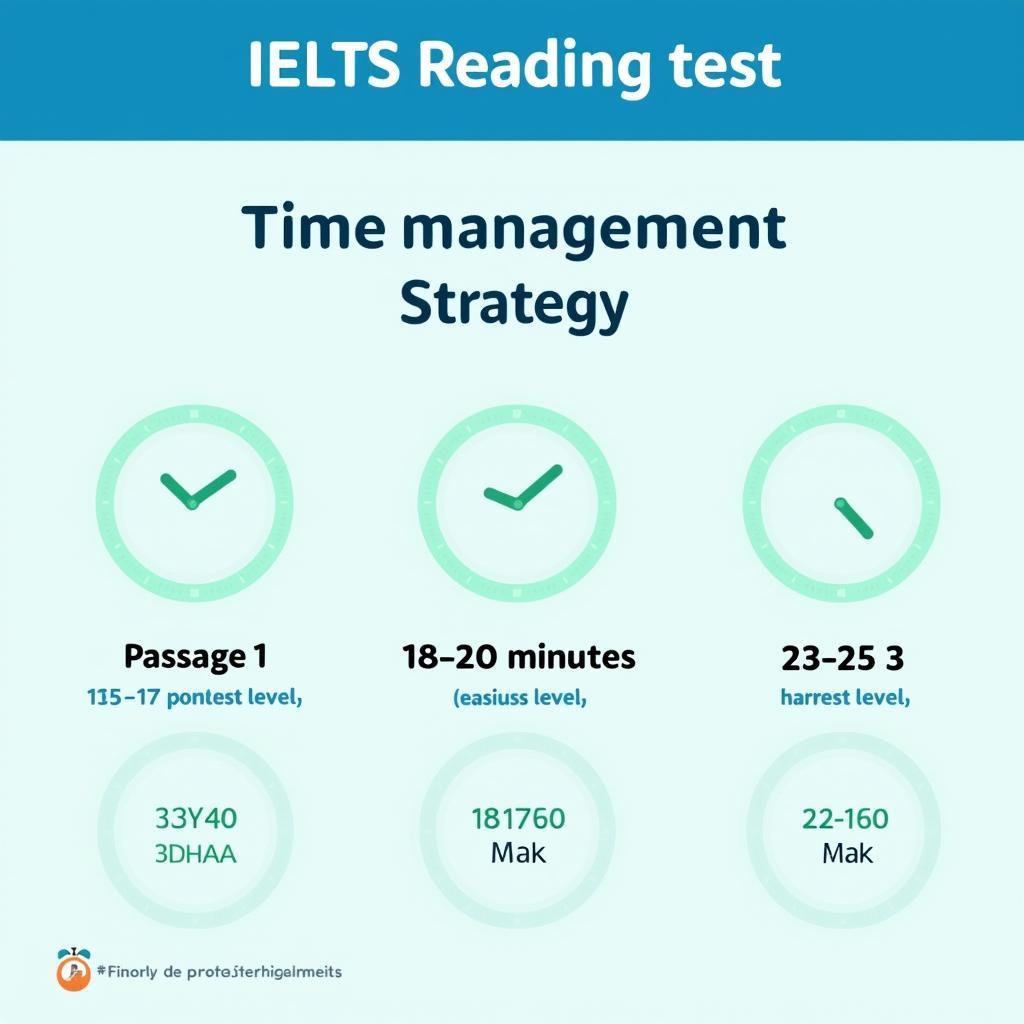
Phân bổ thời gian khuyến nghị:
- Passage 1 (Easy): 15-17 phút – Dành cho việc làm quen và tạo động lực
- Passage 2 (Medium): 18-20 phút – Yêu cầu tập trung và kỹ năng paraphrase tốt
- Passage 3 (Hard): 23-25 phút – Cần phân tích sâu và kỹ năng suy luận cao
Lưu ý quan trọng: Không có thời gian thêm để chuyển đáp án sang phiếu trả lời, vì vậy bạn cần viết đáp án trực tiếp trong quá trình làm bài hoặc dành 2-3 phút cuối để chuyển.
Các Dạng Câu Hỏi Trong Đề Này
Đề thi mẫu này bao gồm 8 dạng câu hỏi phổ biến nhất trong IELTS Reading:
- Multiple Choice – Câu hỏi trắc nghiệm với 3-4 lựa chọn
- True/False/Not Given – Xác định thông tin đúng, sai hoặc không được đề cập
- Yes/No/Not Given – Xác định quan điểm của tác giả
- Matching Headings – Nối tiêu đề với đoạn văn phù hợp
- Matching Features – Nối thông tin với đặc điểm tương ứng
- Sentence Completion – Hoàn thành câu với thông tin từ bài đọc
- Summary Completion – Điền từ vào đoạn tóm tắt
- Short-answer Questions – Trả lời câu hỏi ngắn
IELTS Reading Practice Test
PASSAGE 1 – Climate Migration: A Growing Global Phenomenon
Độ khó: Easy (Band 5.0-6.5)
Thời gian đề xuất: 15-17 phút
Climate change is no longer a distant threat but a present reality affecting millions of people worldwide. One of its most significant consequences is the displacement of populations from their traditional homelands. This phenomenon, known as climate-induced migration, occurs when environmental changes make certain areas uninhabitable or severely reduce people’s ability to sustain their livelihoods.
The primary drivers of climate-induced displacement include rising sea levels, extreme weather events, prolonged droughts, and desertification. Small island nations in the Pacific Ocean, such as Tuvalu and Kiribati, face existential threats as rising waters gradually submerge their territories. In Bangladesh, coastal erosion and frequent flooding have already forced hundreds of thousands of people to abandon their homes and seek refuge in urban areas or neighboring regions.
Agricultural communities are particularly vulnerable to climate change. In sub-Saharan Africa, changing rainfall patterns and increasing temperatures have led to crop failures and livestock deaths, pushing rural populations toward cities in search of alternative income sources. Similarly, in Central America, the “Dry Corridor” has experienced severe droughts that have destroyed harvests and created what experts call “climate refugees.”
The social implications of this mass movement are profound and multifaceted. When people are forced to leave their homes, they don’t just lose physical shelter; they lose their cultural identity, community ties, and traditional ways of life. Indigenous communities, which have maintained their customs and practices for generations, face the risk of complete cultural erosion when scattered to different locations.
Urban areas receiving climate migrants often struggle to provide adequate services and infrastructure. Cities in developing countries, already dealing with rapid urbanization, find themselves overwhelmed by the sudden influx of displaced populations. This can lead to the growth of informal settlements or slums, where living conditions are poor and access to basic services like clean water, sanitation, and healthcare is limited.
Competition for resources becomes a critical issue in receiving communities. Local residents may view newcomers as threats to their jobs, housing, and social services, leading to social tensions and sometimes inter-community conflicts. In some cases, this has resulted in discrimination against climate migrants, who are often marginalized and denied basic rights and opportunities.
Education systems face particular challenges when absorbing large numbers of displaced children. Schools in receiving areas may lack the capacity to accommodate additional students, and language barriers can make integration difficult. Children who have experienced traumatic displacement may also require psychological support that is often unavailable in resource-constrained settings.
However, climate-induced migration also presents opportunities for social innovation and community resilience. Some receiving communities have developed inclusive programs that help newcomers integrate while preserving their cultural heritage. In parts of East Africa, for example, traditional conflict resolution mechanisms have been adapted to manage tensions between host and migrant populations.
International organizations are increasingly recognizing the need for coordinated responses to climate migration. The United Nations has called for the development of legal frameworks that protect climate migrants, who currently fall into a legal grey area since they don’t meet the traditional definition of refugees under international law.
Remittances sent by climate migrants to their places of origin can provide crucial financial support to communities struggling with environmental challenges. These funds often help families left behind to invest in climate adaptation measures such as improved irrigation systems or more resilient crop varieties.
Looking forward, experts predict that climate-induced displacement will accelerate in the coming decades. Estimates suggest that by 2050, between 200 million and one billion people could be displaced by climate-related factors. This makes it imperative for governments, international bodies, and civil society to work together to develop comprehensive strategies that address both the causes and consequences of climate migration.
The key to managing this challenge lies in proactive planning rather than reactive responses. Countries need to invest in climate adaptation in vulnerable regions to reduce the need for displacement, while also preparing receiving areas to welcome and integrate climate migrants with dignity and respect.
Questions 1-6
Choose the correct letter, A, B, C, or D.
-
According to the passage, climate-induced migration occurs when:
A. People want to find better job opportunities
B. Environmental changes make areas difficult or impossible to live in
C. Governments force people to relocate
D. Natural disasters destroy all buildings in an area -
Small island nations in the Pacific Ocean are threatened by:
A. Volcanic eruptions
B. Earthquakes
C. Rising sea levels
D. Tropical storms -
Agricultural communities are vulnerable to climate change mainly because:
A. They lack modern technology
B. They are located in remote areas
C. Changes in weather patterns affect their crops and livestock
D. They have small populations -
When people are displaced by climate change, they lose:
A. Only their physical homes
B. Their savings and investments
C. Their cultural identity and community connections
D. Their citizenship rights -
Cities in developing countries receiving climate migrants often experience:
A. Economic prosperity
B. Improved infrastructure
C. Overcrowding and strain on services
D. Decreased population density -
According to the passage, by 2050, the number of people displaced by climate could be:
A. 50 to 100 million
B. 100 to 150 million
C. 200 million to one billion
D. Over two billion
Questions 7-10
Do the following statements agree with the information given in the passage?
Write:
- TRUE if the statement agrees with the information
- FALSE if the statement contradicts the information
- NOT GIVEN if there is no information on this
-
Climate migrants are currently protected under international refugee law.
-
Remittances from climate migrants help families invest in climate adaptation.
-
All receiving communities have successfully integrated climate migrants.
-
The “Dry Corridor” is located in Central America.
Questions 11-13
Complete the sentences below.
Choose NO MORE THAN TWO WORDS from the passage for each answer.
-
In Bangladesh, __ and frequent flooding have forced many people to leave their homes.
-
Competition for resources can lead to __ between local residents and newcomers.
-
International organizations are calling for __ to protect climate migrants legally.
PASSAGE 2 – The Socioeconomic Dimensions of Climate Displacement
Độ khó: Medium (Band 6.0-7.5)
Thời gian đề xuất: 18-20 phút
The phenomenon of climate-induced displacement represents one of the most complex socioeconomic challenges of the contemporary era, intertwining environmental degradation with deep-seated social inequalities and economic vulnerabilities. As climate change intensifies, the nexus between environmental stress and human migration becomes increasingly pronounced, revealing systemic weaknesses in how societies manage both environmental risks and population movements.
Economic marginalization serves as both a cause and consequence of climate displacement. Communities most susceptible to environmental shocks are typically those with the least adaptive capacity – populations already grappling with poverty, limited access to resources, and weak governance structures. When climate events strike, these communities lack the financial buffers necessary to recover or adapt in situ, making migration not a choice but a survival imperative. This creates a vicious cycle: displacement further impoverishes affected populations, reducing their ability to establish themselves in new locations or return home once conditions improve.
The gendered dimensions of climate displacement deserve particular attention. Research consistently demonstrates that women and girls face disproportionate vulnerabilities during and after displacement. In many societies, women have limited property rights and less access to financial resources, making them particularly precarious when forced to relocate. During displacement, women face heightened risks of gender-based violence, exploitation, and trafficking. Furthermore, the breakdown of traditional social structures during migration can simultaneously liberate women from restrictive norms while exposing them to new forms of marginalization in unfamiliar settings.
Intergenerational impacts constitute another critical social dimension. Children displaced by climate change experience disrupted education, potentially condemning them to perpetual disadvantage. The psychological trauma of losing one’s home and community can have lasting developmental consequences, affecting cognitive development, emotional regulation, and social skills. Meanwhile, elderly populations face distinct challenges: separation from extended family networks, loss of social capital accumulated over lifetimes, and difficulty adapting to new environments where their traditional knowledge and skills may have limited value.
The concept of “trapped populations” has emerged as a significant concern within migration studies. Counterintuitively, the poorest and most vulnerable communities affected by climate change are often unable to migrate because they lack the resources necessary for relocation. This immobility is itself a form of crisis, as people remain in increasingly dangerous environments not by choice but due to structural constraints. These populations face a double jeopardy: suffering from environmental degradation while being unable to access the potential benefits that migration might offer.
Urban assimilation challenges for climate migrants extend beyond immediate practical concerns of housing and employment. Displaced populations must navigate complex social hierarchies, often arriving in cities where they lack social networks, political voice, or legal recognition. Many end up in the informal economy, working in precarious conditions without labor protections or social security. This economic informality perpetuates their vulnerability and can create inter-generational poverty traps.
The phenomenon of “climate gentrification” represents an emerging concern in climate migration discourse. As certain areas become known as climate refuges – locations less vulnerable to climate impacts – property values in these areas escalate, pricing out both existing low-income residents and potential climate migrants. This market dynamic essentially creates “climate havens” accessible primarily to the wealthy, while forcing the poor into increasingly risky areas, thereby amplifying existing inequalities.
Social cohesion in receiving communities faces multifaceted pressures. When large-scale migration occurs rapidly, it can strain the social fabric, particularly in communities with limited experience of diversity. Cultural differences in language, religion, and social practices can become sources of friction. However, research also reveals that these tensions are not inevitable but are mediated by institutional responses, leadership quality, and the narratives that dominant groups construct about newcomers.
The role of social capital in determining migration outcomes cannot be overstated. Migrants with strong kinship networks or diaspora connections in destination areas typically experience smoother transitions and better economic outcomes. Conversely, those lacking such networks face isolation and exploitation. This highlights how climate displacement reproduces and amplifies pre-existing social inequalities rather than creating a level playing field of shared vulnerability.
Mental health implications of climate displacement are increasingly recognized as profound and long-lasting. Beyond the immediate trauma of displacement, migrants often experience chronic stress, identity loss, and survivor’s guilt. The term “solastalgia” – distress caused by environmental change – captures the deep psychological connection people have to their homelands. When forced to leave, many experience a form of grieving comparable to losing a loved one.
Political dimensions of climate migration intersect with questions of sovereignty, citizenship, and international responsibility. Should nations that have contributed most to greenhouse gas emissions bear special responsibility for receiving climate migrants? This question of “climate debt” remains contested, yet it raises fundamental issues of global justice. Meanwhile, climate migrants often find themselves in political limbo, neither protected as refugees nor granted rights as voluntary migrants.
Looking forward, addressing the social implications of climate displacement requires paradigm shifts in how we conceptualize both migration and climate adaptation. Rather than viewing migration purely as policy failure, it should be recognized as a legitimate adaptation strategy that, when managed properly, can reduce vulnerability and create opportunities. This requires pre-emptive planning, investment in climate resilience in vulnerable regions, and the development of migration pathways that respect human dignity while addressing legitimate concerns of receiving communities.
Questions 14-19
Complete the summary below.
Choose NO MORE THAN TWO WORDS from the passage for each answer.
Climate displacement reveals how environmental problems connect with social and economic problems. The communities most affected are those with the 14. __ to adapt to environmental changes. Women face particular risks including 15. __, exploitation, and trafficking during displacement. Some populations are described as 16. __ because they cannot afford to move despite dangerous conditions. In cities, many displaced people work in the 17. __ without proper protections. An emerging issue called 18. __ occurs when property values rise in safer areas. The psychological impact of losing one’s homeland is captured by the term 19. __.
Questions 20-23
Do the following statements agree with the claims of the writer in the passage?
Write:
- YES if the statement agrees with the claims of the writer
- NO if the statement contradicts the claims of the writer
- NOT GIVEN if it is impossible to say what the writer thinks about this
-
Poor communities are more likely to migrate than wealthy ones when climate disasters occur.
-
Elderly people find it difficult to adapt to new environments after displacement.
-
Tensions between migrants and receiving communities are always inevitable.
-
Nations with high greenhouse gas emissions should accept more climate migrants.
Questions 24-26
Choose THREE letters, A-G.
Which THREE of the following are mentioned as challenges faced by climate migrants?
A. Finding affordable housing in climate refuges
B. Learning new agricultural techniques
C. Accessing healthcare in receiving communities
D. Navigating social hierarchies in new locations
E. Obtaining citizenship in destination countries
F. Working without labor protections
G. Managing investments from their homeland
PASSAGE 3 – Reconceptualizing Climate Migration: Governance, Rights, and Transformative Justice
Độ khó: Hard (Band 7.0-9.0)
Thời gian đề xuất: 23-25 phút
The multidimensional crisis precipitated by climate-induced human displacement necessitates a fundamental reconceptualization of the normative frameworks governing both international migration and climate justice. Contemporary scholarly discourse increasingly recognizes that conventional paradigms – which bifurcate migration into voluntary and forced categories, or which treat climate adaptation and migration as mutually exclusive responses – fail to capture the nuanced realities of populations navigating the intersection of environmental change and social transformation. This analytical inadequacy has profound implications for policy development, particularly regarding the architecture of protection available to those displaced across international borders.
The juridical lacuna surrounding climate migrants represents perhaps the most conspicuous manifestation of this conceptual deficit. The 1951 Refugee Convention and its 1967 Protocol, which constitute the cornerstone of international refugee protection, explicitly define refugees as persons fleeing persecution based on race, religion, nationality, political opinion, or membership in a particular social group. Environmental factors, including those anthropogenically induced through climate change, fall outside this definitional scope. Consequently, individuals displaced by climate impacts exist in a legal penumbra, unable to access the protections afforded to convention refugees despite facing circumstances of comparable severity and involuntariness.
Various doctrinal proposals have emerged to address this protection gap. Some scholars advocate for an additional protocol to the Refugee Convention specifically addressing climate displacement, while others propose entirely new legal instruments dedicated to this category of movement. The 2018 Nansen Initiative, later formalized as the Platform on Disaster Displacement, represents a state-led consultative process aimed at developing a protection agenda for people displaced across borders in the context of disasters and climate change. However, these initiatives have been criticized for their non-binding nature and limited enforcement mechanisms, raising questions about their efficacy in providing substantive protection.
The epistemological challenge of establishing causality between climate change and specific displacement events further complicates legal and policy responses. Climate change operates as a “threat multiplier,” exacerbating existing vulnerabilities and interacting with political, economic, and social factors in ways that make monocausal explanations untenable. For instance, when prolonged drought in Syria contributed to rural-urban migration that subsequently fed into social unrest, can those who eventually fled the country be classified as climate refugees? This attribution dilemma has methodological, ethical, and political dimensions that resist simple resolution.
Rights-based approaches to climate displacement emphasize the inalienable dignity of displaced persons and the obligations of states and the international community to protect fundamental human rights regardless of migration status. These frameworks foreground non-discrimination, the right to life with dignity, freedom of movement, and rights to health, education, and livelihood. Proponents argue that a rights-based lens circumvents the taxonomical debates about whether climate migrants are “really” refugees by focusing instead on the substantive protections that all persons deserve.
However, operationalizing rights-based approaches confronts significant obstacles. States retain jealously guarded prerogatives over border control and immigration policy, viewing these as core attributes of sovereignty. Attempts to create enforceable obligations regarding the reception and integration of climate migrants encounter resistance rooted in nationalist politics, economic anxieties, and concerns about cultural cohesion. The rise of populist movements in many receiving countries has further politicized migration, making evidence-based policy discussions increasingly difficult and securitizing what are fundamentally humanitarian and developmental challenges.
The concept of “climate justice” provides an ethical framework that links historical carbon emissions with contemporary displacement, arguing that industrialized nations that have contributed disproportionately to atmospheric greenhouse gas concentrations bear differential responsibilities for addressing displacement. This principle of differentiation finds expression in climate negotiations through concepts like “common but differentiated responsibilities” (CBDR), though extending these principles specifically to migration governance remains contentious. Critics argue that establishing liability frameworks based on historical emissions is politically unfeasible and risks creating adversarial dynamics that impede cooperation.
Planned relocation represents one potential response that attempts to anticipate and manage climate displacement proactively rather than reactively. When implemented according to international best practices – including community participation, culturally appropriate resettlement sites, and livelihood restoration – planned relocation can reduce vulnerability while preserving community cohesion. However, the history of development-induced displacement provides sobering lessons about how relocation often reproduces marginalization when implemented in top-down, technocratic ways that ignore the social embeddedness of affected communities. The challenge lies in distinguishing between relocation as humanitarian protection versus instrumental land acquisition disguised as climate adaptation.
Regional mobility frameworks may offer more pragmatic pathways forward than universal legal instruments. The Kampala Convention in Africa and the Cartagena Declaration in Latin America both provide examples of regionally tailored approaches that recognize displacement from environmental factors, including climate change. These frameworks acknowledge that neighboring states within regions share similar vulnerabilities and have vested interests in managing displacement cooperatively. Regional approaches also allow for normative flexibility that reflects local contexts while establishing burden-sharing mechanisms among countries at similar development levels.
The emerging discourse around “migration with dignity” or “climate-adaptive migration” reconceptualizes mobility not as policy failure but as a legitimate adaptation strategy that can reduce vulnerability when managed appropriately. This perspective challenges the assumption that all migration should be prevented, instead asking how migration pathways can be created that respect human agency, enable skills transfer, generate remittances that support adaptation in origin communities, and allow for circular mobility that maintains connections to homelands. Such approaches require bilateral and multilateral cooperation to create legal pathways for labor migration specifically recognizing climate vulnerability as a factor in migration management.
Transformative justice frameworks push even further, arguing that addressing climate displacement requires systemic changes to the political economy of climate change itself. From this perspective, managing the symptoms of displacement through improved protection mechanisms, while important, remains insufficient unless paired with radical decarbonization, technology transfer to vulnerable regions, and economic restructuring that addresses the root causes of both climate change and the structural inequalities that determine who can adapt in place versus who must move. This holistic approach recognizes climate displacement as symptomatic of deeper ecological and social crises requiring transformative rather than incremental responses.
Looking forward, the scale of projected climate displacement – potentially involving hundreds of millions of people over the coming decades – suggests that business-as-usual approaches to migration governance are woefully inadequate. The challenge is not merely technical but fundamentally political: it requires reimagining international cooperation, recalibrating concepts of sovereignty and responsibility, and building institutional architectures capable of responding to displacement at unprecedented scales. Whether the international community can rise to this challenge remains perhaps the defining question of 21st-century global governance.
Questions 27-31
Choose the correct letter, A, B, C, or D.
-
According to the passage, the 1951 Refugee Convention does not cover climate migrants because:
A. Climate change did not exist when it was written
B. Environmental factors are not included in the definition of refugees
C. The convention only applies to people within their own countries
D. Member states have voted against including climate factors -
The Nansen Initiative has been criticized for:
A. Being too expensive to implement
B. Covering too many types of displacement
C. Not having binding legal force
D. Excluding disaster displacement -
The passage uses the example of Syria to illustrate:
A. How climate change directly causes all migration
B. The difficulty in establishing clear causation between climate and displacement
C. That political factors are more important than environmental ones
D. Why climate refugees should not be recognized legally -
According to the passage, rights-based approaches to climate displacement focus on:
A. Determining if migrants are truly refugees
B. Protecting fundamental human rights regardless of status
C. Creating new international treaties
D. Preventing all forms of migration -
The concept of “climate justice” argues that:
A. All countries should accept equal numbers of climate migrants
B. Wealthy nations should pay for all climate adaptation
C. Historical emissions create special responsibilities
D. Migration should be prevented through better planning
Questions 32-36
Complete each sentence with the correct ending, A-I, below.
- The 1951 Refugee Convention and its Protocol
- Development-induced displacement
- Regional mobility frameworks
- Migration with dignity approaches
- Transformative justice frameworks
A. view migration as a legitimate way to reduce vulnerability rather than as a failure.
B. provide lessons about how relocation can increase marginalization.
C. do not include environmental factors in their definition of refugees.
D. create legal pathways for temporary movement to neighboring countries.
E. require fundamental changes to the economic system causing climate change.
F. focus primarily on internal displacement rather than cross-border movement.
G. allow for flexibility based on regional contexts and cooperation.
H. emphasize voluntary return programs for displaced populations.
I. establish universal standards for climate migrant protection globally.
Questions 37-40
Answer the questions below.
Choose NO MORE THAN THREE WORDS from the passage for each answer.
-
What term describes how climate change worsens existing vulnerabilities?
-
What do states consider border control to be a core aspect of?
-
What type of relocation attempts to anticipate climate displacement in advance?
-
According to the passage, what do transformative approaches recognize climate displacement as being symptomatic of?
 Tác động xã hội của di dân do biến đổi khí hậu toàn cầu trong IELTS Reading
Answer Keys – Đáp Án
PASSAGE 1: Questions 1-13
- B
- C
- C
- C
- C
- C
- FALSE
- TRUE
- NOT GIVEN
- TRUE
- coastal erosion
- social tensions
- legal frameworks
PASSAGE 2: Questions 14-26
- least adaptive capacity
- gender-based violence
- trapped populations
- informal economy
- climate gentrification
- solastalgia
- NO
- YES
- NO
- NOT GIVEN
24-26. A, D, F (in any order)
PASSAGE 3: Questions 27-40
- B
- C
- B
- B
- C
- C
- B
- G
- A
- E
- threat multiplier
- sovereignty
- Planned relocation
- ecological and social crises
Giải Thích Đáp Án Chi Tiết
Passage 1 – Giải Thích
Câu 1: B
- Dạng câu hỏi: Multiple Choice
- Từ khóa: climate-induced migration, occurs when
- Vị trí trong bài: Đoạn 1, câu thứ 3-4
- Giải thích: Bài đọc nói rõ “This phenomenon, known as climate-induced migration, occurs when environmental changes make certain areas uninhabitable or severely reduce people’s ability to sustain their livelihoods.” Đây là paraphrase của đáp án B “Environmental changes make areas difficult or impossible to live in.” Các đáp án khác không được đề cập như là nguyên nhân chính của climate-induced migration.
Câu 2: C
- Dạng câu hỏi: Multiple Choice
- Từ khóa: Small island nations, Pacific Ocean, threatened
- Vị trí trong bài: Đoạn 2, câu thứ 2
- Giải thích: Câu “Small island nations in the Pacific Ocean, such as Tuvalu and Kiribati, face existential threats as rising waters gradually submerge their territories” chỉ rõ mối đe dọa là “rising waters” tức là rising sea levels (mực nước biển dâng). Đáp án C là chính xác.
Câu 5: C
- Dạng câu hỏi: Multiple Choice
- Từ khóa: Cities, developing countries, receiving climate migrants
- Vị trí trong bài: Đoạn 5, câu đầu tiên
- Giải thích: Bài viết nói “Cities in developing countries, already dealing with rapid urbanization, find themselves overwhelmed by the sudden influx of displaced populations.” Từ “overwhelmed” và việc đề cập đến informal settlements cho thấy đáp án C (Overcrowding and strain on services) là đúng.
Câu 7: FALSE
- Dạng câu hỏi: True/False/Not Given
- Từ khóa: Climate migrants, protected, international refugee law
- Vị trí trong bài: Đoạn 9, câu cuối
- Giải thích: Bài viết nói rõ climate migrants “currently fall into a legal grey area since they don’t meet the traditional definition of refugees under international law.” Điều này trực tiếp mâu thuẫn với statement, nên đáp án là FALSE.
Câu 8: TRUE
- Dạng câu hỏi: True/False/Not Given
- Từ khóa: Remittances, climate migrants, invest, climate adaptation
- Vị trí trong bài: Đoạn 10
- Giải thích: Câu “These funds often help families left behind to invest in climate adaptation measures such as improved irrigation systems or more resilient crop varieties” khớp hoàn toàn với statement.
Câu 11: coastal erosion
- Dạng câu hỏi: Sentence Completion
- Từ khóa: Bangladesh, forced, leave homes
- Vị trí trong bài: Đoạn 2, câu thứ 3
- Giải thích: “In Bangladesh, coastal erosion and frequent flooding have already forced hundreds of thousands of people to abandon their homes” – cụm “coastal erosion” là đáp án chính xác.
Câu 13: legal frameworks
- Dạng câu hỏi: Sentence Completion
- Từ khóa: International organizations, protect, climate migrants
- Vị trí trong bài: Đoạn 9
- Giải thích: “The United Nations has called for the development of legal frameworks that protect climate migrants” – đáp án là “legal frameworks”.
Passage 2 – Giải Thích
Câu 14: least adaptive capacity
- Dạng câu hỏi: Summary Completion
- Từ khóa: communities most affected, adapt
- Vị trí trong bài: Đoạn 2, câu thứ 2
- Giải thích: “Communities most susceptible to environmental shocks are typically those with the least adaptive capacity” – cụm từ này khớp chính xác với chỗ trống trong summary.
Câu 15: gender-based violence
- Dạng câu hỏi: Summary Completion
- Từ khóa: Women, risks, displacement
- Vị trí trong bài: Đoạn 3, câu thứ 4
- Giải thích: “During displacement, women face heightened risks of gender-based violence, exploitation, and trafficking” – đáp án là “gender-based violence”.
Câu 16: trapped populations
- Dạng câu hỏi: Summary Completion
- Từ khóa: cannot afford to move, dangerous conditions
- Vị trí trong bài: Đoạn 5, câu đầu
- Giải thích: “The concept of ‘trapped populations’ has emerged as a significant concern” và “people remain in increasingly dangerous environments not by choice but due to structural constraints.”
Câu 20: NO
- Dạng câu hỏi: Yes/No/Not Given
- Từ khóa: Poor communities, more likely to migrate
- Vị trí trong bài: Đoạn 2 và 5
- Giải thích: Bài viết thực sự nói ngược lại – poor communities thường thiếu tài chính để di cư và trở thành “trapped populations”. Đây là điều mâu thuẫn với statement nên đáp án là NO.
Câu 22: NO
- Dạng câu hỏi: Yes/No/Not Given
- Từ khóa: Tensions, migrants, receiving communities, inevitable
- Vị trí trong bài: Đoạn 8, câu cuối
- Giải thích: “However, research also reveals that these tensions are not inevitable but are mediated by institutional responses” – tác giả rõ ràng nói tensions không inevitable, mâu thuẫn trực tiếp với statement.
Câu 24-26: A, D, F
- Dạng câu hỏi: Matching Features (Multiple selection)
- Giải thích:
- A được đề cập qua “climate gentrification” – property values escalate, pricing out potential climate migrants (Đoạn 7)
- D được đề cập: “Displaced populations must navigate complex social hierarchies” (Đoạn 6)
- F được đề cập: “Many end up in the informal economy, working in precarious conditions without labor protections” (Đoạn 6)
Passage 3 – Giải Thích
Câu 27: B
- Dạng câu hỏi: Multiple Choice
- Từ khóa: 1951 Refugee Convention, not cover, climate migrants
- Vị trí trong bài: Đoạn 2
- Giải thích: “The 1951 Refugee Convention…explicitly define refugees as persons fleeing persecution based on race, religion, nationality, political opinion, or membership in a particular social group. Environmental factors…fall outside this definitional scope.” Đáp án B chính xác.
Câu 28: C
- Dạng câu hỏi: Multiple Choice
- Từ khóa: Nansen Initiative, criticized
- Vị trí trong bài: Đoạn 3, câu cuối
- Giải thích: “However, these initiatives have been criticized for their non-binding nature and limited enforcement mechanisms” – đáp án C (Not having binding legal force) là paraphrase chính xác.
Câu 29: B
- Dạng câu hỏi: Multiple Choice
- Từ khóa: Syria, example, illustrate
- Vị trí trong bài: Đoạn 4
- Giải thích: Syria được dùng để minh họa “attribution dilemma” – khó khăn trong việc thiết lập causality. “This attribution dilemma has methodological, ethical, and political dimensions that resist simple resolution” khớp với đáp án B.
Câu 31: C
- Dạng câu hỏi: Multiple Choice
- Từ khóa: climate justice, argues
- Vị trí trong bài: Đoạn 7
- Giải thích: “The concept of ‘climate justice’…arguing that industrialized nations that have contributed disproportionately to atmospheric greenhouse gas concentrations bear differential responsibilities” – đáp án C về historical emissions và special responsibilities là chính xác.
Câu 32: C
- Dạng câu hỏi: Matching Sentence Endings
- Vị trí trong bài: Đoạn 2
- Giải thích: “The 1951 Refugee Convention and its 1967 Protocol…Environmental factors…fall outside this definitional scope” khớp với ending C.
Câu 35: A
- Dạng câu hỏi: Matching Sentence Endings
- Vị trí trong bài: Đoạn 10
- Giải thích: “‘Migration with dignity’ or ‘climate-adaptive migration’ reconceptualizes mobility not as policy failure but as a legitimate adaptation strategy that can reduce vulnerability” khớp với ending A.
Câu 36: E
- Dạng câu hỏi: Matching Sentence Endings
- Vị trí trong bài: Đoạn 11
- Giải thích: “Transformative justice frameworks…arguing that addressing climate displacement requires systemic changes to the political economy of climate change itself…paired with radical decarbonization” khớp với ending E về fundamental economic changes.
Câu 37: threat multiplier
- Dạng câu hỏi: Short-answer
- Từ khóa: term, worsens existing vulnerabilities
- Vị trí trong bài: Đoạn 4
- Giải thích: “Climate change operates as a ‘threat multiplier,’ exacerbating existing vulnerabilities” – đáp án là “threat multiplier”.
Câu 38: sovereignty
- Dạng câu hỏi: Short-answer
- Từ khóa: states, border control, core aspect
- Vị trí trong bài: Đoạn 6
- Giải thích: “States retain jealously guarded prerogatives over border control and immigration policy, viewing these as core attributes of sovereignty.”
Câu 40: ecological and social crises
- Dạng câu hỏi: Short-answer
- Từ khóa: transformative approaches, symptomatic of
- Vị trí trong bài: Đoạn 11
- Giải thích: “This holistic approach recognizes climate displacement as symptomatic of deeper ecological and social crises” – đáp án chính xác là “ecological and social crises” (3 words).
Từ Vựng Quan Trọng Theo Passage
Passage 1 – Essential Vocabulary
| Từ vựng | Loại từ | Phiên âm | Nghĩa tiếng Việt | Ví dụ từ bài | Collocation |
|---|---|---|---|---|---|
| displacement | n | /dɪsˈpleɪsmənt/ | sự di dời, sự dịch chuyển dân cư | climate-induced displacement | forced displacement, mass displacement |
| uninhabitable | adj | /ˌʌnɪnˈhæbɪtəbl/ | không thể ở được, không đủ điều kiện sinh sống | make certain areas uninhabitable | become uninhabitable |
| desertification | n | /dɪˌzɜːtɪfɪˈkeɪʃn/ | sa mạc hóa | prolonged droughts and desertification | combat desertification |
| submerge | v | /səbˈmɜːdʒ/ | nhấn chìm, làm chìm | rising waters gradually submerge their territories | completely submerge |
| vulnerable | adj | /ˈvʌlnərəbl/ | dễ bị tổn thương, yếu thế | particularly vulnerable to climate change | highly vulnerable, vulnerable populations |
| profound | adj | /prəˈfaʊnd/ | sâu sắc, to lớn | profound and multifaceted implications | profound impact, profound effect |
| erosion | n | /ɪˈrəʊʒn/ | sự xói mòn | coastal erosion | cultural erosion, soil erosion |
| overwhelmed | adj | /ˌəʊvəˈwelmd/ | bị choáng ngợp, quá tải | find themselves overwhelmed | feel overwhelmed |
| informal settlements | n phrase | /ɪnˈfɔːməl ˈsetlmənts/ | khu định cư tự phát, khu ổ chuột | growth of informal settlements | live in informal settlements |
| marginalized | adj | /ˈmɑːdʒɪnəlaɪzd/ | bị gạt ra bên lề xã hội | often marginalized and denied basic rights | marginalized communities |
| remittances | n | /rɪˈmɪtnsɪz/ | tiền kiều hối | remittances sent by climate migrants | send remittances, receive remittances |
| resilient | adj | /rɪˈzɪliənt/ | có khả năng phục hồi, bền bỉ | more resilient crop varieties | build resilient communities |
Passage 2 – Essential Vocabulary
| Từ vựng | Loại từ | Phiên âm | Nghĩa tiếng Việt | Ví dụ từ bài | Collocation |
|---|---|---|---|---|---|
| nexus | n | /ˈneksəs/ | mối liên hệ chặt chẽ, điểm giao thoa | the nexus between environmental stress and human migration | nexus between, at the nexus of |
| adaptive capacity | n phrase | /əˈdæptɪv kəˈpæsəti/ | khả năng thích nghi | least adaptive capacity | build adaptive capacity, enhance adaptive capacity |
| imperative | n | /ɪmˈperətɪv/ | điều bắt buộc, tính cấp thiết | migration not a choice but a survival imperative | moral imperative, economic imperative |
| precarious | adj | /prɪˈkeəriəs/ | bấp bênh, không chắc chắn | making them particularly precarious | precarious situation, precarious employment |
| disproportionate | adj | /ˌdɪsprəˈpɔːʃənət/ | không cân xứng, bất cân đối | disproportionate vulnerabilities | disproportionate impact, disproportionate effect |
| intergenerational | adj | /ˌɪntədʒenəˈreɪʃənl/ | liên thế hệ | intergenerational impacts | intergenerational poverty, intergenerational equity |
| immobility | n | /ɪməʊˈbɪləti/ | sự bất động, không thể di chuyển | this immobility is itself a form of crisis | forced immobility |
| assimilation | n | /əˌsɪməˈleɪʃn/ | sự hòa nhập, đồng hóa | urban assimilation challenges | cultural assimilation, social assimilation |
| gentrification | n | /ˌdʒentrɪfɪˈkeɪʃn/ | sự quý tộc hóa (khu vực) | climate gentrification | urban gentrification |
| escalate | v | /ˈeskəleɪt/ | leo thang, tăng vọt | property values escalate | rapidly escalate, escalate tensions |
| amplify | v | /ˈæmplɪfaɪ/ | khuếch đại, tăng cường | amplifying existing inequalities | amplify effects, greatly amplify |
| cohesion | n | /kəʊˈhiːʒn/ | sự gắn kết, tính liên kết | social cohesion faces pressures | social cohesion, community cohesion |
| friction | n | /ˈfrɪkʃn/ | sự xung đột, ma sát | become sources of friction | cause friction, social friction |
| solastalgia | n | /ˌsɒləˈstældʒə/ | nỗi đau do mất môi trường sống quen thuộc | the term solastalgia captures distress | experience solastalgia |
| paradigm shift | n phrase | /ˈpærədaɪm ʃɪft/ | sự thay đổi mô hình tư duy | requires paradigm shifts | fundamental paradigm shift |
Passage 3 – Essential Vocabulary
| Từ vựng | Loại từ | Phiên âm | Nghĩa tiếng Việt | Ví dụ từ bài | Collocation |
|---|---|---|---|---|---|
| reconceptualization | n | /riːkənˌseptʃuəlaɪˈzeɪʃn/ | sự tái khái niệm hóa | fundamental reconceptualization | require reconceptualization |
| normative frameworks | n phrase | /ˈnɔːmətɪv ˈfreɪmwɜːks/ | khung chuẩn mực, khuôn khổ quy định | normative frameworks governing migration | establish normative frameworks |
| bifurcate | v | /ˈbaɪfəkeɪt/ | chia đôi, tách rời | conventional paradigms which bifurcate migration | bifurcate into categories |
| juridical lacuna | n phrase | /dʒʊəˈrɪdɪkl ləˈkjuːnə/ | khoảng trống pháp lý | the juridical lacuna surrounding climate migrants | fill the juridical lacuna |
| anthropogenically | adv | /ˌænθrəpəʊˈdʒenɪkli/ | do con người gây ra | anthropogenically induced climate change | anthropogenically caused |
| legal penumbra | n phrase | /ˈliːɡl pəˈnʌmbrə/ | vùng mơ hồ pháp lý | exist in a legal penumbra | caught in legal penumbra |
| doctrinal | adj | /ˈdɒktrɪnl/ | thuộc về học thuyết, lý thuyết | various doctrinal proposals | doctrinal approach |
| epistemological | adj | /ɪˌpɪstəməˈlɒdʒɪkl/ | thuộc về nhận thức luận | epistemological challenge | epistemological framework |
| monocausal | adj | /ˌmɒnəʊˈkɔːzl/ | đơn nguyên nhân | monocausal explanations untenable | avoid monocausal thinking |
| inalienable | adj | /ɪnˈeɪliənəbl/ | không thể tước đoạt | inalienable dignity of displaced persons | inalienable rights |
| circumvent | v | /ˌsɜːkəmˈvent/ | vượt qua, tránh né | circumvents the taxonomical debates | circumvent restrictions |
| operationalize | v | /ˌɒpəˈreɪʃənəlaɪz/ | thực thi, vận hành | operationalizing rights-based approaches | operationalize policies |
| jealously guarded | adj phrase | /ˈdʒeləsli ˈɡɑːdɪd/ | được bảo vệ cẩn thận | jealously guarded prerogatives | jealously guarded rights |
| securitize | v | /sɪˈkjʊərɪtaɪz/ | an ninh hóa (vấn đề) | securitizing humanitarian challenges | securitize migration |
| differential responsibilities | n phrase | /ˌdɪfəˈrenʃl rɪˌspɒnsəˈbɪlətiz/ | trách nhiệm có phân biệt | bear differential responsibilities | principle of differential responsibilities |
| proactively | adv | /prəʊˈæktɪvli/ | một cách chủ động | manage displacement proactively | respond proactively |
| technocratic | adj | /ˌteknəˈkrætɪk/ | theo chủ nghĩa kỹ trị | top-down, technocratic ways | technocratic approach |
| burden-sharing | n | /ˈbɜːdn ˈʃeərɪŋ/ | chia sẻ gánh nặng | establishing burden-sharing mechanisms | burden-sharing agreements |
 Từ vựng quan trọng IELTS Reading về di dân khí hậu và tác động xã hội
Kết bài
Chủ đề di dời do biến đổi khí hậu và các tác động xã hội của nó đang trở thành một trong những chủ đề quan trọng nhất trong IELTS Reading hiện nay, phản ánh mối quan tâm toàn cầu về vấn đề này. Thông qua bộ đề thi mẫu này, bạn đã được tiếp cận với ba passages có độ khó tăng dần, từ giới thiệu cơ bản về hiện tượng di dời khí hậu cho đến phân tích sâu về các khía cạnh kinh tế-xã hội và cuối cùng là thảo luận học thuật về khung pháp lý và công lý biến đổi khí hậu.
Ba passages này cung cấp đầy đủ các độ khó mà bạn sẽ gặp trong kỳ thi IELTS thật, với 40 câu hỏi bao gồm 8 dạng bài khác nhau. Việc luyện tập với đề thi này không chỉ giúp bạn làm quen với format câu hỏi mà còn rèn luyện kỹ năng quản lý thời gian, xác định thông tin quan trọng và paraphrase hiệu quả.
Phần đáp án chi tiết kèm giải thích đã chỉ ra chính xác vị trí thông tin trong bài và cách paraphrase giữa câu hỏi với passage, giúp bạn tự đánh giá và học hỏi từ những sai lầm. Hơn 40 từ vựng quan trọng được phân loại theo từng passage sẽ là nguồn tài liệu quý giá để bạn mở rộng vốn từ học thuật, đặc biệt trong lĩnh vực môi trường và xã hội học.
Hãy luyện tập thường xuyên với các đề thi như thế này, chú ý đến kỹ thuật skimming và scanning, và đừng quên xem xét What are the effects of climate change on global migration? để có cái nhìn toàn diện hơn về mối quan hệ giữa biến đổi khí hậu và di cư toàn cầu. Chúc bạn đạt được band điểm mong muốn trong kỳ thi IELTS sắp tới!